People

People List

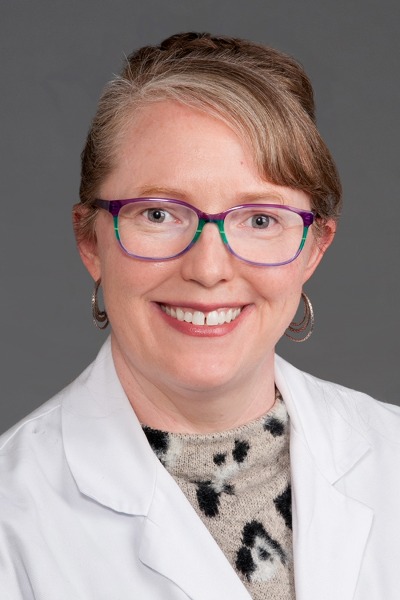
  • Nancy Jacobson, MD

    Medical College of Wisconsin Affiliated Hospitals

    Nancy Jacobson received her Bachelor of Science degree in Biology at the University of Wisconsin-Madison in 2009 and her Doctor of Medicine at the Medical College of Wisconsin in 2014. She went on to complete an emergency medicine residency at the Medical College of Wisconsin, graduating in 2017. She splits her clinical practice between Froedtert Hospital and the Clement J. Zablocki VA Medical Center. She is committed to improving patient quality safety and experience in the Department of Emergency Medicine, as well as being dedicated to resident education and wellbeing. Since 2017, she has served as the faculty co-chair of the Medical College of Wisconsin Emergency Medicine Resident Wellness Committee, and has published on workplace motivators and operational factors supporting physician wellness. She currently serves and the Medical College of Wisconsin System Director for Quality, Safety, and Experience; a Froedtert Hospital Emergency Department Medical Director, and a course co-director for the Medical College of Wisconsin Quality Improvement and Patient Safety Pathway. She is Department of Emergency Medicine Core Faculty and involved in resident teaching. Her research interests include patient safety, diagnostic error, system of care, quality improvement, physician wellness, and qualitative research.


  • Martin Huecker, MD

    Associate Professor & Research Director, Department of Emergency Medicine

    University of Louisville

    Dr. Martin Huecker, MD, is co-editor in chief of the free, open access Journal of Wellness. He is an Associate Professor and the Research Director and Wellness Director in the Emergency Medicine department at the University of Louisville. He is a member of Phi Beta Kappa and Alpha Omega Alpha honor societies. Dr. Huecker graduated from U of L's EM residency program (Chief Resident) in 2011. He works full-time seeing patients and teaching residents in the emergency department. His diverse research interests include substance use, accidental hypothermia, and healthcare professional wellness. Dr. Huecker is also a Certified Lifestyle Medicine Physician (DipABLM). He loves books, trail runs, dogs, and coffee. His wife is an OB/GYN and they have 4 children with cool names.

  • Susan Wojcik, PhD, ATC

    Associate Professor & Director of Research, Department of Emergency Medicine

    SUNY Upstate Medical University

    Dr. Susan Wojcik is an Associate Professor in the Emergency Medicine Department at SUNY Upstate Medical University with over 23 years of emergency medicine research and education experience. She holds a PhD in Health Sciences from Trident University, a Master of Science in Biomedical Engineering from the University of Kentucky, a Bachelor of Science in Ceramic Engineering from Alfred University, and was a certified athletic trainer for 32 years. As the Director of Research since 2017, she provides oversight, leadership, and mentorship in all aspects of research and scholarly activities for the department. Dr. Wojcik is also the director of many educational programs including a fellow research seminar series, the residency research requirement, and a medical student research elective. When she is not conducting research and teaching, Dr. Wojcik enjoys doing home improvement projects and horseback riding and puzzles.

  • Megan Rybarczyk, MD, MPH, FACEP

    University of Pennsylvania

    Megan Rybarczyk, MD, MPH, FACEP is an Assistant Professor of Clinical Emergency Medicine at the University of Pennsylvania Perelman School of Medicine and is the Global Emergency Medicine Fellowship Director. Her experiences in the field of Global Health have involved clinical work, research, and/or education all over the world in countries such as Bangladesh, the Democratic Republic of Congo, Dominica, Ecuador, Ethiopia, Haiti, Honduras, India, Pakistan, South Africa, and Uganda. Her research and academic interests are currently focused on EM education and training and emergency care systems development, particularly in low resource settings. 

  • Megan Rybarczyk, MD, MPH, FACEP

    PGEM Program Director; GEMFC Past-Chair

    University of Pennsylvania

    Megan Rybarczyk, MD is from Muncie, Indiana and graduated from the University of Notre Dame with a major in the Biological Sciences and a minor in Anthropology. She received her medical degree from the Johns Hopkins University School of Medicine and completed her residency training in emergency medicine at Boston Medical Center, serving her final year as a chief resident. She completed the Global Emergency Medicine Fellowship at the Harvard/Brigham and Women's Hospital Program, with a focus on education/curriculum development, EM program development, and emergency care systems development. Her experiences in the field of global health have involved clinical work, research, and/or education all over the world, and her research and academic interests are currently focused on EM education and training, particularly in low resource settings. She is currently the Academic Lead for the Certification Program in Emergency Medicine (CPEM) running in Pakistan and Bangladesh. Now at Penn, she is the Global EM Fellowship Director, and she is working to develop Global EM programming within the Department of Emergency Medicine and across the institution.

    She has been an active member of GEMA for many years and she most recently served on the GEMA Global Engagement Committee, the WHO/ICRC BEC Course Workshop Task Force, the Fellowship Committee, and the GEMA Global EM Resources Handout Task Force. She has also been on the Business Meeting Planning Committee in the past. Additionally, she has served as Secretary to the Global Emergency Medicine Fellowship Consortium (GEMFC) for the last two years. Finally, she is also a member of AWAEM.

  • Rmaah Memon

    Fellow (2024-2026

    Rmaah Memon,MD obtained both her undergraduate and medical degree through the Six-Year BA/MD Program at the University of Missouri-Kansas City and completed her residency training at the Harvard Affiliated Emergency Medicine Residency at MGH/BWH. Her interests include emergency medicine capacity building and curriculum development in low- and middle-income countries, and she has worked on capacity building projects in Pakistan and Iraq during residency. Her prior work has also focused on improving access to refugee care through the implementation of health screening fairs. She has an interest in digital education and telehealth, and is currently leading a telemedicine initiative in Pakistan, primarily aiming to connect physicians in larger urban areas in Pakistan to patients who live in more rural areas. Through this project, she plans to create the first open-source educational curriculum for urgent care telemedicine for a global audience.

  • David Wright, MD

    Member-at-Large

    Emory University School of Medicine

    Dr. Wright, a tenured Professor and Chair of the Department of Emergency Medicine at Emory University School of Medicine, boasts a distinguished career that intertwines education, innovation, and clinical excellence. As the director of both the Center for Innovation and Discovery in the Acute and Emergent Sciences (IDEAS) and the Emergency Neurosciences Clinical Laboratory, Dr. Wright's expertise is at the forefront of acute neurological conditions research. His leadership in significant clinical trials, such as ProTECT III, and his role in networks like SIREN and Georgia StrokeNet, highlight his substantial clinical trial experience. He also brings inventive prowess, with patents to his name, and collaborative skills through adjunct faculty roles across prestigious institutions like the Georgia Institute of Technology.

    With over three decades of involvement in the Society for Academic Emergency Medicine (SAEM), Dr. Wright has contributed extensively to various committees and editorial boards, underscoring his dedication to the field. His candidacy for the SAEM Foundation Board of Trustees is driven by a desire to leverage his extensive network, fundraising capabilities, and a fervent belief in the vital role of academic emergency medicine. Dr. Wright seeks to guide and support the next generation of emergency medicine professionals, aiming to enhance innovation, education, and patient care within the discipline.

  • Stephen J. Wolf, MD

    Member-at-Large

    Denver Health Medical Center

    My name is Stephen J. Wolf, MD, and it would be an honor to represent you as a Member-at-Large on the SAEM Board of Directors. I currently serve as Chair of Emergency Medicine at Denver Health Medical Center, and Professor and Vice Chair for Emergency Medicine at the University of Colorado School of Medicine. I received my undergraduate education (1994) and Medical Degree (1998) from the University of Virginia before going on to complete my residency training at the Denver Health Residency in Emergency Medicine (2002). I have been in my current position for the past 6+ years and I am significantly involved in both SAEM and its Association of Academic Chairs in Emergency Medicine (AACEM). Currently, I have the honor of co-directing our SAEM Emerging Leaders Development Program (eLEAD) and leading the AACEM Leadership Development Working Group. As a Board member, I would bring my academic and leadership experience to the SAEM Board as an advocate for our members, aiming to develop and support academic leaders and shape the future of emergency medicine.

    My background is one that prioritizes service and commitment to our patients, learners, providers, and specialty. I am passionate about developing and aligning effective individuals, teams, and communities, to multiply their impact and achieve outcomes. Each of my past and current roles have helped me to develop skills to this end. In addition to those mentioned above, I have served locally as a Program Director, Director of Education, Assistant then Associate Dean of Undergraduate Medical Education, Vice Chair of Academic Affairs, and an appointed member on our hospital board’s finance and academic committees. Nationally, I have served emergency medicine broadly with a focus on education and faculty development, holding positions of steering committee member for a SAEM Western Regional Conference, ACEP state chapter president, chair of a regional Symposium on Emergency Medicine, chair of CORD’s Academy for Scholarship, and chair of ACEP’s Clinical Policy Committee. Additionally, I serve as an ABEM oral certification examiner and a member of ABEM’s Key Advanced Practice Committee.

    As each of you know, SAEM is a remarkable community and society with profound a commitment to supporting and developing, not only our academic mission, but also our specialty as a whole. We are unique in the power of our academic voice, and we must use that voice to have influence and impact in the areas that matter most to our learners, faculty, and departments, particularly as they shape the future of Emergency Medicine. Our learners must feel drawn to an inclusive and vibrant specialty; our faculty must have wellness, safety, and developmental opportunities; and our departments must be equipped with the resources needed to address challenges and have significant impact both within our academic institutions and communities.

    If elected, I would apply my passion and skills to continue the incredible work SAEM has been engaged in to date, with particular focus on strengthening our internal developmental opportunities and amplifying the external impact of the collective influence of academic emergency medicine.

    Again, it would be an honor to serve you and our society in the role of Member-at-Large on the SAEM Board of Directors. I humbly ask for your support.

  • Ralph Riviello, MD, MS

    Member-at-Large

    UT Health San Antonio

    I have had over 26 years of academic emergency medicine experience. After graduating from Hahnemann University SOM, I completed my EM residency at Allegheny General Hospital in 1997 and served as Chief Resident in my final year of residency. I received a Master's Degree in Clinical Forensic Medicine in 2006, and have applied that experience in building my academic niche. During my career, I have held various roles in several spheres including, Director of Clinical Research, Associate Program Director, Vice Chair of Clinical Operations, and now Chair of Emergency Medicine. My experience as Chair as been in both the community academic and university settings. I am currently the Chair of EM at UT Health San Antonio. I have been a long-standing member of SAEM and AACEM. I currently serve on the AACEM Leader Development Workgroup and DEI Workgroup. I did complete the Chair Development Program and found it invaluable in the transition to Chair, and feel it is one of the most important aspects of what AACEM does. Though I have not served in an SAEM leadership role, I am Past-President and former board member of the Pennsylvania ACEP chapter, and have been a ACEP Section Leader. I am running for office as I feel that giving back to our organizations and my colleagues is an important role. I have benefited from the mentorship, wisdom, and counsel of many past and current members of this organization, that I feel it is my time to pay it forward and help shape the future of the organization. I hope to continue the good work AACEM has done and to move us even further. For me, priorities include increasing DEI across the specialty, especially in the face of hostile state environments and enhancing leader development through the CDP and our newest, eLEAD program. Creating, building, and sustaining a leader pipeline is so crucial for our organization and specialty, that is why I feel the eLEAD program is so important for the continued success of EM. As Chairs, with our various experiences and backgrounds, I think we are crucial in analyzing and responding to what happened in the last match and developing a comprehensive plan, with our other EM organizations, to analyze it, temporize it, and prevent it from ever happening again. Also, with the many other threats to and attacks on Academic EM, I feel the organization needs to be nimble and facile at responding to them, and arming chairs with the tools to help advance their departments at their own institutions. Additionally, my experience on community-based, Board of Directors, and leadership roles in these agencies will provide me a unique perspective in serving in this role.

  • Andra L. Blomkalns, MD, MBA
    Andra L. Blomkalns, MD, MBA

    Member-at-Large

    Stanford University School of Medicine

    Dear colleagues and members of the academic Emergency Medicine community,

    I am honored to submit my candidacy for a role on the AACEM Executive Team to represent you and my colleagues in academic Emergency Medicine. I have a deep commitment to advancing our discipline and a proven track record of organizational leadership and advocacy for emergency medicine research and education. I am well-suited to serve in a capacity that will drive our specialty and academic mission into a new era.

    My experience in academic Emergency Medicine is extensive, having previously served as the President of the Society for Academic Emergency Medicine (SAEM), serving on the SAEM Board for seven years, serving as Chair of the SAEM Program Committee for the annual meeting for the last time we all went to Phoenix (2010) and Boston (2011). During my relatively brief 5.5 years as Chair at Stanford, I’ve experienced the challenges of building a young department to gain respect within the institution and actively participate in its academic mission. I am deeply committed to recognizing the academic excellence that our field deserves.

    Look around us. Emergency Medicine stands at a unique crossroads with significant challenges. Roughly 50 years ago, our specialty was born and fought to be represented as Departments over divisions. Yet, half a century later, many of us still have the same conversations year after year regarding crowding, boarding, length of stay, and leaving without being seen. The corporatization of medicine ravages our autonomy and insults our intellect. I challenge any of you to find “creating new knowledge of how to save lives and educating the next, most capable emergency physicians” on a corporate board meeting agenda.

    Half a century ago, we staked a claim with board certification, expertise in the emergent airway, point-of-care ultrasound, critical care, social emergency medicine, emergency medical services, global emergency medicine, and more. Diversity, Equity, Inclusion? No other specialty cares more about the systemic inequities in our healthcare system. We continue progressing with sustainability, digital health, climate change and health, palliative care, pain medicine, data science, artificial intelligence, machine learning, and more.

    Moreover, Emergency Medicine should not be seen just as a field to train for a minimum of three years to meet the challenges of student loans and enjoy a part-time medicine profession lifestyle. Emergency Medicine is a calling, a dedication to advancing the science and practice of emergency care. Saving lives! As the clinician- and physician-scientist become even more of an endangered species in Emergency Medicine, we are on the sidelines watching the diversion of students away from Emergency Medicine pipelines/pathways because of continued academic reputational challenges. Perhaps, during the period of our semi-centennial, can we come together for a refreshed strategy?

    I am optimistic that Emergency Medicine can continue to emerge as a leader within the broader house of clinical and academic medicine. Many AACEM’s emeriti have ascended to leadership positions throughout healthcare, government, and industry. Our specialty holds a distinctive position as no other medical discipline is as adept at mastering the dialectical exchange of patients within the entire healthcare system.

    However, our path forward is fraught with challenges. Academic medicine is under immense stress, with securing federal funding becoming increasingly difficult. We find ourselves in a time of crisis reminiscent of the inception of our discipline. Critical issues, such as academic integrity, funding, space, innovation, regulation, and assaults on leadership, threaten the very foundation of academic medicine. We must address the pathways and pipelines in undergraduate and medical school education to ensure the sustainability of academicians in our profession.

    In conclusion, I am excited to serve you and academic Emergency Medicine, drawing upon my past experiences and commitment to transformation. Together, we can navigate the challenges ahead, champion the values and integrity of our discipline, and ensure a vibrant and diverse future for academic Emergency Medicine.

    Thank you for your consideration. 

  • Ambrose H. Wong, MD, MSEd, MHS

    SAEM Nominating Committee Member

    Yale School of Medicine

    My name is Ambrose Wong, MD, MSEd, MHS, and I am an Assistant Professor of Emergency Medicine and an academic physician-scientist at Yale School of Medicine. I have been active with SAEM and have been involved in leadership positions consecutively since senior year of residency in 2014. I was on the executive board for the SAEM’s Simulation Academy for the past seven years, including President for 2022-23. My focus has been to support national simulation-based research collaborations, which has led to multiple academy-based publications on topics ranging from virtual mentoring to assessment of models for procedural competency training. I was the recipient of the inaugural Simulation Academy Change Agent Award in 2021, which recognizes transformational leadership in the service of SAEM and the Simulation Academy. I also serve on the SAEM Research Committee, focusing on increasing the pipeline for career development awards in academic emergency medicine and chairing the objective for submitting high-quality research didactics during the Annual Meeting.

    My research focuses on teamwork, patient safety, behavioral health, and healthcare disparities. As the Research Director and Fellowship Director at Yale Center for Medical Simulation, I use healthcare simulation technology to improve teamwork and patient safety. I am the recipient of a career development (K23) award from the National Institute of Mental Health to use informatics for preventing symptoms of psychomotor agitation in patients with behavioral crises. I also received an R21 exploratory research award from the National Institute on Minority Health and Health Disparities to address disproportionate use of physical restraints on historically marginalized populations in the emergency department. This year, I received approval for funding from PCORI for a $6.9 million, five-year broad pragmatic study to implement peer support enhanced behavioral crisis response teams in the emergency department.

    I attended Washington University School of Medicine in St. Louis, Missouri. I obtained my Emergency Medicine residency training at NYU & Bellevue Hospitals Center in New York City, serving as chief resident physician in my final year. I subsequently completed a medical simulation fellowship at NYU School of Medicine & New York Simulation Center for the Health Sciences. I received a Master of Science in Health Professions Education at Massachusetts General Hospital Institute of Health Professions and a Master of Health Sciences from Yale School of Medicine.

    I am honored to be considered for a position on the SAEM Nominating Committee. As an elected member of the Nominating Committee, I hope to help ensure that candidates from a wide spectrum of expertise and interests across the society are represented in candidates running for leadership positions. This is especially important for groups with smaller memberships or are otherwise underrepresented within SAEM. In addition, I will aim to objectively represent the broad interests of general membership when assisting in selecting nominees for the Board and elected positions of standing committees.

  • Leon D. Sanchez, MD, MPH

    SAEM Nominating Committee Member

    Brigham & Womens Hospital/Harvard Medical School

    I am currently the Chief of Emergency Medicine at the MGB Brigham and Women’s Faulkner Hospital. Prior to that I was the Vice Chair for Network Operations at Beth Israel Deaconess Medical Center. I am an Associate Professor of Emergency Medicine at Harvard Medical School with expertise in the field of Emergency Medicine Operations.  I have  over 20 years of healthcare administration experience. Areas of recent focus include operational improvement, patient flow and throughput optimization, queuing, and schedule optimization.

    I am interested in continuing my leadership and service contributions to SAEM. I have been a member of several SAEM committees and currently serve as the Chair of the operations committee. I have also contributed to didactic presentations at SAEM and strive to develop and mentor more junior faculty. If elected I hope to help advance the SAEM mission and help develop the future leaders of Emergency Medicine.

  • Angela Jarman, MD, MPH

    SAEM Nominating Committee Member

    University of California, Davis

    I am a fellowship-trained physician-scientist (University of California, Davis) who strongly supports the mission of SAEM as the premier professional organization for academic emergency physicians. My commitment to SAEM began in 2013, as a resident at the University of Utah and since that time I have maintained an active role within the organization. I recently completed a three-year term as the Chair of the 260-member Sex & Gender Interest Group (SGIG), and despite the challenges of the COVID years, under my leadership we had some of the most successful years since the group’s inception. In the past year alone, the SGIG has developed and sponsored four well-attended and collaborative didactics at our annual meeting, published five peer-reviewed manuscripts focused on sex and gender-specific topics, and led one of ten subgroups at the 2023 consensus conference on precision emergency medicine. I am committed to an academic career and am currently supported by an NIH funded K12 award (Building Interdisciplinary Research Careers in Women’s Health) to study sex differences in pulmonary embolism.

    Previously I have held leadership positions within the Academy for Women in Academic Emergency Medicine (AWAEM) and led the 2021 pre-conference workshop. I am an active member of both AWAEM and the Academy for Diversity, Equity, & Inclusion (ADIEM) and have been a featured speaker on national webinars sponsored by each group. In addition, I have served on numerous SAEM committees through the years, most recently I was selected as a member of the inaugural Diversity, Equity, & Inclusion committee. I am additionally committed to a research career in women’s health.

    My extensive SAEM experience has helped me understand the needs of the organization and has given me a front-row seat to observe the traits of highly effective leaders. This insight coupled with my history of building curricula, designing and conducting research studies, and supporting professional development, particularly for underrepresented groups has helped me build a broad professional network that I will deploy to ensure the highest quality of ongoing leadership within SAEM.

    Service to SAEM as a member of the nominating committee will allow me to have a significant ongoing impact on the organization and thus the advancement of academic EM. My broad experience across all domains of the SAEM mission makes me an excellent candidate to serve on the nominating committee and I would appreciate your support.

  • Salil Phadnis, MD

    Fellow

    Florida Atlantic University

    Hello! My name is Sal Phadnis, I'm a third year EM resident at Florida Atlantic University. In 2024, I'll be starting a simulation fellowship at Indiana University with the goal of pursuing a career in EM GME. I'm currently a vice-chair on EMRA's simulation committee. I offer the perspective and feedback of a resident who has benefited significantly from a strong home sim program and recently traversed the fellowship app cycle.

    It seems that a priority for the sim world right now is developing a more collaborative leadership body across different organizations and institutions that can collectively advocate for sim programs, establish standards for sim training, and foster interest in sim/med-ed among medical students and residents. I want to contribute to that goal by using my background to build stronger ties between Sim Academy and EMRA's sim committee, the latter of which i believe has the potential to reach a broader population of residents by virtue of ACEP's sheer size. In particular, my intention is to foster a more visible pathway to sim mentorship for residents and collaborate on exhibits for students and residents at EM conferences to build interest in the various career opportunities in the sim world.

  • Nora McNulty, MD

    Fellow

    Vanderbilt

    I am Nora McNulty, current PGY4 and Conference Education Chief Resident at the Jacobi-Montefiore emergency medicine residency program. I have also been honored to have been chosen as the simulation fellow for Vanderbilt University Medical Center for the 2024-25 year. My role as chief resident, specifically in the world of conference education, has given me experience in a developing a year-long curriculum for junior and senior residents, developing new and innovative ways to teach emergency medicine topics, and to invite lecturers from outside institutions to our program. This experience has given me many tools in the fields of planning/development, communications and public & media relations, and organizational development.

    I am running for office in an effort to build on the goals already set in place by the simulation academy through its mission statement. The portion of the mission statement most important to me and why I am running is to advance the role of simulation as an effective method for competency in emergency medicine among learners. Throughout my time in residency, I have played a role in designing unique simulation experiences that use simulation not only as a tool to grasp bread and butter emergency medicine topics, but also to develop a greater understanding of the greater world of medicine - one outside of diagnosis and treatment. My interest in simulation lies in how simulation can be used as a tool to bridge the gap between patients and their providers; opening up worlds to our learners that they may not have otherwise come in contact with.

  • Andrew Melendez, DO

    Fellow

    Yale Center for Healthcare Simulation

    I am excited to express my interest in the Fellow position for the Simulation Academy Executive Committee. Throughout my journey, I've consistently sought out opportunities to expand my knowledge of simulation as a powerful tool for education, training, and quality improvement. I had the wonderful opportunity during my residency training to rotate at the second-largest simulation center in New England. The Center for Education, Simulation, and Innovation serves a diverse range of learners that includes residents, nursing, medical students, S.W.A.T., EMS, the United States Armed Forces, and other continued medical education learners. This experience pushed me to increase my creativity in teaching approaches to a wide audience of learners and further demonstrated to me the impact Simulation education can have on healthcare.

    I have also discovered several areas of interest while building my foundation in simulation-based education. One area is the professional development of the next generation of residents and medical students, especially those who are underrepresented in medicine. Simulation offers an opportunity to level the playing field for underrepresented students who may have faced barriers or disparities in their education by providing a standardized environment. I have been involved in this area through various positions, such as my national role as a residency liaison for the Latino Medical Student Association in medical school, leading a Latinx Affinity Group during residency, and participating in the Emergency Medicine Diversity, Equity, and Inclusion Committee at the University of Connecticut. Moreover, it has also been my goal as a Chief Resident to provide mentorship for the personal and professional development of residents and medical students interested in pursuing academic careers to increase diversity among faculty in medical education. I strongly believe that simulation can equip students with the tools to reduce health disparities and promote health equity.

    If elected, I aim to contribute to the committee's mission and to represent the voice of residents and fellows in our joint goal for the advancement of Simulation in Emergency Medicine.

  • Taylor Cesarz, MD

    Fellow

    University of Wisconsin

    My name is Taylor Cesarz and I am running for a fellow position on the SAEM Simulation Academy executive committee. I am currently a simulation fellow at the University of Wisconsin-Madison. My journey with simulation started during residency. Early on in residency, as a learner, I found myself gravitating toward simulation as a way to explore knowledge deficits and enhance my own learning in an engaging way. As I progressed through residency, I found myself becoming even more passionate about simulation from the perspective of an educator, and I began getting involved in simulation education for medical students and co-residents. I am seeking out a position because I want to find ways to connect to the larger simulation community and effect change on a national level.

    Throughout residency, I was fortunate to have had a lot of exposure to simulation, providing me the chance to continually learn new skills to use during simulation education. I have had numerous opportunities to both design and run scenarios as well as practice important simulation principles such as pre-and debriefing. I was also able to help write and facilitate a case for the 2023 SAEM SimWars. Perhaps my favorite project, and the one which solidified my decision to pursue simulation as a career, was creating a multi-institutional gamified simulation race for emergency medicine residents. My motivation for this project stemmed from my enthusiasm for both innovation and gamification in resident education. Both SAEM SimWars as well as EMRA MedWars played a part in my inspiration.

    While I was creating this race, I scoured the internet for resources to help me in the design; while there were some resources available, they were not always easy to find. I quickly learned how many hours of dedication and resources it takes to host a successful simulation event. With a national network like SAEM, I believe there are many simulation projects that may be useful to other members of the simulation community. As medical education continues to evolve, I foresee many more innovative simulation projects on the horizon. With that being said, it would be my goal to bring this spirit of innovation to the committee and develop forums for members to easily search for and/or exchange ideas of projects and resources to promote simulation and advance medical education, national collaboration, and simulation research.

    My experience as a fellow thus far has taught me the importance of a collaborative community in the simulation and scholarly world. For fellows and junior faculty, navigating the challenges of transitioning to a new attending role while developing the skills to become leaders in simulation education can be difficult. I would like to work with other members of the executive committee to create support and mentoring opportunities for different levels of simulationists. My hope is to be able to create resources for project development, publishing simulation research, and the opportunity to receive mentoring from more senior leaders for our simulation committee members.

  • Christina Matulis, MD

    Vice President of Social Media & Communication

    Kaiser Permanente San Diego Medical Center

    My name is Christina Matulis and I am applying for the position of Vice President of Social Media and Communication. I completed my emergency medicine training at the Alpert School of Medicine of Brown University/Rhode Island Hospital followed by a simulation fellowship at Yale University and the Yale Center for Healthcare Simulation. Currently, I am practicing as an emergency physician at Kaiser Permanente San Diego Medical Center where I am also involved in simulation for the residency program and have an interest in expanding interprofessional simulation at our community sites.

    Previously, I served as the inaugural fellow on the SAEM Simulation Executive Committee for the 2022-2023 year. During this time, I established an early career physician subcommittee within the Simulation Academy to provide mentorship, support, and networking opportunities for medical students, residents, and early career physicians. Through collaboration with the SAEM committee at large, I helped increase membership and helped host several mentorship talks throughout the year with leaders in the simulation community. In the past year, I have stayed active in the SAEM simulation academy.

    As an early career physician, the SAEM Simulation Academy has provided me with crucial mentorship and networking opportunities that have fostered career growth. I want to ensure that we continue to grow our presence within the emergency medicine community so that as many members can benefit from the Academy’s offerings as possible. If elected as the VP of social media and communication, I will continue to grow the presence of the SAEM Academy to increase our membership, with a particular emphasis on early career physicians who are shaping the future of simulation in emergency medicine. Early on in my position, I will assess areas of success as well as improvement for communication, so that we ensure we are reaching all eligible SAEM members who could benefit from membership to our Academy. I will also continue to increase awareness of our committee at national conferences so that we can create meaningful collaborations nationally, both virtually and in-person.

  • Heather Hechter, MD

    Vice President of Social Media & Communication

    Emory University School of Medicine

    I am running for the SIM Academy’s VP of Social Media and Communication because I want to bring our community closer together, continue to grow member engagement and foster collaborations between individuals and institutions. I trained in emergency medicine at the University of Connecticut and stayed for fellowship in medical simulation at the Center for Education, Simulation and Innovation (CESI)/Hartford Healthcare. I have recently joined Emory University as simulation faculty and am a member of their education committee. Prior to medical school, I worked with the California YMCA’s Youth and Government program as an advisor for a 100+ member delegation where I started and oversaw their Instagram account. Additionally, I have contributed to the social media for my residency and fellowship programs. For SIM Academy, I have attended the last two annual meetings at SAEM, participated in the education committee and presented at this past SIM Fellow Forum. I am hoping to further contribute to the SIM Academy in this role by ensuring the website stays up-to-date and increasing our social media presence.

  • Aga De Castro, MD, MPH

    Vice President of Social Media & Communication

    Hartford Hospital / University of Connecticut

    It would be an honor to serve as your next VP of Social Media & Communication. I am currently the Assistant Fellowship Director for the Medical Simulation Fellowship program at Hartford Hospital in Connecticut. I also hold an academic appointment as an Assistant Professor of Emergency Medicine at the University of Connecticut School of Medicine. Prior to my current role, I graduated from Georgetown University School of Medicine and completed my Emergency Medicine Residency training at the University of Connecticut. I then completed my Medical Simulation Fellowship at Hartford Hospital, a UConn School of Medicine Level 1 Trauma Center affiliate, where I have stayed in my current roles.

    I joined the Simulation Academy as a senior resident to learn more about our community. It was an eye-opening experience to have met so many other members with similar interests in simulation education. As I progressed through now as a Junior Faculty, I have since been involved in promoting Simulation Academy’s objectives as an active member of the Education Sub-Committee. The supportive collaboration I experienced through this amazing opportunity has solidified my interest in supporting Simulation Academy’s goals in other ways I can.

    I am driven to serve as your next VP of Social Media & Communication because I believe in the power of effective online communication. I am the social media content manager for my Fellowship Program (@hhmedsim). By utilizing numerous platforms including Instagram, X (formerly known as Twitter), and Facebook, I have learned the ins and outs of effective content management. My professional journey has equipped me with a strong foundation in effective communication and social media management. I hope to leverage my knowledge, skills, and passion for this role to enhance the visibility and engagement of our Simulation Academy, fostering a stronger online presence and creating more opportunities for networking and collaboration within the broader SAEM community. If elected, my primary goals include implementing a cohesive social media strategy, enhancing content quality, and fostering a sense of community among our members, ultimately elevating the Simulation Academy experience for all involved.

People List - Grid