People

People List

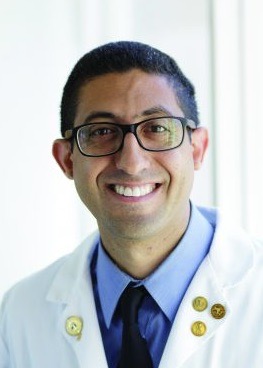
  • Drs. Chen and Scott
    Ai Xin Chen, MD & Elizabeth Scott, MD

    UCLA-Harbor Medical Center

  • Jessica Bod, MD

    Yale University School of Medicine

    Jessica Bod is an assistant professor at Yale School of Medicine department of emergency medicine. She grew up in a family of teachers; her grandfather taught chemistry, her mother is a high school biology teacher and her sister teaches second grade. During her medical training, Jessica naturally gravitated toward a career in medical education. As a resident in emergency medicine, Jessica was the inaugural “resident liaison to medical students” for the Yale emergency department, and helped to shape the curriculum for this required rotation. When she graduated, she became the assistant clerkship director and shortly thereafter became the director of medical student education. In this role, she oversees all programming related to medical students in the department of EM including the required clinical clerkship, the two types of sub-internship and the virtual elective. She is also responsible for mentoring medical students interested in pursuing careers in EM and for leading other faculty involved in medical student education, such as the associate clerkship director.
    Jessica’s interests include the creation of programs promoting residents as leaders in medical education, curriculum development and inclusive excellence in medical curricula. She has spoken about her curricular innovations locally at Medical Education Day and nationally at CORD and SAEM. Currently, Jessica is focusing on inclusive excellence content in EM curricula. She received a grant from SAEM to develop a bystander intervention training for EM residents, and is in the process of assessing the curriculum for its impact on resident behavior. This work is significant in its potential to impact the education of medical trainees for generations to come.

  • Aaron E. Robinson, MD, MPH

    Emergency Medical Services Fellow

    Hennepin County Medical Center


    EMS Fellow Award Recipient

  • Nicole Klekowski, MD

    Pediatric Emergency Medicine Fellow

    University of Michigan Dept. of Emergency Medicine

    Dr. Klekowski is a Clinical Assistant Professor in the Department of Emergency Medicine at the University of Michigan where she also serves as the Director of the Gender Equity Professional Development Group, Children's Emergency Services Ultrasound Director, Pediatric Advanced Emergency Ultrasonography Fellowship Director, and Advanced Emergency Ultrasonography Fellowship Assistant Program Director. She completed residency in Emergency Medicine followed by fellowships in Pediatric Emergency Medicine and Advanced Emergency Ultrasonography at the University of Michigan. She has academic interests in Pediatric Emergency Medicine point-of-care Ultrasound (PEMPOCUS) and gender equity in medicine. She has a clinical interest in ultrasound, caring for patients with critical care needs across the age spectrum, and bringing breastfeeding support to the bedside. Dr. Klekowski is honored to care for patients in Children's Emergency Services and Adult Emergency Services.

  • Julie Gesch, MD
    Julie Gesch, MD

    The Andrew Levitt Center for Social Emergency Medicine

  • Julian Hertz, MD
    Julian T. Hertz, MD, MSc

    Duke University

    Julian Hertz, MD, MSc, is an Associate Professor of Emergency Medicine & Global Health. He completed his undergraduate studies at Princeton University, medical school at Duke University, residency training in emergency medicine at Vanderbilt University Medical Center, and his fellowship in Global Health at Duke.

    Dr. Hertz's primary interests include global health, implementation science, and undergraduate and graduate medical education. Dr. Hertz's research focuses on using implementation science methods to improve cardiovascular care both locally and globally. His current projects involve developing interventions to improve acute myocardial infarction care in Tanzania, to improve management of hypertension among Tanzanians with HIV, and to improve post-hospital care among patients with multimorbidity in East Africa.

  • Howard S. Kim, MD MS

    Assistant Professor

    Northwestern University Feinberg School of Medicine

    Howard S. Kim, MD MS is an emergency medicine physician and health services researcher at the Northwestern University Feinberg School of Medicine. He completed his residency in emergency medicine at Denver Health Medical Center in 2015 and received formal training in health services and outcomes research and patient-reported outcomes measurement. Dr. Kim’s research agenda is dedicated to improving the safety and effectiveness of acute pain management and reducing harms associated with opioid use disorder. Dr. Kim has been continuously funded by the Agency for Healthcare Research and Quality (AHRQ) and the National Institute on Drug Abuse (NIDA) for the last six years, including early career research training through AHRQ T32 and K12 awards. Currently, he is the PI of an AHRQ R01 award evaluating ED physical therapy for acute low back pain (R01HS027426), the Site PI for a multisite NIDA clinical trial evaluating ED-initiated buprenorphine for opioid withdrawal (UG1DA015831, PI: D’Onofrio), the Site PI for an early phase pain investigation clinical network (U24NS115679, PI: Aufderheide). Over the last few years, Dr. Kim has published extensively on the topics of opioid prescribing, marijuana legalization, ED physical therapy, and opioid harm reduction in journals such as Academic Emergency Medicine, Annals of Emergency Medicine, the New England Journal of Medicine, JAMA Network Open, and Physical Therapy.

  • Amber Sabbatini, MD, MPH

    Assistant Professor, Department of Emergency Medicine

    University of Washington

    I am a practicing emergency physician and federally-funded health services researcher with expertise in using claims and administrative datasets to understand how the delivery of emergency care affects patient outcomes, resource utilization, and quality. To date, much of my research has revolved around examining hospital admission practices and their consequences, including a special emphasis on observation care. Most recently, I have been awarded several federal and foundation grants to study the impact of payer policies and delivery reforms on health utilization and costs and their intersection with emergency care. These include a pilot award from the UW Population Health Initiative to examine the association between behavioral health integration under Washington state’s Medicaid Transformation Program and preventable ED use, an R34 from NIMH to study the impacts of state Medicaid policies targeting high-utilizers of the ED on mental health outcomes and a newly awarded R01 from the NIA to study how Medicare policies including the Hospital Readmissions Reduction Program have affected the growth of observation stays and impacted outcomes for older adults requiring hospitalization. I am currently appointed as an Assistant Professor in the Department of Emergency Medicine and Adjunct Assistant Professor of Health Services at the University of Washington. I am additionally an affiliate faculty member for the Center for Health Innovation & Policy Science (CHIPS) and a core faculty in the Department of Emergency Medicine’s Section of Population Health. After completing my emergency medicine training in 2012, I undertook a health services research fellowship at the University of Michigan. I then joined the faculty at University of Washington and was subsequently awarded a K12 career development award in patient-centered outcomes research from the Agency for Healthcare Research and Quality. I have been actively involved in the implementation of Washington state’s Medicaid Transformation Project in King County and serve on multiple workgroups related to improving care coordination and ED utilization among high-needs Medicaid patients. These activities complement my current grant-funded research in the Medicaid space and provide a stakeholder network for translating research into policy. I maintain active membership in the Society for Academic Emergency Medicine (SAEM) and American College of Emergency Physicians (ACEP). I served on the SAEM grants committee for several years, and currently serve on the ACEP Patient Safety & Quality and Research committees. Finally, this past summer I served as a reviewer on an NHLBI R21 Special Emphasis Panel focusing on secondary analyses of existing datasets.

  • Cynthia Santos, MD
    Cynthia Santos, MD

    Assistant Professor

    Rutgers New Jersey Medical School

  • Jennifer Love, MD
    Jennifer Love, MD, MSCR

    Assistant Professor, Emergency Medicine

    Icahn School of Medicine at Mount Sinai

    Jennifer Love, MD, MSCR, is an assistant professor of emergency medicine at the Icahn School of Medicine at Mount Sinai. After residency at the University of Pennsylvania, she completed a medical toxicology fellowship at Oregon Health & Science University. She then completed a clinical research fellowship at the Icahn School of Medicine under Dr. Lynne Richardson's T32 training program in emergency care research. Her current work focuses on opioid use disorder and novel substances of misuse, specifically xylazine. She also serves as the SAEM AWAEM research committee co-chair and the VP of Education.

  • Betty Chang, MD
    Betty Chang, MD

    New York–Presbyterian/Columbia University Irving Medical Center

  • lee-michelle-2021
    Michelle Lee, MDCM

    The Hospital for Sick Children

  • Frederick Kofi Korley, MD, PhD

    Associate Professor with tenure

    University of Michigan

    Frederick Korley, M.D., Ph.D. is an Associate Professor of Emergency Medicine at the University of Michigan. He received his medical and emergency medicine education at Northwestern University School of Medicine, serving as chief resident during his final year of training. He also received doctoral training in clinical investigation at the Johns Hopkins University School of Public Health with election into Phi Beta Kappa. His doctoral thesis represents the first published study of the diagnostic accuracy of a high sensitivity troponin assay in a US emergency department population. He was the inaugural recipient of the Robert E. Meyerhoff Assistant Professorship at the Johns Hopkins University School of Medicine. Dr. Korley’s research work is focused on the development of diagnostics and therapeutics for TBI. With regards to the development of diagnostics for TBI, Dr. Korley holds a patent for a panel of biofluid-based biomarkers for brain injury detection and outcome prognostication. He is a co-investigator of the largest observational study of TBI in the US (the Transforming Research and Clinical Knowledge in TBI, TRACK-TBI). As part of this work, he leads efforts in the clinical validation of novel brain injury biomarkers. In collaboration with colleagues in engineering, Dr. Korley is also developing a credit card sized microfluidic device for point-of-care measurement of TBI bioflud biomarkers. Dr. Korley is also a co-investigator in the clinical coordinating center of the NIH funded Strategies to Innovate Emergency Clinical Care Trials (SIREN) network. He is a principal investigator of two federally funded research studies run by the SIREN network, that are investigating the use of biofluid-based biomarkers for 1) subject selection in clinical trials; 2) monitoring individual patient response to promising neuroprotective agents. He also participates in the DoD/FDA funded TBI Endpoints Development (TED) Initiative, a public-private partnership examining effective measures or “endpoints” of brain injury and recovery. With regards to the development of therapeutics for TBI, Dr. Korley is a principal investigator of a SIREN network NINDS funded phase II adaptive design clinical trial that is investigating the optimal treatment parameters of hyperbaric oxygen that is most likely to demonstrate improvement in the rate of good neurological outcome versus control in a subsequent confirmatory trial. During the on-going COVID-19 pandemic, Dr. Korley is leveraging his expertise in the testing of novel therapeutics to lead an NHLBI funded multi-center clinical trial of COVID-19 convalescent plasma in outpatients (C3PO) as one of the national co-PIs. With enrollment of participants at >50 emergency departments across the country, this study represents a significant contribution by the emergency medicine community to test a promising therapeutic in COVID-19 patients who are discharged home from the emergency department. Dr. Korley has >70 peer-reviewed publications in high impact journals such as JAMA, Lancet, JAMA Neurology, JAMA Psychiatry, JAMA Cardiology, and the Journal of the American College of Cardiology. He is a member of the NINDS Neurological Sciences and Disorders A (NSD-A) study section.

  • Phillip A. Scott, MD, MBA

    Professor

    Department of Emergency Medicine, Michigan Medicine

    As the originator of the acute stroke team at the University of Michigan, I have been extensively involved with clinical stroke research for 25 years. Over that period, our team has developed a comprehensive, multispecialty approach to the treatment of patients with cerebrovascular disease. This effort extensively involves emergency medicine, neurology, neurosurgery, radiology, interventional neuroradiology, neuro-intensivists, rehabilitation and partners from multiple other disciplines within the health system. Our system has demonstrated ability not only within the walls of the hospital, but also the ability to design, implement and conduct research in the community and regional settings to enhance stroke care access and knowledge among patients and external providers – from their homes, to the streets (EMS), to the hospitals. My background in recruiting, developing, and implementing multidisciplinary systems and teams for the delivery of acute stroke care and NIH-supported research across multiple clinical trials over the past two decades provides key insights into the proposed research platform. I have personally participated in over 35 clinical trials, serving as site principal investigator in over ten and as the overall principal investigator in seven. I was the Principal Investigator on the INSTINCT Trial (RO1 NS050372) examining methods to enhance stroke systems of care. That experience, along with my background in clinical trial development, engineering, and newer business and marketing expertise, provide a tremendous foundation for the STEP program. My research involvement has focused on clinical trial work in: 1) development of population- and systems-based approaches to acute stroke care and research, particularly focusing on community delivery of acute stroke care (second-stage knowledge translation) 2) hyper-acute, thrombolytic, based stroke treatment strategies, 3) efforts to extend stroke treatment via neuronal protection mechanisms (both pharmacologic and hypothermic), 4) the development of mechanical-based clot removal and lysis in stroke, 5) methods to enhance treatment for subarachnoid hemorrhage care via hypothermia, 6) primary stroke prevention via enhanced identification of atrial fibrillation. My work has been extensively funded by the NIH and I have led and/or participated in numerous consortia, multicenter clinical trials, and trial networks, including: INSTINCT (PI: RO1 NS050372), SPOTRIAS (P50 NS044283, NETT (U01 NS056975) and STROKENET (co-PIs with Dr. Brown: U10 NS086526). In August, 2013 my mother suffered a large and debilitating stroke which was not treated effectively due to the time limitations of therapy at that time. During my subsequent partial sabbatical, I obtained an advanced business degree from the University of Michigan with the intent of applying the science of enhancing system efficiency and marketing promotion to clinical trial findings in order to accelerate uptake of research results by healthcare provider and patient populations. I believe the STEP program will greatly enhance our ability as scientists and clinicians to rapidly improve systems to reduce the burden of stroke on our communities and may be leveraged to reduce and eliminate barriers to broad community implementation of new results.

  • Eve Losman, MD

    Clinical Assistant Professor

    Department of Emergency Medicine, Michigan Medicine

    In 2016, Dr. Losman joined the Washtenaw Health Initiative –Opioid Project and in 2017 she became her department’s representative on the Michigan Medicine Pain Committee and QI Controlled Substances Committee.In 2018, Dr. Losman joined the CDC funded Injury Prevention Center. She is involved in 3 projects focused on the Opioid Epidemic; creation of a web-based toolkit for providers and the public regarding appropriate prescribing and the care of patients with Opiate Use Disorder; real time tracking of opiate overdoses to assist public health, EMS, and law enforcement to respond more effectively and rapidly to community needs; creation of a toolkit for post overdose care from the Emergency Department. She is part of the ReWrite the Script team at Michigan Medicine as well as the MEDIC QI project working within her department as well as institution wide on clinician education regarding appropriate use of opiates, curbing the inappropriate prescribing of opiates, and alternative strategies to control acute pain. She is leadingthe harm reduction effort to educate opiate overdose patients in the ED regarding the use of Naloxone rescue.As evidenced by the many activities detailed above and below, Dr. Losman has a longstanding commitment to the education of EM residentsand the emergency care of older adults. More recently she has applied her leadership and organizational skills to the area of public health with a focus inappropriate ED utilization and the Opioid Epidemic. She has found ways to combine these interests in a meaningful and productive manner.

  • Lauren M. Westafer, DO, MPH, MS

    Assistant Professor in the Department of Emergency Medicine

    University of Massachusetts Medical School - Baystate

    Dr. Westafer, DO, MPH, MS (she/her) is an Assistant Professor in the Department of Emergency Medicine at the University of Massachusetts Medical School - Baystate and Director of the Emergency Medicine Research Fellowship. Lauren is an implementation science researcher and FOAMed enthusiast. She is author of the blog, The Short Coat, and cofounder of the emergency medicine podcast, FOAMcast. Dr. Westafer lectures internationally on social media in medical education, critical appraisal and journal club design, pulmonary embolism, and advancing the quality of healthcare for LGBTQI+ patients. In addition, she serves as the Social Media Editor and a research methodology editor for Annals of Emergency Medicine and an Associate Editor for the NEJM Journal Watch Emergency Medicine.

  • Iris Reyes, MD

    Professor

    Department of Emergency Medicine, Perelman School of Medicine University of Pennsylvania

    Iris Reyes, MD, FACEP is a Professor of Clinical Emergency at the Perelman School of Medicine (PSOM) at the University of Pennsylvania. She has served as an Attending Physician in the Emergency Department at the Hospital of the University of Pennsylvania since completing her fellowship in 1989. Dr. Reyes has served as an Advisory Dean for the PSOM Office of Student Affairs, an Ombudsman, a member of the Admissions Committee at Penn Med, and as a faculty preceptor for the Medical Spanish Elective and the Latino Medical Student Association. Dr. Reyes developed and has precepted the Minority Mentoring Seminar Series (aka “Cracking the Clerkships”) designed to provide mentoring resources for medical students from backgrounds under-represented in Medicine for over 20 years. Her longstanding interest in the impact of cultural diversity on healthcare delivery led to her co- development of a mandatory course for first year medical students at Penn Med. The course was absorbed into the broader “Doctoring Course” and continues to address issues such as racism in Medicine, spirituality in healthcare, and the proper use of interpreters for patients with limited English proficiency. Dr. Reyes’s passion for improving diversity in Medicine and the need to improve the pipeline and support of under-represented minority residents and faculty led to her founding of the UPHS-CHOP Alliance of Minority Physicians (AMP) in 2012. AMP promotes the recruitment, retention, mentoring and the overall success of minority residents and fellows training in the University of Pennsylvania Health System and the Children’s Hospital of Philadelphia. AMP’s efforts have led to a near doubling of the minority residents, fellows and faculty at Penn Medicine and CHOP. It has also promoted an expansion of Visiting clerkship programs for minority medical students from 1 to 15 participating residency programs. This year, AMP faculty members led the charge to demand the elimination of institutional racism at our health systems.

  • lane-bennett-2021
    Bennett Lane, MD, MS

    University of Cincinnati

  • Christine Luo, MD, PhD
    Christine Luo, MD, PhD

    Oregon Health and Science University

  • Okubo, Masashi 2021
    Masashi Okubo, MD, MS

    University of Pittsburgh

People List - Grid