
From ChatGPT to the Emergency Department: Leveraging the Potential of Large Language Models in Emergency Medicine
This is a ticketed event. Using a combination of theory, hands-on exercises, and discussion, this workshop will explore the potential, challenges, and impact of integrating Large Language Models (LLMs) into the daily operations of emergency medicine. Participants will discover how LLMs can revolutionize processes from EHR integration to administrative tasks and self-directed education without the need for programming skills or advanced mathematical knowledge.
Presenters:
- Richard A. Taylor, MD MHS
- Joshua W. Joseph, MD, MS, MBE
- Christian Rose, MD
- Gabrielle Bunney, MD
- Andrew L. Chu, MD, MPH, MBA
-

Richard A. Taylor, MD, MHS
Vice Chair, Research and Innovation
UVA Health
Richard Andrew Taylor, MD, MHS, is an international leader in digital health and artificial intelligence (AI), specializing in the integration of emerging technologies into clinical practice. His research spans interdisciplinary domains, addressing not only the technical aspects of AI-driven clinical decision support but also the ethical, social, and implementation challenges that shape the future of digital health. At UVA, he aims to build collaborative initiatives that bridge medicine, data science, and policy to drive responsible and impactful innovation in emergency care and beyond. -
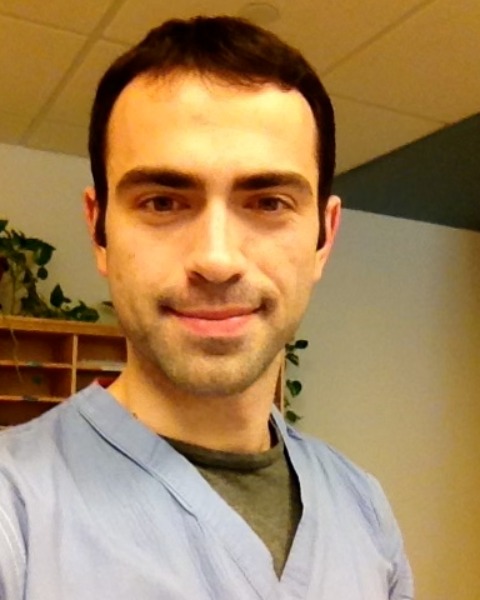
Joshua W. Joseph, MD, MS, MBE
Harvard Medical School/Brigham and Women's Hospital
Dr. Joshua W. Joseph is an Emergency Physician and Clinical Informaticist at Brigham and Women's Hospital and an assistant professor of Emergency Medicine at Harvard Medical School. I currently serve as the medical director for data analytics for the Mass General Brigham Emergency Medicine network. My research examines the intersection of patient throughput, clinical decision-making, and quality, through the lens of machine-learning techniques. This research encompasses how the decisions of individual physicians on-shift affect throughput in the department and hospital as a whole, and how physicians and nurses can help to mitigate structural inequalities in the delivery of care. -
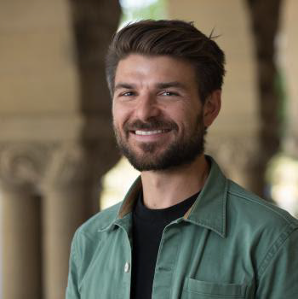
Christian Rose, MD
Assistant Professor Department of Emergency Medicine
Stanford University School of Medicine
Dr. Christian Rose is an Assistant Professor of Emergency Medicine at Stanford University. As a dual-boarded emergency physician and clinical informaticist, he operates at the intersection of clinical medicine, informatics, and innovation. He began to study the effect of technology on medicine during his undergraduate years, obtaining his degree in Physics as well as Science, Technology, and Society. He continued this pursuit in medical school at Columbia University and residency at the University of California, San Francisco (UCSF), where he engaged in various human-centered informatics projects like gene discovery, decision support, and alert fatigue. He completed his informatics fellowship training at Stanford University, where he began his research in deep learning and AI. Dr. Rose strives to improve both patient and physician experiences in medicine, focusing on how information technologies can enhance clinical practice and patient outcomes without losing sight of the essential human aspects of healthcare.
-
Gabrielle Bunney, MD
Stanford University
Dr. Gabrielle Bunney is an Innovation fellow in the department of Emergency Medicine at Stanford. She has a passion for using artificial intelligence (AI) models to support emergency medicine care delivery and efficiency. She has worked on projects using machine learning models to predict early seizures after intracerebral hemorrhage and identify patients for a hospital’s geriatric intervention program aimed to avoid hospital admission. Her current research projects are focused on using artificial intelligence to select patients efficiently and equitably for an early electrocardiogram to detect myocardial infarction. -

Andrew L. Chu, MD, MPH, MBA
Stanford University
Dr. Chu is a Clinical Assistant Professor in the Department of Emergency Medicine at Stanford University. He has co-led multi-disciplinary teams in designing, developing, and launching award winning digital solutions that help physicians manage life threatening emergencies at the point-of-care. His current academic interests include evaluating and executing promising academic-industry partnerships, conducting AI and LLM research, and integrating innovation principles and design thinking into the residency curriculum. As a first-generation college student who grew up in a low-income immigrant family, Dr. Chu is also passionate about diversity in medicine and increasing opportunities for disadvantaged communities. Dr. Chu earned an MD from Boston University. He completed his applied research fellowship training in healthcare innovation and residency in emergency medicine at Harvard (MGH/BWH). He is currently a Stanford Biodesign Faculty Fellow for 2023-2024.