Code of Ethics: Addressing Bias and Values in Information Systems and Artificial Intelligence (ADIEM- and Ethics Committee-Sponsored)
As artificial intelligence transforms healthcare, emergency medicine leads in its implementation, offering opportunities to enhance care while raising ethical challenges. This session explores the role of AI in emergency care, emphasizing the reliance on data quality, human interaction, and ethical responsibility. Topics include bias, privacy, and maintaining reliability in shifting clinical contexts. Panel discussions and interactive components will present successful human-AI collaborations, essential competencies for practitioners, and strategies for integrating human values into AI development. Attendees will gain actionable insights to responsibly leverage AI, ensuring it enhances patient care, equity, and ethical standards in emergency medicine.
Learning Objectives:
- Analyze the ethical implications of AI implementation in emergency medicine, with a focus on data quality and bias.
- Identify key entry points for human values in AI model development and deployment.
- Understand how to evaluate AI model performance and potential consequences in clinical settings.
- Develop strategies to critically assess and ethically implement AI tools in emergency medicine practice.
Presenters:
- Italo M. Brown, MD, MPH, FAAEM
- Christian Rose, MD
- Jody Vogel, MD (she/her/hers)
- Carl Preiksaitis, MD
- Kamna S. Balhara, MD, MA, FACEP
- Dong-han Yao, MD
-
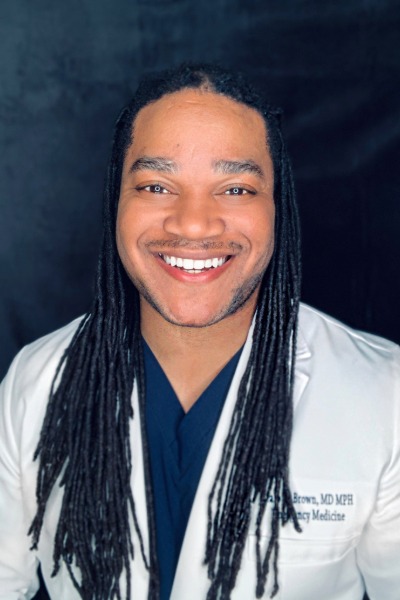
Italo M. Brown, MD, MPH, FAAEM
Stanford School of Medicine
Italo M. Brown, MD MPH (Morehouse College '06, Boston University '08, Meharry Medical College '15) is a Board-certified Emergency Physician, an Assistant Professor in Emergency Medicine, and Health Equity & Social Justice Curriculum Thread Lead at Stanford University School of Medicine. Throughout his career, Italo has been at the frontlines of social medicine and health equity. Italo is the current Chief Impact Officer of T.R.A.P. Medicine, a barbershop-based wellness initiative that leverages the cultural capital of barbershops to address the physical and emotional health of Black men and boys. He is a former board member of the Tennessee Health Care Campaign, an organization that spearheads statewide advocacy efforts in support of the Affordable Care Act and Medicare/Medicaid Reform. Italo trained at Jacobi Medical Center and Montefiore Medical Center, two Bronx Hospitals ranked among the top 20 busiest ERs in the country. In 2017, the National Minority Quality Forum named Italo among the 40 Under 40 Leaders in Minority Health. An avid writer, Italo served with the ABC News Medical Unit, and has contributed health equity & wellness commentary to The New York Times, NPR, USA Today, GQ, Men's Fitness, and Bloomberg. Recently, Italo was selected to be among clinician leaders in access to care for the recurring Health Equity Leaders Roundtable, a new initiative by the White House Office of Public Engagement.
-
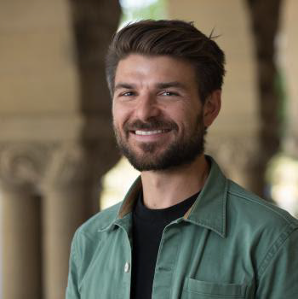
Christian Rose, MD
Assistant Professor Department of Emergency Medicine
Stanford University School of Medicine
Dr. Christian Rose is an Assistant Professor of Emergency Medicine at Stanford University. As a dual-boarded emergency physician and clinical informaticist, he operates at the intersection of clinical medicine, informatics, and innovation. He began to study the effect of technology on medicine during his undergraduate years, obtaining his degree in Physics as well as Science, Technology, and Society. He continued this pursuit in medical school at Columbia University and residency at the University of California, San Francisco (UCSF), where he engaged in various human-centered informatics projects like gene discovery, decision support, and alert fatigue. He completed his informatics fellowship training at Stanford University, where he began his research in deep learning and AI. Dr. Rose strives to improve both patient and physician experiences in medicine, focusing on how information technologies can enhance clinical practice and patient outcomes without losing sight of the essential human aspects of healthcare.
-

Jody A. Vogel, MD, MSc, MSW
Associate Professor
Stanford University
Dr. Jody A. Vogel, Vice Chair for Academic Affairs in the Department of Emergency Medicine at Stanford University and Secretary-Treasurer for the Society for Academic Emergency Medicine. With a diverse background including social work and emergency medicine, Dr. Vogel has been an active contributor to SAEM since her residency. Her extensive experience includes leadership roles on various committees, task forces, and initiatives within SAEM. Dr. Vogel's goals for advancing SAEM and its members include promoting high-quality education and faculty development, increasing mentorship and research opportunities, encouraging participation of junior faculty and residents, promoting inclusiveness, and strengthening relationships with other emergency medicine organizations. She emphasizes her commitment to fostering academic development and strengthening SAEM's role in emergency care research, education, and grant advocacy. -
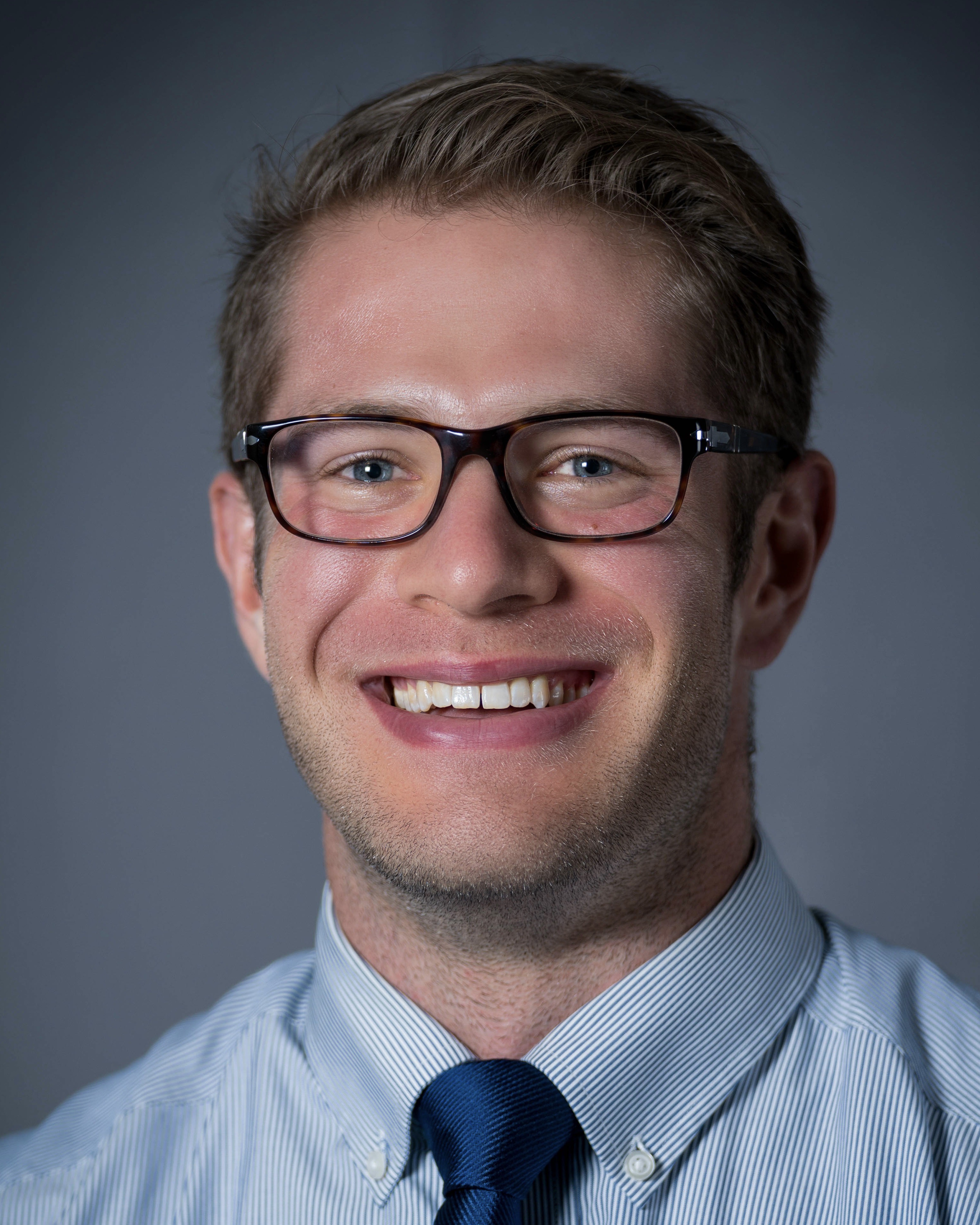
Carl Preiksaitis, MD
Clinical Instructor
Stanford University
Dr. Carl Preiksaitis is a Medical Education Fellow and Clinical Instructor in the Department of Emergency Medicine at Stanford University. Dr. Preiksaitis completed his medical training at New York University School of Medicine and a residency in emergency medicine at Stanford. His scholarly interests include digital technology and medical education, reproductive healthcare in the emergency department, and healthcare innovation. He is currently pursuing a master’s degree in medical education at the University of Cincinnati.
-
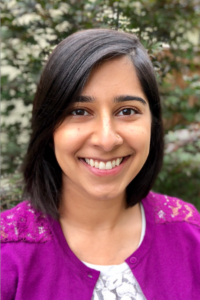
Kamna S. Balhara, MD, MA, FACEP
Associate Professor of Emergency Medicine
Johns Hopkins University
Dr. Kamna Balhara is an associate professor of emergency medicine (EM) at the Johns Hopkins University School of Medicine, and holds a dual appointment as associate professor in Medicine, Science, and the Humanities at the Johns Hopkins Zanvyl Krieger School of Arts and Sciences. After obtaining a master’s degree in French Cultural Studies from Columbia University, she completed medical school and residency at Johns Hopkins, serving as chief resident. She served in residency program leadership at the University of Texas San Antonio and subsequently at Johns Hopkins.
Dr. Balhara is an innovator in the health humanities and has experience with implementing humanities curricula for medical students, residents, and faculty from across specialties. She is a founder and co-director of the Health Humanities at Hopkins EM initiative, which offers equity-focused and humanities-based programming to institution, community, and national audiences. She also directs a unique longitudinal interdisciplinary institution-wide health equity and humanities track for residents and fellows across Johns Hopkins, and directs the Health Humanities Fellowship. She has been invited to speak to international audiences on the humanities in medicine and was selected as a Harvard Macy Institute Art Museum-Based Health Professions Education Fellow.
Her scholarly interests revolve around equity and inclusion in clinical and learning environments. She has authored multiple publications on graduate medical education, humanities, social determinants of health, and disparities in health care access, and has developed tools and resources for other educators seeking to apply the humanities towards equity in health care and health professions education. Her work has been funded by the Association of American Medical Colleges (AAMC), the Josiah Macy Foundation, the National Endowment for the Humanities, and the Emergency Medicine Foundation. She serves on the steering committee for the National Health Humanities Consortium, and is a member of the editorial board of the SAEM journal Academic Emergency Medicine.
-

Dong-han Yao, MD
Stanford Health Care-Sponsored Stanford University
Dong-han Yao, M.D., is an emergency medicine physician at Stanford Medicine and fellow in the Stanford Clinical Informatics Program. Dr. Yao holds a B.A. in Molecular & Cell Biology and Immunology from University of California, Berkeley, an M.D. from Mount Sinai School of Medicine, and completed his Emergency Medicine residency at UCLA. Dr. Yao's research and operational work include expanding patient access to acute care via virtual care, responsible integration of AI into medical education and the clinical continuum, and leveraging technology to streamline workflow and improve patient outcomes in the emergency room.