People
People List
-
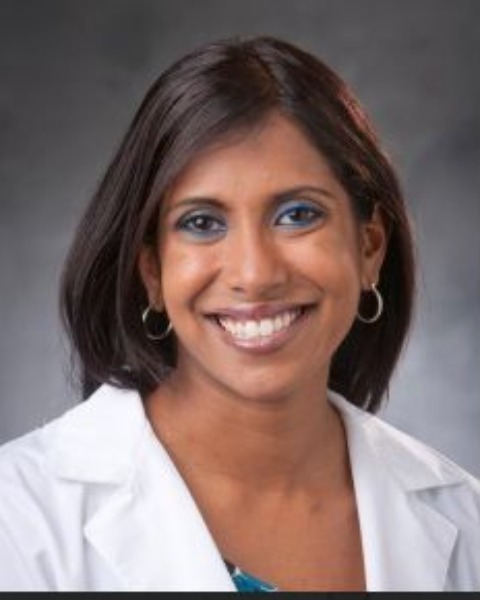 Sree Natesan, MD, FACEP
Duke University School of Medicine
Dr. Sree Natesan is an Associate Professor and Associate Program Director in the Duke University Department of Emergency Medicine. She is committed to the advancement of education, clinical teaching/feedback, and diversity, equity & inclusion (DEI).
Regarding advancing medical education and fostering inclusive learning environments: She had had a broad clinical and research training including ACEP Teaching Fellowship, Academic Life in Emergency Medicine Faculty Incubator Program, AAMC Medical Education Research Certificate Program, Duke Educational Skills Longitudinal Mentorship Program, and Duke Academy for Health Professions Education and Academic Development (AHEAD) Certificate Program, among others. She has shown herself a leader in medical education, having been awarded the CORD Junior Faculty Award, ACEP Junior Faculty Teacher Award, CORD Academy Scholar Award for Teaching and Evaluation. She is a leader on various committees including Council of Emergency Medicine Residency Director (CORD) Education Committee, co-Chair of the CORD Best Practices Subcommittee, Chair of CORD Academy for Scholarship. Dr. Sree Natesan serves as Chief Academic Officer for Academic Life in EM (ALiEM) Faculty Incubator Program, an international faculty development program. She is co-founder and director of the Duke GME Medical Education Leadership Track (MELT), a longitudinal resident/fellow-as-teachers program across all GME specialties, which has graduated over 170 trainees and fellows since 2018 and the Duke GME Faculty Academy for Clinical Teaching Program that was started in 2023 due to the success of the MELT program.
Regarding advancing diversity, equity, and inclusion within MedEd: She serves as co-founder and co-chair of Duke EM Justice Equity Diversity & Inclusion (JEDI) as well as on national committees for advancing Medical Education and DEI. She is Chair for the CORD DEI committee and is the President Elect for 2024 for ADIEM. She is actively involved in community outreach, mentorship, and pipeline/pathline programs. She has helped lead institutional and national conferences on holistic review for resident recruitment, implicit bias, and upstander training against microaggression. She has helped to create the CORD DEI track for the CORD Academic Assembly and has served as the track chair since 2021, as well as the founder and chair for the CORD DEI virtual conference to help EM programs grow the diversity of their programs and create inclusive training spaces.
Her primary research interest and expertise is in clinical teaching and feedback by incorporating innovative novel strategies in the Emergency Department (ED) as well as advancing Diversity, Equity, and Inclusion. -
 Kamna S. Balhara, MD, MA, FACEP
Associate Professor of Emergency Medicine
Johns Hopkins University
Dr. Kamna Balhara is an associate professor of emergency medicine (EM) at the Johns Hopkins University School of Medicine, and holds a dual appointment as associate professor in Medicine, Science, and the Humanities at the Johns Hopkins Zanvyl Krieger School of Arts and Sciences. After obtaining a master’s degree in French Cultural Studies from Columbia University, she completed medical school and residency at Johns Hopkins, serving as chief resident. She served in residency program leadership at the University of Texas San Antonio and subsequently at Johns Hopkins.
Dr. Balhara is an innovator in the health humanities and has experience with implementing humanities curricula for medical students, residents, and faculty from across specialties. She is a founder and co-director of the Health Humanities at Hopkins EM initiative, which offers equity-focused and humanities-based programming to institution, community, and national audiences. She also directs a unique longitudinal interdisciplinary institution-wide health equity and humanities track for residents and fellows across Johns Hopkins, and directs the Health Humanities Fellowship. She has been invited to speak to international audiences on the humanities in medicine and was selected as a Harvard Macy Institute Art Museum-Based Health Professions Education Fellow.
Her scholarly interests revolve around equity and inclusion in clinical and learning environments. She has authored multiple publications on graduate medical education, humanities, social determinants of health, and disparities in health care access, and has developed tools and resources for other educators seeking to apply the humanities towards equity in health care and health professions education. Her work has been funded by the Association of American Medical Colleges (AAMC), the Josiah Macy Foundation, the National Endowment for the Humanities, and the Emergency Medicine Foundation. She serves on the steering committee for the National Health Humanities Consortium, and is a member of the editorial board of the SAEM journal Academic Emergency Medicine.
-
 Joseph Pare, MD
Director of Ultrasound Research
Brown University & Lifespan Hospital System
Dr. Joseph R. Pare, MD, MHS, is an assistant professor of emergency medicine at the Warren Alpert Medical School of Brown University and serves as the director of ultrasound research for his department. Dr. Pare received his medical degree in emergency medicine from the University of Vermont College of Medicine and a Master of Health Science degree from Yale University. Dr. Pare completed residency at Boston University Medical Center followed by a two-year combined research and ultrasound fellowship at Yale University.
Dr. Pare has been awarded several institutional and foundation grants to conduct research on point-of-care ultrasound and has published numerous original research manuscripts in his field of expertise. He is a previous recipient of the Academy of Emergency Ultrasound (AEUS) Rising Star in Research Award and is the co-chair of the American College of Emergency Physicians (ACEP) EUS Research Subcommittee.
-
 Hannah Janeway, MD, MSPH
University of California, Los Angeles
Dr. Hannah Janeway MD, MSPH is an Assistant Clinical Professor at the University of California Los Angeles and the co-founder and co-director of Refugee Health Alliance. They are the Enhanced Care Management clinical lead for UCLA’s Homeless Healthcare Collaborative, a street medicine project. In addition to serving the unhoused throughout Los Angeles, they also work clinically at White Memorial Medical Center, the West Los Angeles VA and at RHA’s clinics. Their work focuses on reestablishing communities as guardians of their own health, border health and border abolition, and re-envisioning healthcare spaces to serve the people who visit them including freeing them from carceral forces and infra/structural barriers.
-
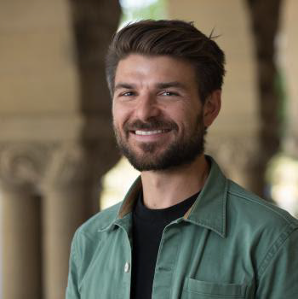 Christian Rose, MD
Assistant Professor Department of Emergency Medicine
Stanford University School of Medicine
Dr. Christian Rose is an Assistant Professor of Emergency Medicine at Stanford University. As a dual-boarded emergency physician and clinical informaticist, he operates at the intersection of clinical medicine, informatics, and innovation. He began to study the effect of technology on medicine during his undergraduate years, obtaining his degree in Physics as well as Science, Technology, and Society. He continued this pursuit in medical school at Columbia University and residency at the University of California, San Francisco (UCSF), where he engaged in various human-centered informatics projects like gene discovery, decision support, and alert fatigue. He completed his informatics fellowship training at Stanford University, where he began his research in deep learning and AI. Dr. Rose strives to improve both patient and physician experiences in medicine, focusing on how information technologies can enhance clinical practice and patient outcomes without losing sight of the essential human aspects of healthcare.
-
 Elizabeth M. Schoenfeld, MD, MS
UMass Chan - Baystate
Dr. Schoenfeld is the VC of Research at UMass Chan-Baystate. She completed her K award in 2023 (Shared Decision Making in the ED for imaging decisions in suspected renal colic) and currently serves as a mentor to several K awardees and clinician-researchers working towards K funding. She has received research funding as PI from NIDA, AHRQ, and various foundations (R03, K, and R34). She is a Decision Editor for Qualitative Methods for Academic Emergency Medicine. Current areas of research and interest include shared decision-making (SDM) with people who use drugs, building trustworthiness, SDM without shared language, supporting EM research, and harm reduction for people who use stimulants. She is more than happy to talk to you about your own research interests, your career, qualitative methods, or any place she could be helpful to you.
-
 Christine Ngaruiya, MD, MSc, DTM&H
Stanford University
Dr. Ngaruiya is an Associate Professor in the Department of Emergency Medicine (DEM) at Stanford University, and the Population and Global Health Research Director for the Department. She completed fellowship in Global Health in the Yale Department of Emergency Medicine in 2015, matriculating with an MSc in Tropical Medicine and International Health, and DTM&H from LSHTM, then joined the faculty at Yale for several years prior to joining the Stanford faculty. She is also a graduate of the NIH Training Institute for Dissemination and Implementation Research in Health (TIDIRH) program, which she was competitively selected for from a national pool of applicants for the 2019-2020 cohort. Her research centers on: Non-communicable Diseases (NCDs), barriers to care, and community-based interventions with a particular focus on Africa. Her past professional work focused on health disparities among underserved populations in the U.S. and Community-Based Participatory Research (CBPR). This work has been funded by Yale University, NIH, USAID, the World Bank, Gates Foundation, and others. In 2021 and 2022, she was among the top 100 federally funded researchers in EM.
Some past honors include: the Emergency Medicine Resident’s Association (EMRA) Augustine D’Orta Award for outstanding community and grassroots involvement, Harambe Entrepreneur Alliance Associate and the 2014 Harambe Pfizer Fellow Award for social entrepreneurship, the 2016 University of Nebraska Outstanding International Alumnus award, the 2018 Society for Academic Emergency Medicine Global Emergency Medicine Academy Young Physician award, and the 2019 Yale School of Medicine Leonard Tow Humanism award. In 2020, she was selected as 1 of 24 women nationally as part of the Stanford-affiliated, Gates Foundation funded WomenLift Health Leadership Cohort.
She has held several national and international leadership positions including with: the SAEM Global Emergency Medicine Academy, the Women Leaders in Global Health (WLGH) conference committee and the Consortium of Universities for Global Health (CUGH) Research Committee. She was also a founding member of the Yale Network for Global Noncommunicable Disease (NGN), which acts as a hub for global NCD work involving the Yale community. Additionally, she served on the research pre-symposium committee for the African Conference on Emergency Medicine in 2014, on the Scientific Committee in 2016, and as the chair for the research pre-symposium committee in 2020. She has sat on a number of NIH panels related to global NCD topics, and has lectured both nationally and internationally on the same.
People List - Grid
-
Sree Natesan, MD, FACEP
Duke University School of Medicine
-
-
-
Hannah Janeway, MD, MSPH
University of California, Los Angeles
-
Christian Rose, MD
Assistant Professor Department of Emergency Medicine
Stanford University School of Medicine
-
Elizabeth M. Schoenfeld, MD, MS
UMass Chan - Baystate
-
Christine Ngaruiya, MD, MSc, DTM&H
Stanford University