The Federal Funding Playbook: Strategies from Successfully Funded EM Researchers (Research Committee-Sponsored)
Federal funding grant application processes such as those through the National Institutes of Health (NIH) have become highly competitive, making early preparation crucial for early investigators. Understanding the administrative and procedural steps for applying for federal funding can greatly enhance success. Program officers (POs) are key players in the funding ecosystem, serving as facilitators and mentors by helping to demystify the process and offering practical advice on which institute would be most appropriate for your grant. Due to recent changes at the NIH that prevent their employees from participating this year, SAEM has invited experienced EM researchers with funding from institutes such as the NIH, Agency for Healthcare Research and Quality (AHRQ), and more to share insights typically provided by program officers. A guided question-and-answer session moderated by an expert will follow, offering ample time for open discussion.
Learning Objectives:
- Identify the different NIH institutes and study sections
- Explain how to contact and communicate with POs
- Map out the timeline for different grants (K, U, R)
- Describe how funded research fits into academic EM career trajectory
Presenters:
- Jody Vogel, MD (she/her/hers)
- Colin F. Greineder, MD, PhD
- Willard W. Sharp, MD, PhD
- Vinay N. Kampalath, MD, DTM&H
- Youyou Duanmu, MD, MPH
- Junaid A. Razzak, MD, PhD
- Bernard P. Chang, MD, PhD
- Manish N. Shah, MD, MPH
- Charles B. Cairns, MD
- Tony MD Rosen, MD, MPH
- Danielle M. McCarthy, MD, MS
- Bory Kea, MD, MCR
- Joseph Miller, MD, MS
- Jeremy Brown, MD
- Catherine Staton, MD MSc PhD
- Christine Ngaruiya, MD MSc DTM&H
-
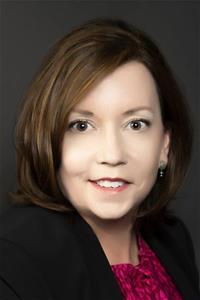
Jody A. Vogel, MD, MSc, MSW
Associate Professor
Stanford University
Dr. Jody A. Vogel, Vice Chair for Academic Affairs in the Department of Emergency Medicine at Stanford University and Secretary-Treasurer for the Society for Academic Emergency Medicine. With a diverse background including social work and emergency medicine, Dr. Vogel has been an active contributor to SAEM since her residency. Her extensive experience includes leadership roles on various committees, task forces, and initiatives within SAEM. Dr. Vogel's goals for advancing SAEM and its members include promoting high-quality education and faculty development, increasing mentorship and research opportunities, encouraging participation of junior faculty and residents, promoting inclusiveness, and strengthening relationships with other emergency medicine organizations. She emphasizes her commitment to fostering academic development and strengthening SAEM's role in emergency care research, education, and grant advocacy. -
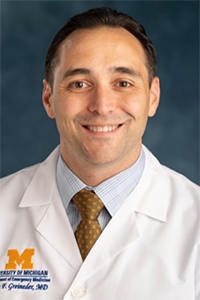
Colin Greineder, MD, PhD
Assistant Professor
University of Michigan
Colin Greineder, MD, PhD, attended the Yale School of Medicine and completed Emergency Medicine residency at the University of Michigan. After a year working in the community, he returned to academia to pursue a PhD in Pharmacology and post-doctoral fellowship at the University of Pennsylvania. Throughout this long period of scientific training, Dr. Greineder continued to work as an attending in a variety of academic and community ERs, including UPenn, Thomas Jefferson, Geisinger Medical Center, and the Crozer-Keystone Health System. He was awarded a K08 Career Development award from the NHLBI and returned to Michigan Medicine in 2018 as a tenure track faculty in Emergency Medicine and Pharmacology. Dr. Greineder’s laboratory focuses on development of novel pharmacologic therapies for the treatment of emergent ischemic, thrombotic, and inflammatory disorders. The primary focus is affinity ligand delivery of biotherapeutics to endothelial cells as a means of restoring their homeostatic functions and elucidating their role in disease pathogenesis. Additional interests include pharmacokinetic modeling, coagulofibrinolytic changes in critical illness, and risk stratification and management of venous thromboembolism. -
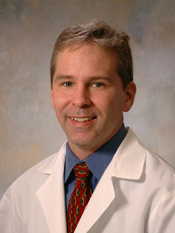
Willard A. Sharp, MD, PhD
Research Learning Series Panelist
University of Chicago
Willard W. Sharp M.D., PhD. is an Associate Professor in the Department of Medicine, Section of Emergency Medicine at the University of Chicago. Dr. Sharp runs an NIH funded basic science laboratory investigating the role of mitochondrial injury and metabolism in cellular injury following cardiac arrest. Recent work has focused on the role of mitochondrial fission and fusion in mediating injury and outcomes in a murine model of cardiac arrest.
Dr. Sharp received his undergraduate degree in biology and history at Wofford College in South Carolina before pursuing his PhD at the University of South Carolina in Biomedical Science. He completed NIH funded post-doctoral work at the University of Illinois at Chicago followed by his MD degree at the University of South Carolina. During his medical training he received a Rotary International Fellowship to spend a year at the John Radcliffe Hospital and Oxford University studying gene therapy. He then completed residency training in Emergency Medicine at the University of Michigan before obtaining a faculty appointment at the University of Chicago.
Dr. Sharp has experience in mentoring pre-doctoral, post-doctoral, residents, and junior faculty and is interested in encouraging young EM trainees to pursue research in basic science. He is co-founder of an unofficial SAEM basic science and translational science interest group for EM trainees and physicians and is a member of the SAEM and ACEP research committees
-
Vinay N. Kampalath, MD, DTM&H
Senior Fellow in Pediatric Emergency Medicine and Global Health
Children's Hospital of Philadelphia (CHOP)
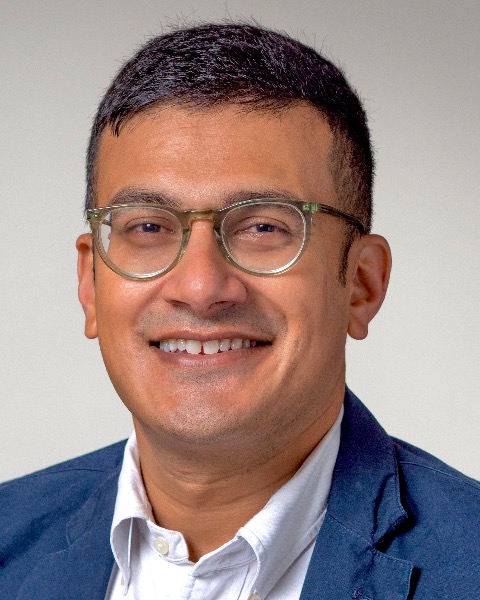
Dr. Vinay Kampalath (moderator) is a senior fellow in PEM and Global Health at the Children's Hospital of Philadelphia (CHOP) and a research fellow at the Geneva Centre for Humanitarian Studies. He completed a pediatrics residency at CHOP, a medical degree at Brown University, and a diploma in tropical medicine and hygiene from the London School of Hygiene and Tropical Medicine. He has clinically worked with displaced populations in Bangladesh, Greece, and Jordan. -
Youyou Duanmu, MD, MPH
Research Officer
Stanford University
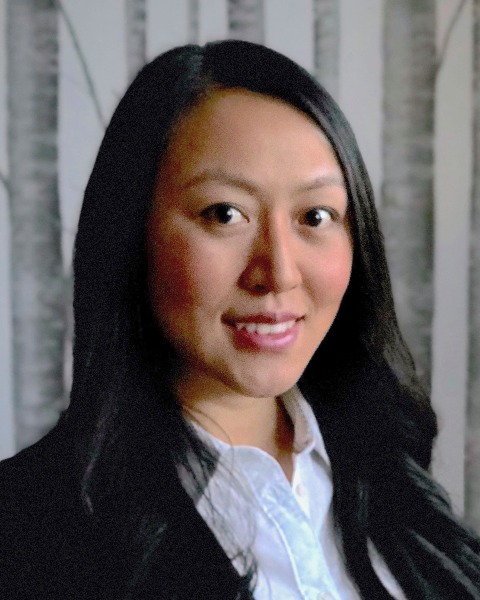
Youyou Duanmu, MD MPH is an Assistant Professor and Co-Director of the Ultrasound Fellowship in the Stanford Emergency Department. Dr. Duanmu completed a two year ultrasound fellowship at Brigham and Women's Hospital and earned a Master of Public Health from the Harvard T.H. Chan School of Public Health in quantitative research methods. Her research focus is in advanced point-of-care cardiac ultrasound, clinical decision rules and medical education and competency assessment. Dr. Duanmu serves as a research mentor to medical students, residents and fellows and is an educator for the Stanford emergency medicine residency research curriculum.
-
Junaid A. Razzak, MD, PhD
-
Bernard P. Chang, MD, PhD
Associate Dean, Faculty Health and Research Career Development
Columbia University
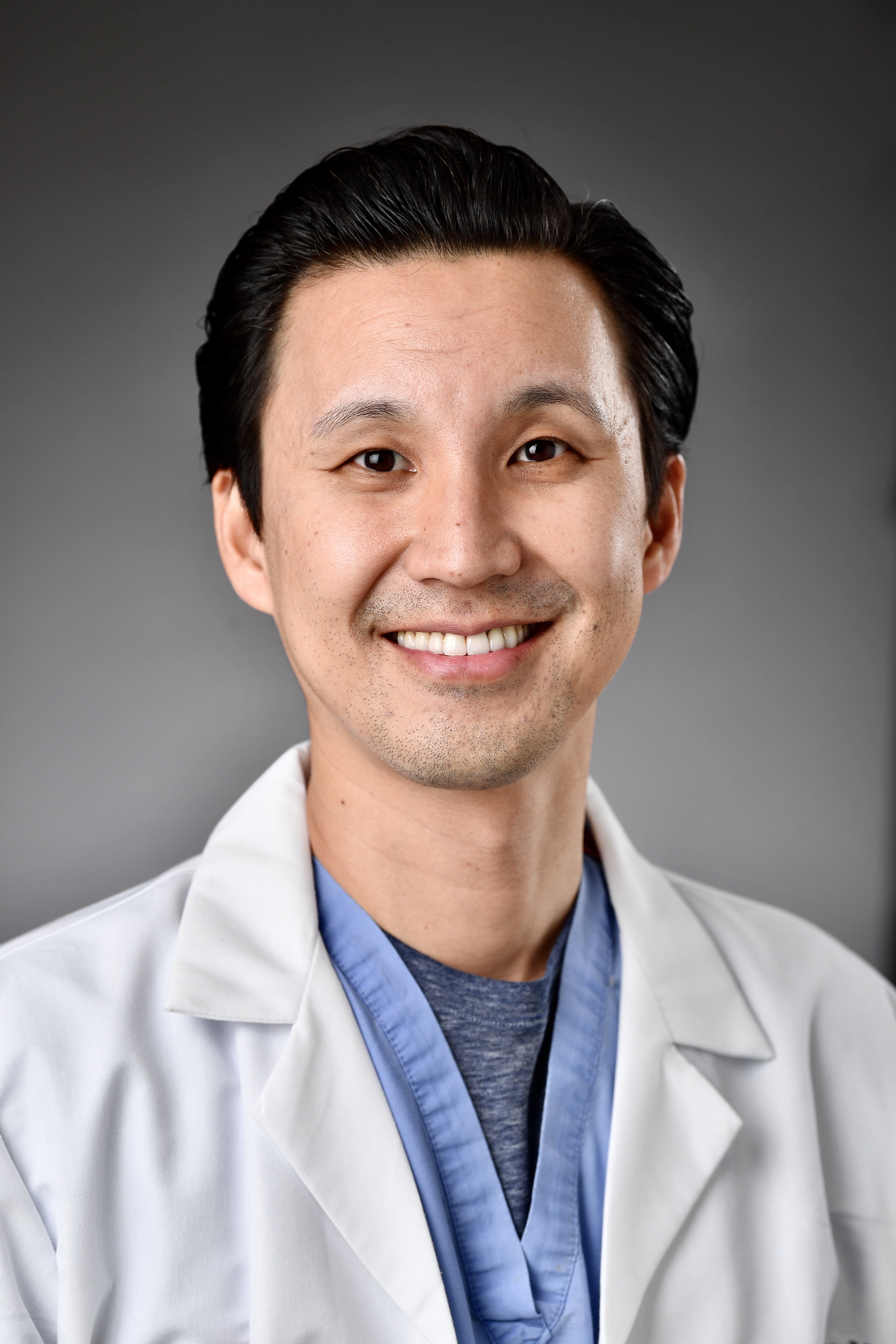
Dr. Bernard P. Chang is the Associate Dean of Faculty Health and Research Career Development at Columbia University. He also serves as Vice Chair of Research in the Department of Emergency Medicine and is the Tushar Shah and Sarah Zion Associate Professor in Emergency Medicine. Trained as a psychologist and emergency physician, his research focuses on neuropsychiatric emergencies and clinician health. He received his PhD from Harvard in psychology, his MD from Stanford, and completed his Emergency Medicine residency training at the Harvard Affiliated Emergency Medicine Residency at Massachusetts General Hospital and Brigham and Women's Hospital.
-

Manish Shah, MD, MPH
Azita G. Hamedani Distinguished Chair of Emergency Medicine
University of Wisconsin-Madison
Manish Shah, MD, MPH, is Professor and Chair of the BerbeeWalsh Department of Emergency Medicine at the University of Wisconsin, where he holds the Azita G. Hamedani Distinguished Chair of Emergency Medicine. Dr. Shah is a national leader in prehospital and geriatric emergency medicine research. His efforts, with funding from NIH, AHRQ, CDC, and HRSA, have helped establish the field of geriatric emergency medicine and advanced the role of paramedics to support community health efforts. He is passionate about developing the next generation of emergency care researchers and research leaders. He led the NIH-funded KL2 Career Development Award program until 2022 and is a mentor on numerous NIH and AHRQ career development awards. Dr. Shah is the Immediate Past President of the SAEM Foundation (SAEMF). -

Charles B. Cairns, MD
Walter H. and Leonore Annenberg Dean; Senior Vice President, Medical Affairs
Drexel University
Charles B. Cairns, MD, is the Walter H. and Leonore Annenberg dean of the College of Medicine and senior vice president for medical affairs at Drexel University. A leader in emergency medicine and critical care education, training, and research, he previously served as dean of the College of Medicine and Health Sciences at the United Arab Emirates University and dean of the College of Medicine and assistant vice president for clinical research at the University of Arizona. He has also been chair of the Department of Emergency Medicine at the University of North Carolina, associate chief of emergency medicine at Duke University, and director of emergency medicine research at the Duke Clinical Research Institute, the world’s largest academic research organization.
Dr. Cairns has served as director of the National Institutes of Health United States Critical Illness and Injury Trials Group and as principal investigator of the Department of Homeland Security National Collaborative for Biopreparedness. He has led COVID-19 research and innovation efforts to understand the acute and longitudinal immune response to severe SARS-CoV-2 infection, including as clinical lead for the National Institute of Allergy and Infectious Diseases COVID-19 Immunophenotyping (IMPACC) study, a member of the Data and Safety Monitoring Board for the National Heart, Lung, and Blood Institute convalescent plasma study, and principal investigator of the Bill & Melinda Gates Foundation project on predicting COVID-19 community infection and recovery.
An honors graduate of Dartmouth College, Dr. Cairns earned his medical degree from the University of North Carolina and completed his residency in emergency medicine and fellowship in cardiovascular research at the Harbor-UCLA Medical Center.
-
Tony Rosen
New York Presbyterian Hospital
-
Danielle M. McCarthy, MD, MS
Northwestern University
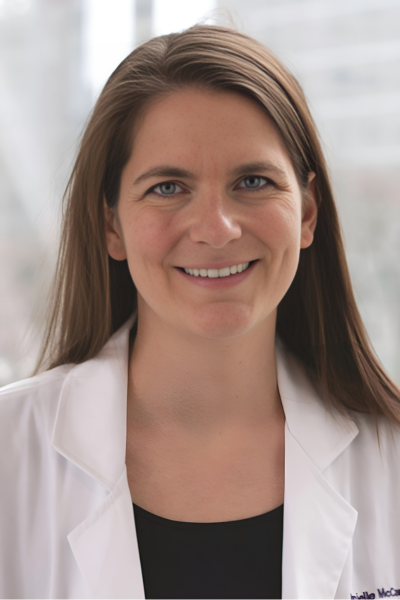
Danielle McCarthy is an Associate Professor and the Vice Chair of Research in the Department of Emergency Medicine at Northwestern University Feinberg School of Medicine. She completed her undergraduate studies at Harvard University followed by medical school at Northwestern University. After finishing residency training at Northwestern in 2010, she completed a National Service Research Award T32 fellowship and earned a Masters degree in Health Services and Outcomes Research. Since completing her training in 2012, she has been funded continuously as PI, Site-PI or Co-I on multiple grants from a range of funding agencies, including the NIH, AHRQ, the FDA and the Emergency Medicine Foundation. She is the current PI of an AHRQ R01 as well as an AHRQ R18.
Dr. McCarthy has content area expertise is in doctor-patient communication in the emergency department, risk communication, and diagnostic uncertainty, as well as methodologic expertise in clinical trials design and qualitative methods. -
Bory Kea, MD, MCR
Oregon Health Sciences University
-
Joseph Miller, MD, MS
Clinical Associate Professor
Henry Ford Health / Michigan State University Health Sciences
I am a Clinical Associate Professor of Emergency Medicine at Henry Ford Health and Michigan State University. I lead the SAEM ARMED course and frequently speaks on statistical methods. My research focuses on the intersection of neurological and cardiovascular emergencies, and I am a principal investigator for a R01 ancillary study to the BOOST-3 trial. -
Jeremy Brown, MD
National Institutes of Health (NIH)
Jeremy Brown, MD, Jeremy Brown is Director of the Office of Emergency Care Research, part of the National Institute of Neurological Disorders and Stroke at the National Institutes of Health. He trained as an emergency physician in Boston, and prior to joining the NIH he worked in the Department of Emergency Medicine at the George Washington University in Washington DC, where he was also the research director, and received R01 funding from the NIH. He is the author of over fifty peer reviewed papers and three books, including two textbooks of emergency medicine, all published by Oxford University Press. His books include Influenza: The Hundred-Year Hunt to Cure the Deadliest Disease in History, published by Simon and Schuster in 2018.
-
Catherine Staton, MD, MSc
Professor in Emergency Medicine, Neurosurgery, & Associate Professor of Global Health
Duke University
Dr. Staton is a Professor in Emergency Medicine (EM) & Neurosurgery & Associate Professor of Global Health with tenure at Duke University. She is the Director of the GEMINI (Global EM Innovation & Implementation) Research Center and the EM Vice Chair of Research Strategy & Faculty Development. Her research integrates innovative implementation methods into health systems globally to improve access to acute care. In 2012, with an injury registry at Kilimanjaro Christian Medical Center, Tanzania Dr. Staton demonstrated 30% of injury patients had at risk alcohol use, providing preliminary data for a K01/Career Development Award. Her K01 award adapted a brief alcohol intervention to the KCMC ED and Swahili and is now being trialed in an NIAAA funded R01 pragmatic adaptive clinical trial. Dr. Staton and her mentor and collaborator Dr. Mmbaga are co-PD of the “The TReCK Program: Trauma Research Capacity Building in Kilimanjaro” to train 12 masters and doctoral learners to conduct innovative implementation and data science projects to improve care for injury patients. Dr. Staton has designed and managed multiple clinical trials in global and US settings from efficacy trials, to pragmatic trials and hybrid implementation trials. Currently, Dr. Staton and GEMINI partners with over a dozen faculty from over 6 low- and middle-income countries to conduct research, has mentored over 150 learners from undergraduate to post-doctoral levels from high, middle and low- income settings and has over 130 manuscripts.
-
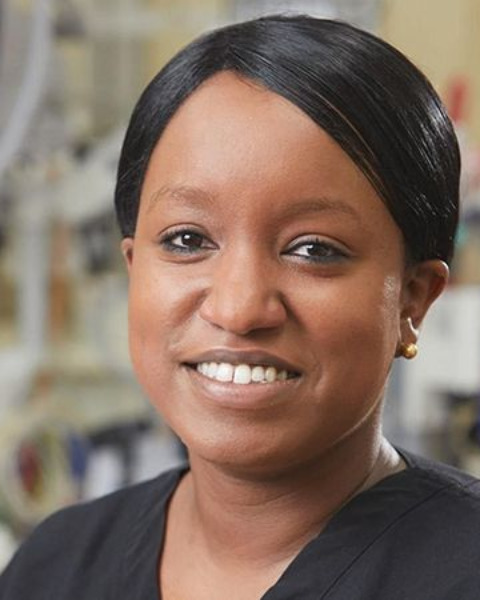
Christine Ngaruiya, MD, MSc, DTM&H
Stanford University
Dr. Ngaruiya is an Associate Professor in the Department of Emergency Medicine (DEM) at Stanford University, and the Population and Global Health Research Director for the Department. She completed fellowship in Global Health in the Yale Department of Emergency Medicine in 2015, matriculating with an MSc in Tropical Medicine and International Health, and DTM&H from LSHTM, then joined the faculty at Yale for several years prior to joining the Stanford faculty. She is also a graduate of the NIH Training Institute for Dissemination and Implementation Research in Health (TIDIRH) program, which she was competitively selected for from a national pool of applicants for the 2019-2020 cohort. Her research centers on: Non-communicable Diseases (NCDs), barriers to care, and community-based interventions with a particular focus on Africa. Her past professional work focused on health disparities among underserved populations in the U.S. and Community-Based Participatory Research (CBPR). This work has been funded by Yale University, NIH, USAID, the World Bank, Gates Foundation, and others. In 2021 and 2022, she was among the top 100 federally funded researchers in EM.
Some past honors include: the Emergency Medicine Resident’s Association (EMRA) Augustine D’Orta Award for outstanding community and grassroots involvement, Harambe Entrepreneur Alliance Associate and the 2014 Harambe Pfizer Fellow Award for social entrepreneurship, the 2016 University of Nebraska Outstanding International Alumnus award, the 2018 Society for Academic Emergency Medicine Global Emergency Medicine Academy Young Physician award, and the 2019 Yale School of Medicine Leonard Tow Humanism award. In 2020, she was selected as 1 of 24 women nationally as part of the Stanford-affiliated, Gates Foundation funded WomenLift Health Leadership Cohort.
She has held several national and international leadership positions including with: the SAEM Global Emergency Medicine Academy, the Women Leaders in Global Health (WLGH) conference committee and the Consortium of Universities for Global Health (CUGH) Research Committee. She was also a founding member of the Yale Network for Global Noncommunicable Disease (NGN), which acts as a hub for global NCD work involving the Yale community. Additionally, she served on the research pre-symposium committee for the African Conference on Emergency Medicine in 2014, on the Scientific Committee in 2016, and as the chair for the research pre-symposium committee in 2020. She has sat on a number of NIH panels related to global NCD topics, and has lectured both nationally and internationally on the same.