The Bleeding Edge: An Update on Hemorrhage Control Therapies in Trauma
Management of hemorrhage in trauma patients is a critical skill in the practice of emergency medicine. Recent advances in the area have deepened our understanding of the complexity of hemorrhage and given us more powerful tools to use in its treatment with many more on the horizon. These advances include a more complete understanding of the contributions of coagulopathy and endotheliopathy and the complex interplay with traumatic brain injury. We have also learned about the effectiveness of novel transfusion and blood product resuscitation strategies and mechanical hemostatic methods such as complete and partial REBOA (resuscitative endovascular balloon occlusion of the aorta) and SAAP (selective aortic arch perfusion) to support perfusion of vital organs.
This session will be a discussion with experts in the field, providing updates on recent advances in our understanding and management of traumatic hemorrhage, as well as previews of upcoming breakthroughs. The format will include brief updates from experts in several key areas, followed by discussion and audience questions. Audience members can expect to learn the latest updates and promising future therapies from the research world in hemorrhage control for trauma.
Presenters:
- Francis X. Guyette, MD, MS, MPH, FACEP, FAEMS
- Christopher Winckler, MD, LP
- Austin Johnson, MD, PhD
- Kalev Freeman, MD PhD FACEP
- Nathan J. White, MD, MS, FACEP, DRTM
-
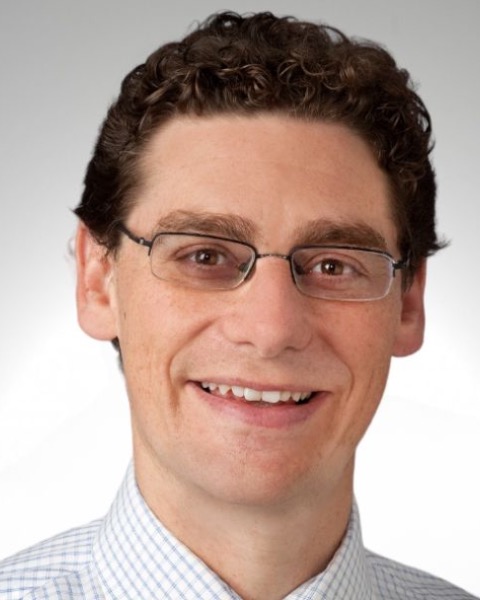
Francis X. Guyette, MD, MS, MPH, FACEP, FAEMS
University of Pittsburgh
Dr Guyette has spent more than 30 years in Emergency Medicine and EMS and devotes his academic career to acute resuscitation research. He is a Professor of Emergency Medicine at the University of Pittsburgh and serves as the Medical Director for STAT MedEvac the nation’s largest, academic, non-profit critical care transport group. His areas of expertise are in the recognition of shock, prehospital resuscitation, and clinician decision support. He has examined these issues with funding from the Department of Defense, National Institutes of Health, National Institute for Occupational Health and Safety, National Highway and Transportation Safety Administration, National Association of EMS Physicians, and DARPA. Dr. Guyette is the Co-PI of the Linking Investigators in Trauma and Emergency Services (LITES) Network.
-
Christopher Winckler, MD, LP
UT Health San Antonio
C. J. Winckler serves as the deputy medical director for the San Antonio Fire Department, medical director for North Channel EMS/Wilson County ESD, and Texas Emergency Medical Task Force Region 8. He is an associate clinical professor at the University of Texas San Antonio Health Science Center and Texas A&M College Station. Winckler provides daily clinical supervision to over 2000 EMS providers. Dr. Winckler and multiple stakeholders, worked tirelessly to deploy whole blood in San Antonio. This is the first-time whole blood was available to save prehospital patients in hemorrhagic shock, for an entire American metropolitan city.
-
Austin Johnson, MD, PhD
University of Utah
Dr. Johnson is an Associate Professor and the Vice-Chair of Research in the Department of Emergency Medicine at the University of Utah. Dr. Johnson received his PhD in Neuroscience and his MD from the University of Wisconsin Madison, followed by residency training in Emergency Medicine at Denver Health in Denver, CO. Dr. Johnson practicing clinical emergency medicine at the University of Utah where he runs a translational research lab focused on the development of new therapies for patients suffering from trauma, cardiac arrest, and stroke. Dr. Johnson's laboratory work has led to over 10 filed patents and over 50 publications. His grant funding has included the Department of Defense, the National Institute of Health, the Zoll Foundation, and the Food and Drug Administration.
-
Kalev Freeman, MD PhD FACEP
University of Vermont
Kalev Freeman M.D., Ph.D. is a physician-scientist and associate professor at the University of Vermont with expertise in emergency medicine and trauma. His lab studies the endothelial cell responses to injury that lead to thrombo-inflammation, seeking novel targets for endothelial restoration that may ultimately improve recovery in trauma patients.
-
-.jpg?sfvrsn=3709756b_1 "Nathan J. White, MD, MS, FACEP, DRTM (he:him:his)")
Nathan J. White, MD, MS, FACEP, DRTM
Harborview Medical Center/University of Washington
Nathan White M.D., M.S., is Associate Professor and Associate Chair Research, Department of Emergency Medicine and Associate Dean of Research and Graduate Education at the University of Washington, Seattle. WA USA. Dr. White also holds adjunct appointments with the Departments of Bioengineering and Mechanical Engineering and is the inaugural director of the Resuscitation Engineering Science Unit (RESCU), an interdisciplinary research center focused on translating new technology for resuscitation of critical illness and injury. In addition, Dr. White is an attending physician at Harborview Medical Center, a busy level I trauma center admitting almost 6,000 trauma patients every year from the Pacific Northwest and a flight doctor with Airlift Northwest.
Dr. White focuses his research on the blood coagulation response to acute hemorrhage and resuscitation with an emphasis on fibrinogen biochemistry. Dr. White works within cross-disciplinary teams of clinicians, basic scientists, and engineers to focus on problems germane to bleeding emergencies including; Identifying novel post-translational oxidative modifications of fibrinogen and their contribution to traumatic coagulopathy; Identifying the role of platelet mechanobiology in bleeding and outcomes after trauma; Developing new hemostatic agents, including fibrinogen concentrates, and bioengineered synthetic hemostats; and the effect of immunomodulation on trauma-induced inflammation and coagulopathy. Dr. White has received the Young Investigator Award from the American Heart Association Resuscitation Science Symposium twice along with the best basic science award and young investigator award from the Society of Academic Emergency Medicine.