Retrospective Chart Review Research: Get It Right to Get It Published (Evidenced-Based Healthcare & Implementation and Educational Research Interest Groups Sponsored)
Chart or medical records review studies rely on existing patient medical records to link cause and effect. Relatively easy to perform with plentiful clinical research material data readily available in the patient’s chart, they are a popular type of research platform. When done properly, they are relatively easy to get published but there are many potential pitfalls in performing these studies. Researchers must better understand the processes of performing these studies and getting their research published. We will show how a well-done medical record review study should be done to insure timely publication.
Medical record data may have poor quality due to subjective descriptions made by a variety of clinicians. Reviewers may use subjective standards to determine the presence of the risk factor and outcome. An implicit medical record review study does not have a clear-cut protocol for reducing these sources of bias. Explicit medical record review studies use clearly defined protocols and objective measures in reviewing medical charts as described by Gilbert and Lowenstein (Annals of Emergency Medicine, March 1996) and Kaji et. al. (Annals of Emergency Medicine, April 2014). This includes review done in a blinded manner with clearly determined descriptors and reviewer training and measurement of inter-rater reliability.
We will ask the small groups to give three items that need to be modified in each three hypothetical medical record review studies for them to become acceptable for publication. These will include one that is publishable in its current form, a second that can be improved and could then be published and a third study that is clearly not publishable and cannot be fixed for publication.
Presenters:
- Dan Mayer, MD, FACEP, FAAEM
- Carly Eastin, MD
- Peter Chuanyi Hou, MD
- Andrew C. Meltzer, MD, MS
- Michael Gottlieb, MD
- Martin P. Wegman, MD, PhD
-
-.jpg?sfvrsn=b7b09fcd_1 "Dan Mayer, MD, FACEP, FAAEM (he:him:his)")
Dan Mayer, MD, FACEP, FAAEM
Albany Medical College
Dan Mayer, MD has been an Emergency Medicine physician for the past 46 years. He has been teaching for the past 32 years and practicing Emergency Medicine for the past 37 years in a variety of hospital settings including academic urban emergency departments and rural community hospital emergency departments. He was an attending Emergency Medicine physician at Albany Medical Center Hospital from 1987 until his retirement in 2014. He also taught evidence-based medicine, medical decision-making and Emergency Medicine at Albany Medical College. He has taught medical students, other health science students, residents and attending physicians. He has been board certified in Emergency Medicine since 1984. He is currently retired from active clinical practice and is active in publishing medical research in Emergency Medicine and teaching EBM to dental residents. He is an Associate Editor for the Western Journal of Emergency Medicine and JACEP Open. He has been an outstanding peer-reviewer for Academic Medicine, JACEP Open, Western Journal of Emergency Medicine, Academic Emergency Medicine, and Annals of Emergency Medicine.
-
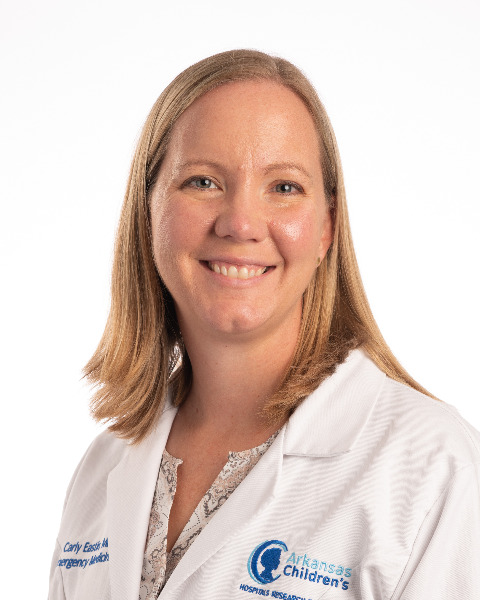
Carly Eastin, MD
University of Arkansas
Carly Eastin, MD, is an Associate Professor of Emergency Medicine at the University of Arkansas for Medical Sciences in Little Rock, AR, where she works clinically and is core faculty at the Level 1 Trauma and tertiary care facility and long-standing emergency medicine residency. She also holds a secondary appointment in the Department of Pediatrics as she works clinically at Arkansas Children's Hospital. She serves SAEM in several capacities: as chair of the Evidence Based Healthcare and Implementation Interest Group, as a member of the Research Committee, and has presented several didactics at the SAEM Annual Meeting.
-

Peter Chuanyi Hou, MD
Harvard Medical School
I am dual-boarded in emergency medicine and critical care. My clinical interest is the care of the critically ill ED patients who require resuscitation and critical care. I am a clinical expert, innovator, educator, and researcher. I have contributed to sepsis, ARDS, and COVID-19 research which synergistically aligned with my clinical interest in sepsis and ARDS management. I have participated in many multi-centered trials and studies and co-authored 5 articles in New England Journal of Medicine and 2 articles in the Journal of American Medical Association. I led the formation of the Brigham Critical Care Research Collaborative and Consortium (BCCRCC). I was a Co-Lead Investigator for the Acute Lung Injury Group of New England Clinical Center (ALIGNE CC) and a Steering Committee member of the Prevention and Early Treatment of Acute Lung injury (PETAL) Network.
I was a key member to the creation of the Division of Emergency Critical Care Medicine in 2016. With the establishment of the Brigham and Women's Hospital Emergency Medicine and Critical Care Medicine fellowship, BCCRCC, and ED and ICU clinical and research operations portfolios, I have greatly contributed to elevating our division within our department, hospital, and Mass General Brigham. -
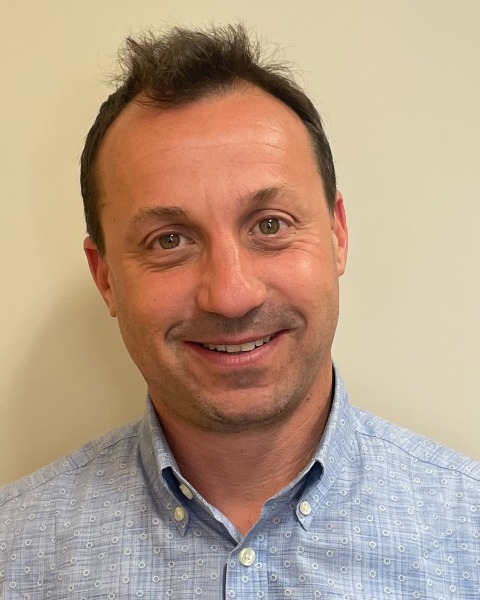
Andrew C. Meltzer, MD, MS
George Washington University School of Medicine and Health Sciences
Andrew C. Meltzer, MD MS FACEP is a Professor of Emergency Medicine and the Chief of the Clinical Research Section at the George Washington University School of Medicine. Dr. Meltzer completed his MD at SUNY Downstate, residency in Emergency Medicine at the University of Maryland and R Adams Cowley Shock Trauma Center, and his fellowship in Clinical Research at the University of Maryland. He is a Fellow of the American College of Emergency Physicians (ACEP) and member of the ACEP Clinical Policies Committee and the Society of Academic Emergency Medicine (SAEM) Research Committee. He was an author of the GRACE-2 Guidelines for Abdominal Pan and served as a member of the External Oversight Board for the SIREN research network. As part of an international team, he developed guidelines for the acute management of gastrointestinal bleeding. He was the principal investigator on the NIH-funded multi-center randomized control trial on medical expulsive therapy for renal colic. In addition, he was the PI on a multi-center trial examining novel way to diagnose gastrointestinal hemorrhage, the site PI on the CDC Recover grant, and the overall PI for the HYPERACT trial examining acute management of patients with respiratory distress. He has experience working with two successful technology companies as a chief medical officer. As of this writing, Dr. Meltzer had over 60 peer-reviewed authorships indexed in PubMed with over 1500 citations.
-
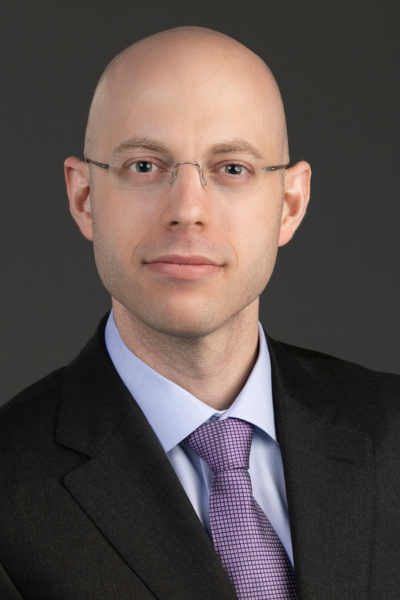
Rush University Medical Center
Michael Gottlieb, MD is the Vice Chair of Research and Director of the Emergency Ultrasound Division at Rush University Medical Center. He is Past-Chair of the ACEP Ultrasound Section and Past-Chair of the AAEM Ultrasound Section. He has authored over 500 peer-reviewed publications and is an Editor for Academic Medicine, The Annals of Emergency Medicine, The Western Journal of Emergency Medicine, The American Journal of Emergency Medicine, and Academic Emergency Medicine Education and Training, as well as the Social Media Editor for Academic Emergency Medicine. He is Past-Chair of the CORD Academy for Scholarship, Past-Chair of the SAEM Education Summit, Past-Chair of the CORD Education Committee, Past-Chair of the CORD Best Practices Subcommittee, and a nationally-recognized speaker and educator. His academic interests include medical education, ultrasound, infectious diseases, heart failure, and diversity, equity, and inclusion.
-
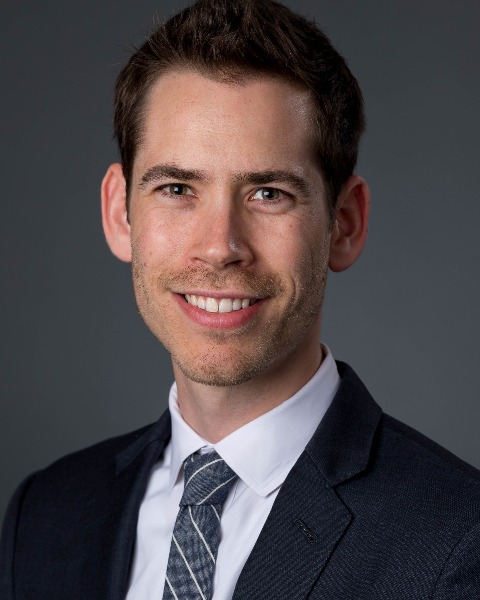
Martin P. Wegman, MD, PhD
HCA Florida Orange Park Hospital
Martin Wegman, MD, PhD is a practicing emergency physician, population-health scientist, and research director at HCA FL Orange Park Hospital. He is also the inaugural Senior Research Fellow at the American College of Emergency Physicians where he provides strategic direction for the College's research portfolio, including the annual research conference, research training course and research networks. In these roles, he serves as principal investigator on multiple funded projects.
He completed his MD-PhD training program at the University of Florida, with graduate work in epidemiology and healthcare policy. He then completed a post-graduate clinical research fellowship at Yale School of Medicine and his emergency medicine residency training at Yale and the University of North Carolina. He has been published in Lancet Global Health, JAMA, Health Affairs, and Medical Care, and funded by the NIH, FDA, Doris Duke Foundation, and the AMA - with awards totaling in excess of $1M. He has expertise in research methodology, including quasi-experimental design and experience in analyzing large healthcare datasets to inform healthcare practice and policy.