
Playing Pandora: How Humans Can Work with Artifical Intelligence to Deliver the Best Possible Emergency Care (Informatics and Data Sciences IG)
Playing Pandora: How Humans Can Work With Artificial Intelligence to Deliver the Best Possible Emergency Care (Informatics and Data Science Interest Group Sponsored) The paradigm shift towards integrating Artificial Intelligence (AI) in healthcare is paving the way for a new era in emergency care, significantly impacting decision-making, patient outcomes, and overall efficiency. However, the union of human intelligence with AI raises critical questions surrounding best practices, ethics, and training. This panel discussion aims to delve into the multifaceted dimensions of this integration in emergency settings.
We have curated a distinguished panel of academicians, practitioners, and AI ethics experts who will present a range of perspectives based on real-world experiences and emerging research. Through an engaging dialogue, the panel will explore the optimum collaboration between humans and AI, addressing challenges, showcasing successful models, and elucidating the essential competencies for emergency medicine practitioners in the evolving landscape. Attendees will walk away with a deeper understanding of the dynamics of AI in emergency care, actionable insights for fostering a collaborative environment, and a clear roadmap to navigate the ethical and operational intricacies.
Presenters:
- Carl Preiksaitis, MD
- Christian Rose, MD
- Gabrielle Bunney, MD
- Kamna S. Balhara, MD, MA
-

Carl Preiksaitis, MD
Clinical Instructor
Stanford University
Dr. Carl Preiksaitis is a Medical Education Fellow and Clinical Instructor in the Department of Emergency Medicine at Stanford University. Dr. Preiksaitis completed his medical training at New York University School of Medicine and a residency in emergency medicine at Stanford. His scholarly interests include digital technology and medical education, reproductive healthcare in the emergency department, and healthcare innovation. He is currently pursuing a master’s degree in medical education at the University of Cincinnati.
-
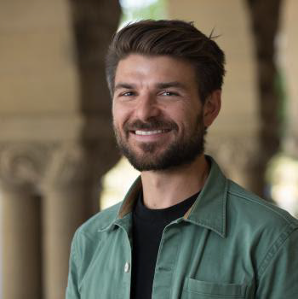
Christian Rose, MD
Assistant Professor Department of Emergency Medicine
Stanford University School of Medicine
Dr. Christian Rose is an Assistant Professor of Emergency Medicine at Stanford University. As a dual-boarded emergency physician and clinical informaticist, he operates at the intersection of clinical medicine, informatics, and innovation. He began to study the effect of technology on medicine during his undergraduate years, obtaining his degree in Physics as well as Science, Technology, and Society. He continued this pursuit in medical school at Columbia University and residency at the University of California, San Francisco (UCSF), where he engaged in various human-centered informatics projects like gene discovery, decision support, and alert fatigue. He completed his informatics fellowship training at Stanford University, where he began his research in deep learning and AI. Dr. Rose strives to improve both patient and physician experiences in medicine, focusing on how information technologies can enhance clinical practice and patient outcomes without losing sight of the essential human aspects of healthcare.
-
Gabrielle Bunney, MD
Stanford University
Dr. Gabrielle Bunney is an Innovation fellow in the department of Emergency Medicine at Stanford. She has a passion for using artificial intelligence (AI) models to support emergency medicine care delivery and efficiency. She has worked on projects using machine learning models to predict early seizures after intracerebral hemorrhage and identify patients for a hospital’s geriatric intervention program aimed to avoid hospital admission. Her current research projects are focused on using artificial intelligence to select patients efficiently and equitably for an early electrocardiogram to detect myocardial infarction. -

Kamna S. Balhara, MD, MA, FACEP
Associate Professor of Emergency Medicine
Johns Hopkins University
Dr. Kamna Balhara is an associate professor of emergency medicine (EM) at the Johns Hopkins University School of Medicine, and holds a dual appointment as associate professor in Medicine, Science, and the Humanities at the Johns Hopkins Zanvyl Krieger School of Arts and Sciences. After obtaining a master’s degree in French Cultural Studies from Columbia University, she completed medical school and residency at Johns Hopkins, serving as chief resident. She served in residency program leadership at the University of Texas San Antonio and subsequently at Johns Hopkins.
Dr. Balhara is an innovator in the health humanities and has experience with implementing humanities curricula for medical students, residents, and faculty from across specialties. She is a founder and co-director of the Health Humanities at Hopkins EM initiative, which offers equity-focused and humanities-based programming to institution, community, and national audiences. She also directs a unique longitudinal interdisciplinary institution-wide health equity and humanities track for residents and fellows across Johns Hopkins, and directs the Health Humanities Fellowship. She has been invited to speak to international audiences on the humanities in medicine and was selected as a Harvard Macy Institute Art Museum-Based Health Professions Education Fellow.
Her scholarly interests revolve around equity and inclusion in clinical and learning environments. She has authored multiple publications on graduate medical education, humanities, social determinants of health, and disparities in health care access, and has developed tools and resources for other educators seeking to apply the humanities towards equity in health care and health professions education. Her work has been funded by the Association of American Medical Colleges (AAMC), the Josiah Macy Foundation, the National Endowment for the Humanities, and the Emergency Medicine Foundation. She serves on the steering committee for the National Health Humanities Consortium, and is a member of the editorial board of the SAEM journal Academic Emergency Medicine.