Improving Survival in Intracerebral Hemorrhage: State-of-the-Art Strategies and Research Targets (Neurologic EM Interest Group-Sponsored)
Stroke is the second leading cause of death and the leading cause of long-term disability, significantly impacting quality of life in the United States. Hemorrhagic stroke accounts for 10-20% of all strokes, with the highest rates of morbidity and mortality. Of hemorrhagic strokes, 70-80% are intracerebral hemorrhages (ICH), and the remaining 20-30% are subarachnoid hemorrhages. This didactic session will provide emergency physicians with updated information on the assessment and management of intracerebral hemorrhage patients. Topics will include advances in hematoma expansion mitigation, risk stratification, and prognostication, hyperacute/initial management strategies for ED patients, and palliative care approaches for ICH patients in the emergency department.
Learning Objectives:
- Review Current Best Practices: experts will summarize the latest evidence-based strategies for prehospital and ED management of intracerebral hemorrhage
- Identify Gaps in Care: Highlight areas where current practices fall short and discuss the challenges in improving survival
- Explore Innovative Treatments: Present emerging therapies and technologies that show promise in improving patient outcomes
- Develop a Research Agenda: Outline key research questions and priorities that need to be addressed to advance the field of intracerebral hemorrhage care.
Presenters:
- Andrea Lauren Klein, MD, MPH
- Katherine D. Mayes, MD, PhD (she/her/hers)
- Joshua N. Goldstein, MD
- Charles R. Wira, MD
- Peter D. Panagos, MD
- Joseph Miller, MD, MS
- Christopher Lewandowski, MD
- Kyle A. Hultz, PharmD
- Matthew T. Ball, MD
-

Andrea Lauren Klein, MD, MPH
Carilion Clinic-Virginia Tech Carilion School of Medicine
Dr. Klein is a second year emergency medicine resident at Virginia Tech Carilion in Roanoke, Virginia. She completed her undergraduate training at the University of California, San Diego, where she earned an honors BS in biochemistry and cell biology, specializing in genetic engineering and neuroscience. She then attended The George Washington University in Washington, DC for a combined MD/MPH degree, and completed her thesis on differences in stroke incidence, protocols, and outcomes by zip code in US urban centers. Dr. Klein has comprehensive experience teaching at the undergraduate and graduate level (structural biochemistry and molecular genetics), performing and directing basic, translational, and clinical neuroscience research, and presenting at the national and international levels, which has garnered her several major awards and fellowships. Her current work focuses on optimizing stroke protocols within VTC and studying stroke outcomes in the region. After graduating residency, Dr. Klein will complete a fellowship in critical care medicine within the Department of Anesthesiology at UC San Diego under a T-32 grant with which she will continue her stroke research.
-

Katherine D. Mayes, MD, PhD
Virginia Tech Carilion School of Medicine
Katherine Dickerson Mayes, MD, PhD is an Assistant Professor and Core Faculty of Emergency Medicine at the Virginia Tech Carilion School of Medicine. She attended medical school at Stanford University prior to completing her residency at the Harvard Affiliated Emergency Medicine Residency program at Mass General Brigham, where she served as chief resident. Her research interests include both the treatment of neurologic emergencies and social determinants of health.
-

Joshua N. Goldstein, MD
Harvard Medical School
Dr. Goldstein is an emergency physician with expertise in neurologic emergencies. He received his M.D. and Ph.D. from the University of Connecticut in 2000, and completed his residency at the Harvard Affiliated Emergency Medicine Residency in 2005. He then completed a research fellowship in Vascular and Critical Care Neurology at Massachusetts General Hospital and Brigham & Women’s Hospital. He is currently the Vice Chair for Faculty Affairs in the Department of Emergency Medicine at Massachusetts General Hospital; and a Professor of Emergency Medicine at Harvard Medical School.
He is a Fellow of the Neurocritical Care Society, the American Heart Association, the American College of Emergency Physicians, and the American Academy of Emergency Medicine.
Dr. Goldstein manages a clinical research program integrating neurology, hematology, neurocritical care, and emergency medicine. His team is funded by NIH, foundations and industry. He has served as an invited speaker at many national and international forums, coauthored the AHA Guidelines on Intracerebral Hemorrhage, and has published over 300 research articles, reviews, and book chapters. Finally, he co-directs a CME course on Neurologic Emergencies (the largest of its kind) that draws over 180 participants from across the world annually. -
Charles R. Wira, MD
Yale University School of Medicine
Dr. Wira is board certified in Internal and Emergency Medicine with specialization in Stroke and Emergency Critical Care. He provides clinical care in the Yale Department of Emergency Medicine (DEM) and also for the Division of Vascular Neurology in the Department of Neurology. He has held volunatary leadership positions with the AHA/ASA, inclusive of serving on the Leadership Committee of the Stroke Council, and past served as Chair of the State of Connecticut Stroke Task Force at the CT Department of Health. Dr. Wira performs research in the areas of stroke, sepsis, and cardiac arrest, and helps operate the Yale SIREN Hub, implementing phase II/III clinical trials of the NIH funded SIREN network. -
Peter D. Panagos, MD
Washington University in St. Louis
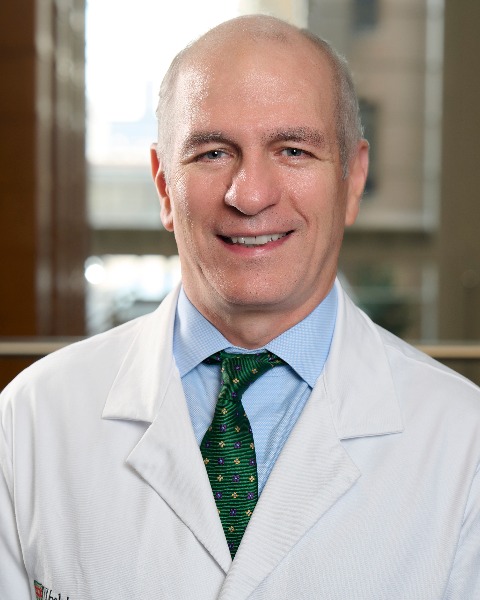
Dr. Panagos is currently Executive Vice Chair and Professor of Emergency Medicine and Neurology at Washington University in St Louis. He is a 1987 graduate of Dartmouth College. In 1994, he completed his medical education at Emory University. Following a year of surgical training at Naval Medical Center San Diego, he graduated and received his wings as a Naval Flight Surgeon in Pensacola, Florida. From 1996-1999, he was stationed in Okinawa, Japan from with the 3rd Marine Aircraft Wing. In 2002, he completed a residency in Emergency Medicine at the University of Cincinnati and subsequently completed a Neurovascular Emergencies/Stroke Fellowship at the same institution in 2003. At Washington University, he has served as PI for multiple NIH and Industry funded clinical trials including current Co-PI of NINDS StrokeNet (RCC 28). Starting in December 2023, he will serve as main PI of NIH/NINDS RCC 28 (MARCC), the largest national stroke trial network, StrokeNet. He is the Director of Neurovascular Emergencies in the Division of Emergency Medicine and Co-Director of the Barnes-Jewish Hospital/Washington University Stroke Network. He has severed in multiple leaderships for the AHA/ASA including Chair of Mission: Lifeline Stroke, the Emergency Neurovascular Care Committee (ENCC) and is the immediate past Chair of the ASA Stroke Council Leadership Committee. He is Associate Editor of Academic Emergency Medicine and an Emergency Medicine Oral Board Examiner.
-
Joseph Miller, MD, MS
Clinical Associate Professor
Henry Ford Health / Michigan State University Health Sciences
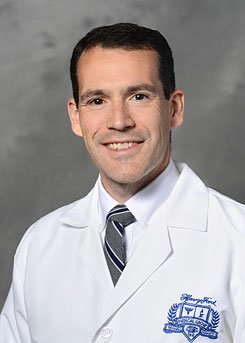
I am a Clinical Associate Professor of Emergency Medicine at Henry Ford Health and Michigan State University. I lead the SAEM ARMED course and frequently speaks on statistical methods. My research focuses on the intersection of neurological and cardiovascular emergencies, and I am a principal investigator for a R01 ancillary study to the BOOST-3 trial. -

Christopher Lewandowski, MD
Henry Ford Hospital, Wayne State University
Christopher A. Lewandowski, MD, FACEP, FAAEM, is board-certified in emergency and internal medicine. He received his BS degree in Chemistry from Marquette University - Milwaukee in 1976 and his MD from the Medical College of Wisconsin – Milwaukee in 1982. After 2 years in the National Health service Corp, he completed residency at Henry Ford Hospital in Emergency Medicine and Internal Medicine in 1988.
Dr. Lewandowski is currently the Executive Vice Chair for Academic Affairs and the former Residency Program Director for the Department of Emergency Medicine at Henry Ford Hospital. He is a Clinical Professor of Emergency Medicine at Wayne State University and a member of the Ford Acute Stroke Team. His primary area of interest in research is in the acute treatment of Stroke and Neurological Emergencies. He was one of the original t-PA Stroke Study Investigators. His ongoing research includes participation in multiple trials sponsored by The National Institute of Neurological Disorders and Stroke (NINDS) through the Neurological Emergencies Treatment Trials (NETT) Network and the SIREN Network, as well as PTSD development among trauma survivors. -

Kyle A. Hultz, PharmD
Memorial Hospital West
I am a residency trained emergency medicine clinical pharmacy specialist currently practicing as a clinical coordinator at Memorial Hospital West with experience working in both large and small health systems in Florida, Connecticut, New York, and Pennsylvania.
I am passionate about bedside patient care, customer satisfaction, multi-disciplinary continuing education, process improvement, and enhancing healthcare outcomes by optimizing clinical practice and the use of electronic medical records.
My areas of clinical interest include resuscitation, anticoagulation and management of antithrombotic associated bleeding, neurologic emergencies, and cardiovascular disease.
My goal is to provide a pharmacist's perspective on the management of acute events and how patients experience the continuum of care from the Emergency Department to hospital discharge with the ultimate goal of returning to a high quality of life. -

Matthew T. Ball, MD
Henry Ford Health System
Matthew Ball, MD, FAEMS graduated from the University of Cincinnati College of Medicine in 2016 and completed Emergency Medicine Residency at Henry Ford Hospital in 2019 and fellowship in Emergency Medical Services at The Ohio State University in 2020. Since then, he has served as faculty at Henry Ford Hospital's Emergency Medicine Residency program with an appointment as Clinical Assistant Professor at the Wayne State University School of Medicine, and as fellowship director for the very recently ACGME approved Emergency Medical Services Fellowship at Henry Ford Hospital. Outside of the hospital environment, he serves as a medical officer on the MI-1/MN-1 DMAT, a member of the Detroit East Medical Control Authority (DEMCA) board after completing a 2 year term as deputy medical director at the end of 2023, and as Lead ED Physician Consultant for the Henry Ford Health Mobile Integrated Health (MIH) program. Research interests include care of time sensitive disease processes in the out of hospital environment, EMS ultrasound, EMS workforce issues, and medical education.