How to Recruit, Train, and Keep Advanced Practice Providers in Emergency Medicine
Physician assistants (PAs) and Nurse Practitioners (NPs), commonly referred to as Advanced Practice Providers (APPs), are common in modern day emergency departments (EDs). An ACEP Now article writes that the most effective ED patient flow model appears to favor teams of emergency physicians and PAs/NPs. They are now utilized in low acuity treatment areas, high acuity treatment areas, triage, observation units and more. However, finding the right APP is often a challenge. Where do you recruit them? Training and onboarding APPs is also a significant investment in time and money. What does it mean if they have postgraduate training? APP retention is also vital because, if your ED culture and work environment aren’t satisfying, you’ll have a revolving door of APPs leaving after you’ve invested time and money into them. Join these speakers, experts in the APP workforce, for an interactive discussion as they discuss ways to 1) find and recruit APPs to your ED, 2) onboard, train and supervise APPs in emergency medicine, and 3) retain them as part of your ED workforce.
Presenters:
- Fred Wu, MHS, PA-C
- Sharon Chekijian, MD, MPH
- Elizabeth S. Temin, MD, MPH
-
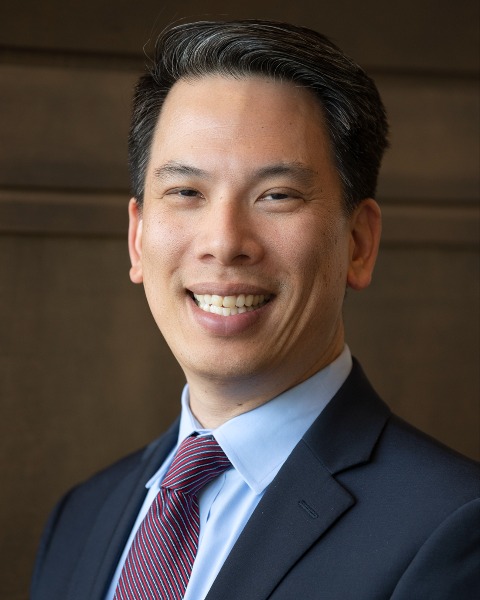
Fred Wu, MHS, PA-C
UCSF Fresno
Fred Wu, MHS, PA-C has been an emergency medicine PA for 20 years. He is the founding program director of the Emergency Medicine PA Residency at the University of California San Francisco – Fresno and the Lead APP in the Department of Emergency Medicine. In addition to his clinical duties, Mr. Wu is also an educator and researcher with professional interests in medical education, EMS, wilderness medicine and emergency department operations.
-
Sharon Chekijian, MD, MPH
Yale School of Medicine
Dr. Chekijian joined the Yale School of Medicine faculty in 2007 where she works full time as an Associate Professor in the Department of Emergency Medicine. She is faculty member in the Section of Global Health and International Emergency Medicine as well as in the Section of Administration. She has served as the inaugural Medical Director of patient experience since 2011. She is also the Medical Director of the Physician Assistant and Nurse Practitioner group in the Department of Emergency Medicine. Dr. Chekijian is a seasoned educator and is the founding Medical Director of the APP residency program which admitted its 1st cohort in 2015. She completed the Yale Medical Education Fellowship in 2014.
Her research interests lie in global emergency medicine and include emergency care systems' development in low and middle-income countries, unintentional injury prevention in low and middle-income countries, as well as stroke and cardiac care in low and middle-income countries. Dr. Chekijian has led and participated in projects in the Republic of Armenia, Uganda, and Iraq. She has consulted for the World Bank and the US Department of State. She is an active member of the Stroke Initiative Advisory Task-Force for Armenia (SIATA). Dr. Chekijian was awarded a Fulbright in 2020 for her work to improve emergency care in Armenia by the establishment of a new emergency medicine residency program in cooperation with the National Institutes of Health of Armenia and supported from a research standpoint by the School of Public Health at the American University of Armenia.
She is deeply committed to patient experience, communication and humanism in medicine. Dr. Chekijian co-produced a film that addresses human rights as it relates to the Armenian Genocide of 1915 under the working title “The Hidden Map” that premiered at the Toronto Pomegranate Film Festival in 2019.
-
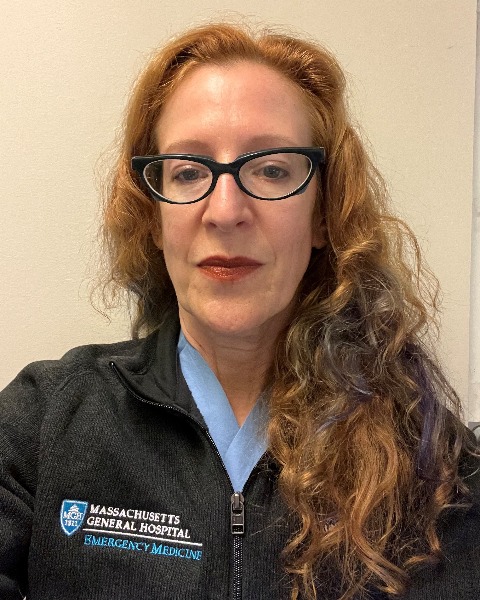
Elizabeth S. Temin, MD, MPH
Harvard Medical School/Massachusetts General Hospital
I am an Emergency Physician at Massachusetts General Hospital (MGH). I completed my Emergency Medicine Residency at Boston Medical Center in 2004. I then went on to complete a fellowship in Emergency Medical Services at Boston EMS in 2006, during which I obtained my MPH from Boston University School of Public Health. I joined the faculty at MGH in July 2006 where I provide clinical care, supervise trainees including residents, medical students and advanced practice providers (APPs), conduct research, and provide administrative leadership for my department as the first Division Chief for Advanced Practice Provider Affair.
I have been the medical director for APPs in the MGH Emergency Department (ED) since 2009. I currently supervise over 70 APPs including hiring, training, direct observation, chart review, didactic and simulation teaching, bedside teaching and ongoing quality assessment. I have created multiple educational opportunities for our APPs including simulation, didactic and ultrasound teaching at each stage of their careers, including onboarding, work in the Acute area of the ED, the pediatric area of the ED, and the ED observation unit, as well as continuing education with monthly simulation sessions and procedural training. I have published on this work, including papers on best practices, educational and integrational initiatives, In 2016 I started the interest group at SAEM for Medical Directors of Advanced Practice Providers, since combined with the SAEM Operations interest group, and sat on the SAEM APP task force which published a national survey of all academic ED chairs and program directors on their views and use of APPs in 2021. In 2021 I became chief of the first national Division of APP Affairs in an academic ED. In this role I lead our staff in research, national leadership positions, educational initiatives and clinical care. Many of the APPs I have trained have gone on to start and lead clinical programs in other EDs, to sit on national organization boards, and teach in national and international ultrasound programs and to publish in national journals.
In other areas of interest I spent 10 years as the assistant director for Quality and Safety in our department, spearheading initiatives on patient and staff safety, leading simulation session on implicit bias, and taking the lead to write a code of conduct for patients and visitors. I also co-lead the MGH ED women's group and have initiated a salary and leadership role review by gender of our department.
During my years at MGH I have strived for excellence in my clinical care, research, teaching and department administration to contribute to the intellectual pursuits of the MGH.