Critically Ill Emergency Department Boarders: Addressing Current Challenges and Exploring Innovative Solutions
Crowding and boarding in the ED place considerable strain on the healthcare system and negatively affect patient outcomes. ICU boarding shifts the focus from acute resuscitation and stabilization to delivering ongoing critical care—a transition often delayed or overlooked as boarding is extended, contributing to longer stays and higher mortality. Across the U.S., various models of ICU-level care at the ED-ICU interface are being implemented. In this session, we will examine the post-implementation experiences of several ED-ICU models, including the geographic approach used by the University of Michigan’s EC3 and personnel-focused models like Henry Ford Hospital’s EIT and Stanford University’s ECCP. We will also explore new innovations, such as the University of Cincinnati's Flex ICU and the University of Vermont's Rural Health Network Support. A panel of experts will share their experiences with these models, offering insights on overcoming barriers, optimizing bedside management of critical care boarders, and advocating for change with hospital leadership. Attendees will gain a deeper understanding of these models’ impact, discuss research priorities, and consider future directions for advancing critical care in the ED.
Learning Objectives:
- Summarize the impact of models of delivery of ED based critical care on patient outcomes
- Describe the key factors to consider when designing and implementing the ED based critical care consultation model at your institution
- Illustrate opportunities to engage hospital leaders in the conversation
- Explore research opportunities for delivery of critical care in the ED that will inform future directions for ED based critical care delivery
Presenters:
- Namita Jayaprakash, MB, BcH, BAO, MRCEM
- Ben S. Bassin, MD, FACEP, EDAC (he/him/his)
- Tsuyoshi Mitarai, MD, FACEP, FAAEM
- William E. Baker, MD
-

Namita Jayaprakash, MB Bch BAO, MRCEM, FACEP
Henry Ford Health/Henry Ford Hospital
Dr. Jayaprakash is an EM-CCM dual board certified physician's in the United States. She is currently based in Detroit, MI where her academic and clinical focus is on the delivery of early interventions in critical illness. Her vision is delivered through clinical practice in emergency medicine and medical intensive care; her commitment to process improvement; and her research. Along these lines she is passionate about enhancing sepsis care and leads the Henry Ford Health system sepsis program and serves as the Associate Medical Director for Quality and Patient Safety in the Emergency Department at Henry Ford Hospital.
Graduating from University College Dublin in the Republic of Ireland, Dr. Jayaprakash completed a basic specialist training scheme in the Republic of Ireland and gained a competitive and esteemed Membership (by examination) to the Royal College of Emergency Medicine for the UK and Ireland. Following this, she completed an emergency medicine residency at Henry Ford Hospital and then a critical care fellowship at the Mayo Clinic in Rochester, MN. She is a Clinical Assistant Professor in Emergency Medicine and Medicine at Michigan State University and a Clinical Assistant Professor in Emerency Medicine at Wayne State University. -
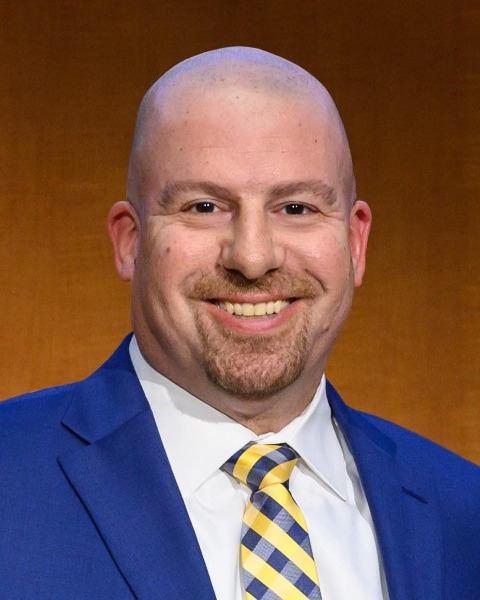
Benjamin S. Bassin, MD, FACEP, EDAC
University of Michigan
Dr. Benjamin Bassin, MD, FACEP, EDAC is an Associate Professor of Emergency Medicine, Director of the Emergency Critical Care Center, Director of Intellectual Property and Technology Development at the University of Michigan and the Vice President and Innovation Fellow at CannonDesign. He received his B.S. and M.D. degrees from the University of Michigan and completed residency training in Emergency Medicine at the University of Cincinnati, where he served as chief resident. He has served in a number of process improvement, healthcare facility design and administrative leadership roles at the department and institutional levels. Prior to joining Blue Cottage of CannonDesign as its inaugural Innovation Fellow, he served as the Director of the Emergency Critical Care Center (EC3), the first and largest ED-ICU in the U.S. Additionally, he has been an advisor and the chief medical officer of a number of medical device start-up companies and founded his own consulting company focused on providing expertise at the intersection of clinical care delivery and optimized healthcare design. He is recognized as an international expert in emergency critical care delivery design and has been invited to consult and lecture around the world on healthcare design, device innovation as well as serve on many national and international task forces on emergency critical care delivery.
-
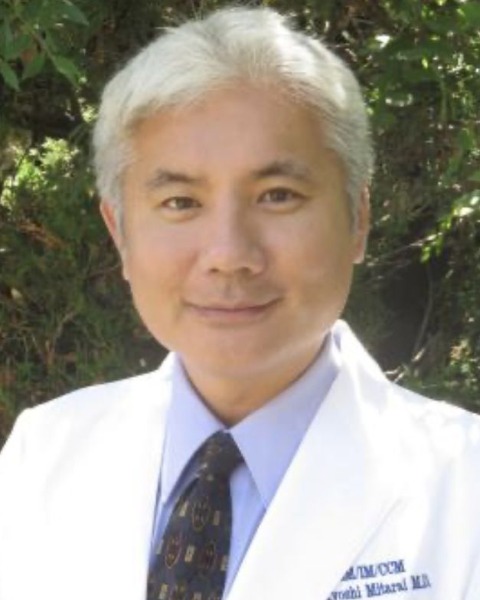
Tsuyoshi Mitarai, MD, FACEP, FAAEM
Stanford University
Dr. Tsuyoshi Mitarai was born and grew up in Japan until he was 17. He graduated from University of Rochester School of Medicine in 2002 and completed his combined internal medicine/emergency medicine residency at University of Maryland in 2007. He finished his critical care fellowship at Stanford University in 2009, and stayed on as a faculty to attend in emergency department as well as medical ICU. He created an Emergency Critical Care Program (ECCP) in 2017 to improve the quality of care for critically ill patients in emergency department (https://www.acep.org/how-we-serve/sections/critical-care-medicine/news/july-2018/stanford-emergency-critical-care-program-eccp/). He was the first author of the manuscript that demonstrated 6 % decrease in inhospital mortality associated with the ECCP (Crit Care Med. 2023 PMID: 37010317). He earned multiple teaching awards including Outstanding Educator Award (2019, Stanford University, CA), The Henry J. Kaiser Family Foundation Award for Excellence in Clinical Teaching, (2015, 2019, Stanford University, CA), and National Emergency Medicine Excellence in Bedside Teaching Award (2024, ACEP). The ECCP received 2024 Society of Critical Care Medicine Patient Safety First! Award (2025, SCCM) -
William E. Baker, MD
University of Vermont
Dr. Baker is an Associate Professor of Emergency Medicine at University of Vermont Medical Center. He strives to improve healthcare through systems improvements, while serving as a clinical educator and researcher. He ascribes to Deming's philosophy, including constantly focusing on quality throughout every process in the organization. His quality improvement training includes having completed the Institute for Healthcare Improvement’s 10-month “Improvement Advisor Professional Development Program”.