Connecting Across Generations: Fostering Growth Mindset and Collaboration in Medical Education (CDEM- and Education Committee-Sponsored)
In today’s medical education, multiple generations—Baby Boomers, Generation X, Millennials, and Generation Z—work side by side, each with unique preferences for communication, motivation, workflow, and feedback. Emergency medicine residency programs particularly reflect this dynamic, with older generations leading and newer generations entering as residents and students. This session will explore how growth mindset principles can bridge generational gaps. We’ll discuss fostering adaptive expertise, moving away from fixed roles, and offer best practices for communication, teamwork, and case-based learning. Participants will also practice applying these tools in small group discussions.
Learning Objectives:
- Describe key motivational drivers across generations and how they influence learning and teaching in medical education.
- Identify concrete strategies to adjust teaching methods for different learners using evidence-based best practices.
- Define growth mindset and apply strategies to foster adaptive expertise and lifelong learning across generations in medical education.
Presenters:
- Guy Carmelli, MD
- Elizebeth Dubey, MD, FACEP
- Annemarie Cardell, MD, FACEP
- Deepa Patel, MD
- Kelly N. Roszczynialski, MD, MS
- Craig Cooley, MD, MPH, EMT-P, FACEP, FAAEM, FAEMS
- Carolyn Geraci, MD
- Jason J. Lewis, MD
-
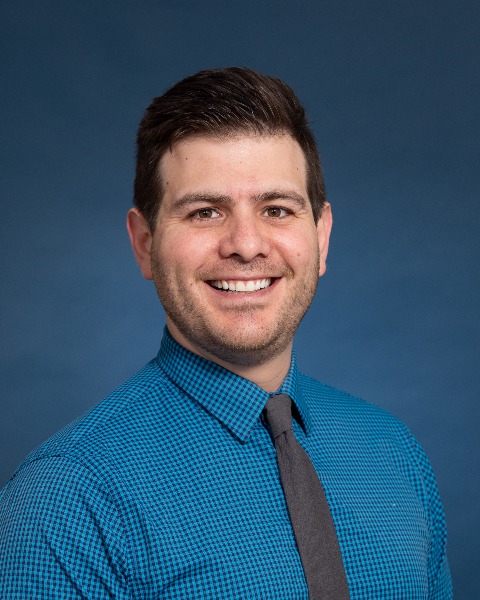
Guy Carmelli, MD, MSEd
Assistant Professor, Emergency Medicine
University of Massachusetts
Guy Carmelli, MD, MSEd, received his medical degree at USC's Keck School of Medicine and completed residency and education fellowship at Kings County/SUNY Downstate. He completed a Master's in Medical Education at UPenn. His interests are in resident/medical student education, curricular design, innovative digital design, and cardiovascular emergencies.
-
Elizebeth Dubey, MD, FACEP
Wayne State University
Elizebeth Dubey, MD serves as the Program Director of Emergency Medicine at Detroit Receiving Hospital, where she teaches and trains the next generation of emergency physicians. She spends most of her time balancing clinical work and teaching. Yet she also has interests in research with a focus on medical education. She also has interests in both bias in medicine and discordance in patient care. Last year she authored a chapter in Urban Emergency Medicine titled, “Linguistic, Racial and Cultural Discordance”. She is part of national Emergency Medicine committees serving in a variety of roles on a national level. She represented the American Academy of Women Emergency Physicians (AAWEP) as a Councilor fort the annual American College of Emergency Physicians (ACEP) Council meeting for seven years. In addition, she serves on Society of Academic Emergency Medicine (SAEM) committees, including the Education Committee and the Equity & Inclusion Committee. When not working, she spends time with her spouse and three energetic girls. -
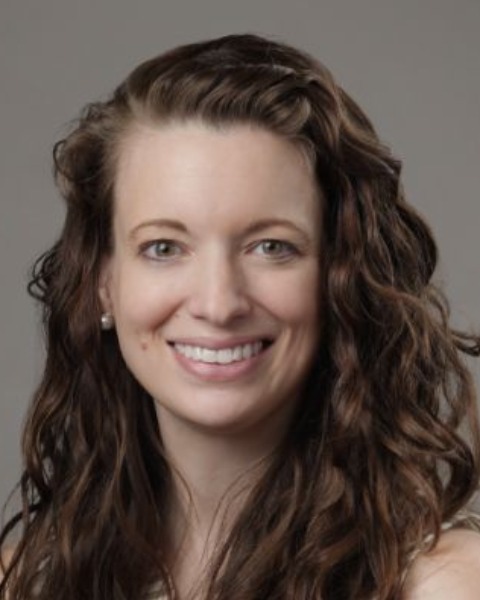
Annemarie Cardell, MD, FACEP
Emory University School of Medicine
Annemarie Cardell is an emergency medicine physician in Atlanta, GA., and mom to a 2-year-old daughter, Magnolia. She is also an educator who specializes in teaching through simulation and developing new and novel ways to educate others. She currently works at Emory School of Medicine where she serves as the Assistant Program Director. Previous research has included building large scale simulation to facilitate MCI education on responding to an active shooter, how clinical workflow is impacted by burnout, developing a next generation intubation trainer using 3D printing, and revamping clinical documentation curriculum to facilitate increased RVUs/ Pt for resident physicians.
-
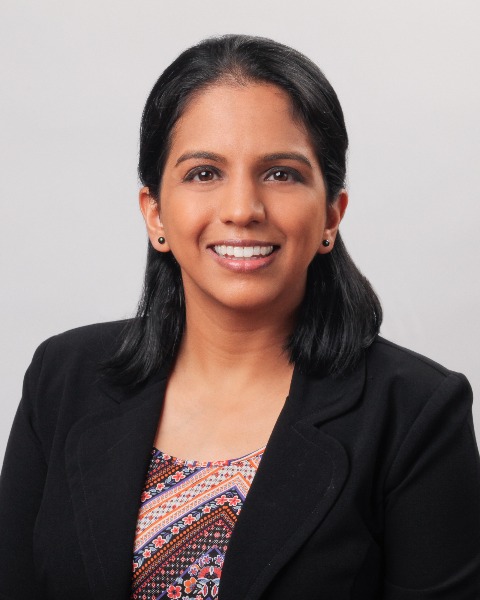
Deepa Patel, MD Deepa Patel, MD
Emory University School of Medicine
Deepa Patel, MD is an emergency physician at Grady Memorial Hospital and an intensivist working in the Cardiovascular and Surgical/Transplant Intensive Care Units at Emory University Hospital. She completed both her residency in Emergency Medicine and fellowship in Anesthesiology Critical Care Medicine (ACCM) at Emory. Currently, she’s an Associate Program Director for the ACCM fellowship, Co-Director of Multi-Professional Education for the Emory Critical Care Center and is the Director of the newly minted Critical Care Section within the Department of EM. Her interests include critical care education with a focus on mechanical ventilation and improving the care of critically ill patients in the Emergency Department -
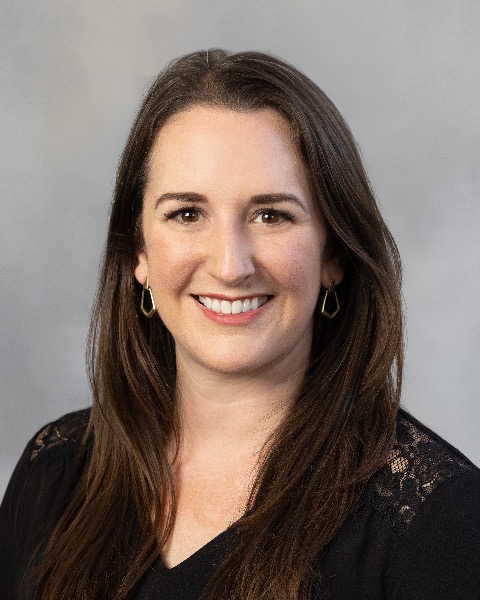
Kelly N. Roszczynialski, MD, MS
Stanford University
Dr. Roszczynialski completed her emergency medicine residency training at the University of Alabama at Birmingham. Following residency, she completed Simulation Fellowship at the University of Alabama at Birmingham and earned a Masters in Healthcare Simulation developing an interest in utilizing simulation for procedural education, team training, as well as process improvement. Dr. Roszczynialski’s simulation research has been on Rapid Cycle Deliberate Practice, interdisciplinary in-situ simulation, and just-in-time training. She has spoken both locally and nationally on Rapid Cycle Deliberate Practice simulation and simulation for procedural training. She has an interest in curricular design and educational training both at the residency and fellowship level. Dr. Roszczynialski currently serves as the Emergency Medicine Associate Program Director at Stanford University. In her APD role, she oversaw the residency core didactic curriculum for three years and now oversees Program Evaluation and Transition to residency. She also serves as the Residency Simulation director and has been active in translating educational efforts into scholarly works. She has expertise in curricular design and educational content delivery, using various modalities of simulation for residency and faculty education, incorporating virtual and augmented reality simulation. -
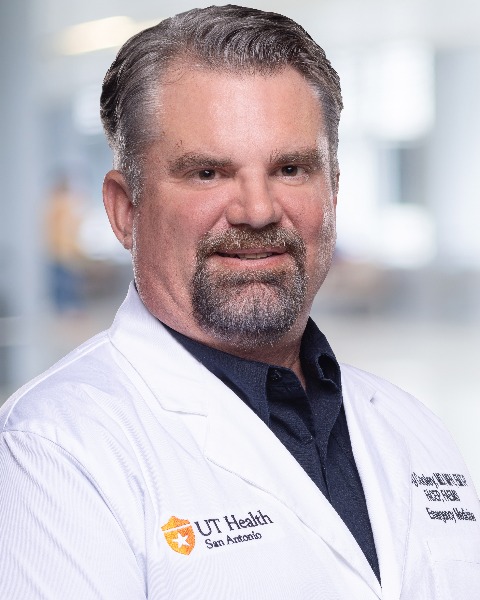
Craig Cooley, MD, MPH, EMT-P, FACEP, FAAEM, FAEMS
UT Health San Antonio
Craig Cooley MD, MPH, EMT-P is the EMS Division Chief and EMS Fellowship Director for UT Health San Antonio Department of Emergency Medicine, Deputy Medical Director for San Antonio Fire Department, and a Medical Director for the Texas Emergency Medical Task Force (EMTF) – Region 8. In these roles, Dr. Cooley provides radio/phone and on-scene medical control for SAFD, provides medical oversight during state disaster responses, and educates fellows, residents, and medical students through the different programs and rotations he helped develop that are offered at UT Health San Antonio. He is also part of the Office of the Medical Director that provides EMT and Paramedic continuing education to 1500 personnel per year. Among his involvement in several regional, state and national organizations, Dr. Cooley is a member of the Texas Governor’s EMS and Trauma Advisory Council (GETAC) Cardiac Subcommittee and is Chair of the Council of EMS Fellowship Directors with the National Association of EMS Physicians (NAEMSP). In addition to speaking frequently at the program and local level on several EMS topics, Dr. Cooley continues to speak regionally, nationally and internationally about EMS and EMS system development.
-
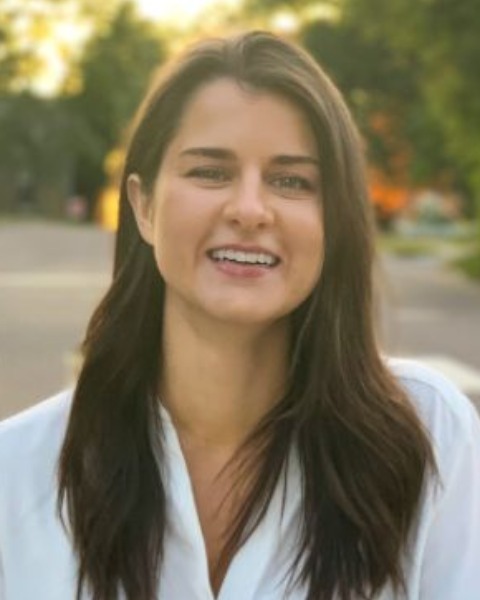
Carolyn Geraci, MD Carolyn Geraci, MD
Hennepin County Medical Center
Carolyn Geraci, MD. Chief Resident (PGY3) and Incoming Medical Education Fellow at Hennepin County Emergency Medicine. -
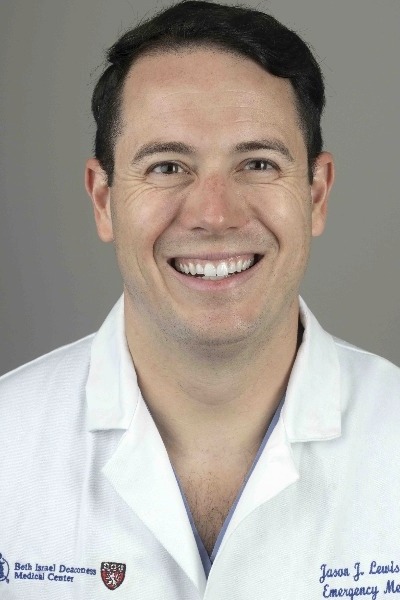
Jason J. Lewis, MD
Assistant Professor, Emergency Medicine
Beth Israel Deaconess Medical Center
Dr. Jason Lewis is an Assistant Professor of Emergency Medicine at Harvard Medical School and attending physician at Beth Israel Deaconess Medical Center. Dr. Lewis completed his residency at Beth Israel Deaconess Medical Center Harvard Affiliated Emergency Medicine Residency in 2014 followed by a fellowship in Medical Education at Beth Israel Deaconess Medical Center in 2015. He currently serves as the director of the Emergency Bootcamp and associate clerkship director. He is passionate about medical education, with a particular focus on undergraduate medical education.