Best Practices for Ensuring High Quality Care for Incarcerated Patients: Patients' Rights and Our Responsibilities (ADIEM and Equity & Inclusion Committee and Ethics Committee Sponsored)
-
Paul Logan Weygandt, MD, MPH
-

Kamna S. Balhara, MD, MA, FACEP
Associate Professor of Emergency Medicine
Johns Hopkins University
Dr. Kamna Balhara is an associate professor of emergency medicine (EM) at the Johns Hopkins University School of Medicine, and holds a dual appointment as associate professor in Medicine, Science, and the Humanities at the Johns Hopkins Zanvyl Krieger School of Arts and Sciences. After obtaining a master’s degree in French Cultural Studies from Columbia University, she completed medical school and residency at Johns Hopkins, serving as chief resident. She served in residency program leadership at the University of Texas San Antonio and subsequently at Johns Hopkins.
Dr. Balhara is an innovator in the health humanities and has experience with implementing humanities curricula for medical students, residents, and faculty from across specialties. She is a founder and co-director of the Health Humanities at Hopkins EM initiative, which offers equity-focused and humanities-based programming to institution, community, and national audiences. She also directs a unique longitudinal interdisciplinary institution-wide health equity and humanities track for residents and fellows across Johns Hopkins, and directs the Health Humanities Fellowship. She has been invited to speak to international audiences on the humanities in medicine and was selected as a Harvard Macy Institute Art Museum-Based Health Professions Education Fellow.
Her scholarly interests revolve around equity and inclusion in clinical and learning environments. She has authored multiple publications on graduate medical education, humanities, social determinants of health, and disparities in health care access, and has developed tools and resources for other educators seeking to apply the humanities towards equity in health care and health professions education. Her work has been funded by the Association of American Medical Colleges (AAMC), the Josiah Macy Foundation, the National Endowment for the Humanities, and the Emergency Medicine Foundation. She serves on the steering committee for the National Health Humanities Consortium, and is a member of the editorial board of the SAEM journal Academic Emergency Medicine.
-
Taylor Brown, MD
-
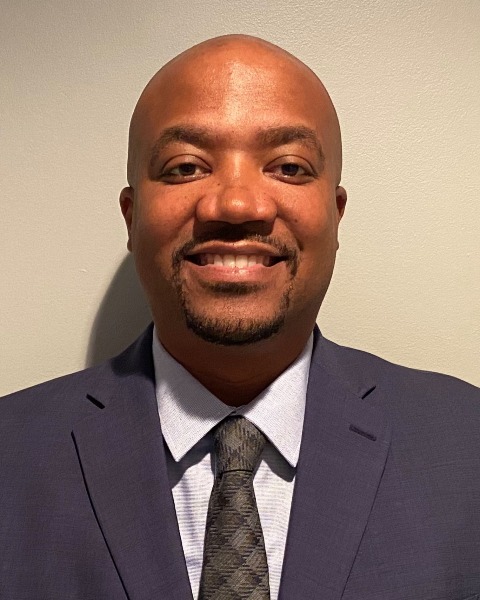
Nathan Irvin, MD, MSHPR
Johns Hopkins
Dr. Irvin is an assistant professor in the Department of Emergency Medicine. He earned a medical degree at Harvard in 2003. Following medical school, he completed a residency in emergency medicine at Alameda Health System’s Highland Hospital in Oakland, California, where he was a chief resident, prior to graduating in 2011.
Upon completion of residency, Dr. Irvin entered into the Robert Wood Johnson Foundation’s Clinical Scholars Program at the University of Pennsylvania, graduating in 2013 with a master's degree in health policy research.
Dr. Irvin holds interests in social emergency medicine and addressing many of the health and behavioral problems that affect people living in urban communities. Two such threats are HIV/AIDs and violence. He is currently the clinical director of the Johns Hopkins Bayview Medical Center Emergency Department HIV/HCV screening program, working to identify and get people with new diagnoses of HIV linked into care. Additionally, he is engaged in work related to youth violence prevention and endeavors to develop a trauma-informed, hospital-based violence intervention program. -
Sandy L. Werner, MD
-

Emily Spilseth Binstadt, MD, MPH
Regions/Health Partners
Dr Binstadt is passionate about exploring the best ways to teach residents and faculty and provide high-quality emergency care to patients. She is interested in issues of justice, equity, inclusion, and belonging, medical education using simulation, procedural skills training, experiences of women in medicine, wilderness medicine, and ethics. She also enjoys maximizing her time spent outside in natural environments, traveling, and with her family.
-
Andrea Wu, MD, MMM
-

Katrina Gipson, MD, MPH
President-Elect
Emory University School of Medicine
I hail from the Midwest and was born and raised in Ann Arbor, MI. I received a BS in Biomedical Engineering with a concentration in Biotechnology from Yale University and an MD from Case Western Reserve University with Honors with Distinction in Research. During medical school, I received an MPH in Health Management and Policy from the University of Michigan. I completed postgraduate training in Emergency Medicine (EM) at University Hospitals Case Medical Center and a Health Policy Fellowship at George Washington University. I view my path through EM through the lens of diversity, inclusion, and health equity as forms of justice. This vantage point has afforded me mentors and opportunities that qualify me to serve as ADIEM president-elect. I have demonstrated a commitment to educational and workforce diversity and inclusivity as a member of Emory School of Medicine’s Implicit Bias Committee and I serve as our department’s Diversity Council Implicit Bias lead. Additionally, at my institution, I work to ensure that our learners deliver care with cultural humility in an inclusive environment as our Social EM Pathway Faculty Advisor and founding Health Policy Fellowship Director. The SAEM and National Medical Association (NMA) allow me to advocate on behalf of our specialty and patients at the national level as Co-Chair of the Equity & Inclusion Committee’s Education Subcommittee and EM Section Secretary respectively. I am running for ADIEM President-Elect because I know that our patients’ lives depend on our specialty’s commitment to diversity and inclusion. For instance, a patient’s faith in the medical community may depend on a resident’s understanding that pain tolerance does not vary by race. A transgender patient may be more likely to seek care if their appropriate pronouns are used. If I have the pleasure of serving as President-Elect, the next three years will be spent expanding the lens through which ADIEM informs the narrative surrounding the role of diversity and inclusion in health care. I will ensure that our members have the resources to recruit and retain diverse faculty and learners. I will work to promote academic endeavors that seek to reduce health care disparities and inequitable access to care. I hope to accomplish the sense that the centering of diversity & inclusion in our specialty is pivotal in the journey to improved and equitable health outcomes. -
Jolion McGreevy
-
Shamsher Samra, MD, MPhil