ADIEM Town Hall: Dual Identity: How Awareness of Racial Bias in MedicineInforms our Role as BIPOC Physicians
- How do we address our patients' concerns about racial bias in the medical field?
- What actions do we consciously or unconsciously take to mitigate racial bias?
- In what ways have we been complicit?
-
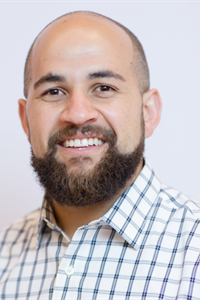
Rosny Daniel
Dr. Rosny Daniel was born and raised in Southern California, but has called San Francisco his home for the last ten years. He completed his medical school, emergency medicine residency, chief residency and medical education fellowship at University of California, San Francisco. Dr. Daniel is currently a faculty member and Assistant Professor in the department of emergency medicine at UCSF. He is the director of DEI in residency curriculum. He also serves on the executive board of EM Foundations as Director of EDI. His interests include mentorship, advocacy, medical education, social emergency medicine, justice, equity, diversity and inclusion. Rosny educates medical students, residents and faculty on topics ranging from generational differences in the workplace to creating equitable educational content to anti-racism in medicine to treating common emergency department complaints. His goal is to model longitudinal incorporation of equity/inclusion training in emergency medicine residency training across the nation and beyond. In his spare time he enjoys making and drinking fancy cocktails, going to concerts, listening to emo gen z rap, exercising, watching the Lakers, cooking, playing tug-o-war with his dog or traveling when he can. -
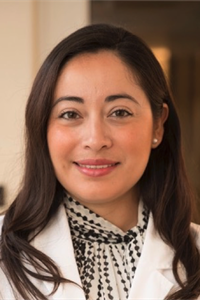
Minerva Romero Arenas
Dr. Minerva A. Romero Arenas is an Endocrine & General Surgeon at New York Presbyterian Brooklyn Methodist Hospital. She is an Assistant Professor of Surgery at Weill Cornell Medical College. Dr. Romero Arenas completed a fellowship in Oncologic Surgical Endocrinology at the University of Texas MD Anderson Cancer Center and General Surgery Residency at Sinai Hospital of Baltimore. She earned her Medical Doctorate and Master of Public Health degrees from The University of Arizona. She studied Cell Biology and French at Arizona State University. Dr. Romero Arenas is passionate about recruiting the next generation of surgeons and is involved in mentoring through various organizations, such as the Association of Women Surgeons, Tour for Diversity in Medicine, Latino Medical Student Association, National Hispanic Medical Association, and Building the Next Generation of Academic Physicians. She is a Founding Member of the Latino Surgical Society. -
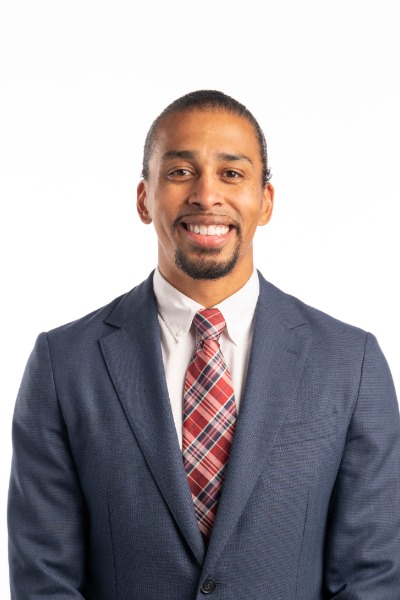
Joshua Ellis, MD, MPH
University of Arkansas for Medical Sciences
Dr. Joshua Ellis is a faculty physician in Emergency Medicine at University of Arkansas for Medical Sciences (UAMS). He graduated from Howard University College of Medicine and completed his residency at the Mayo Clinic, where he was the recipient of the Golden Stethoscope Resident/Fellow Educator of the Year and also the Gold Humanism Award. He then went on to complete a Masters in public health at the Harvard T.H. Chan School of Public Health and his education fellowship at Harvard Medical School and BIDMC.
He now serves as the Clerkship Director for the EM Clerkship at UAMS and also as the Chair of the LGBTQ+ subcommittee of ADIEM at SAEM. His other work has focused on improving diversity within higher medical education, and he has published twice in New England Journal of Medicine as well as being awarded the Harvard Medical School Harold Amos Faculty Diversity Award. He currently also is the clinical director of Project Heal, a Hospital Based Violence Intervention Program aimed at decreasing recidivism in. -

Marcee Wilder
Research Learning Series Moderator
George Washington University
Marcee Wilder is Assistant Professor of Emergency Medicine at George Washington University. She attended medical school at Howard University College of Medicine in Washington D.C. and residency at the Icahn School of Medicine at Mount Sinai. While at Mount Sinai, Marcee participated in and developed several clinical studies examining racial disparities in emergency department care. After residency she completed a 2-year clinical research fellowship at GWU, focusing on disparities and health outcomes. During her fellowship she was awarded funding from the National Institute of Health (NIH) to examine social determinants of health and their effect on outcomes including medication adherence and emergency department visits. She also completed a master’s degree in clinical and translational research during this time. As full-time faculty, Marcee splits her time between working clinically, research, teaching, and administration. She is a health services researcher who is passionate about health equity and disparities and hopes to contribute to the field through research and education. Marcee teaches public health at the medical school and teaches a clinical research course to the undergraduates at the University. She works clinically at George Washington University Hospital, as well as DC’s last public hospital, United Medical Center. She is also the medical director for the Medical Faculty Associates group in the Department of Emergency Medicine at Walter Reed National Military Center. In her spare time, she mentors at risk female youth in DC.
