History of Emergency Medical Education
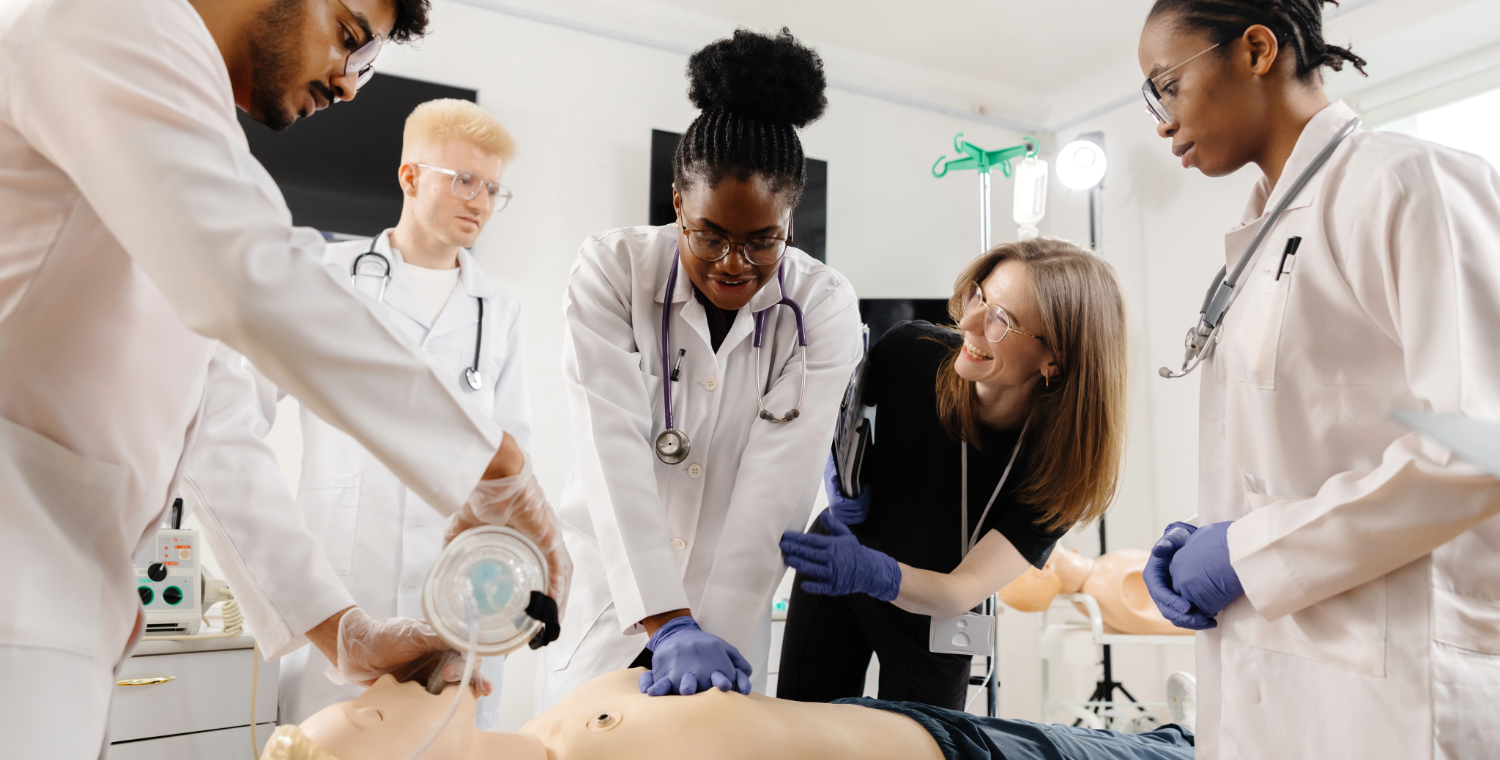
Pursuit of the medical education pathway allows one to develop expertise in clinical teaching, education administration, or educational research, leading to career opportunities in academic emergency medicine (EM) as a clinical or classroom instructor, an education investigator, or an educational administrator. Within the medical track, students and residents may focus on one or more of the following areas: bedside training, classroom teaching, curriculum design and evaluation, medical education research, leadership in residency administration, or healthcare simulation.
Why a Medical Education Pathway
Medical education appeals to those who have a desire to teach or to further our understanding of the science of learning. As a medical educator you have the opportunity to train future emergency physicians and help shape the future culture of medicine. Although all physicians are teachers to some degree, the professionalization of medical education now requires additional specialized skills. Educators must be able to identify and assess knowledge gaps, develop interventions to target these areas, and design specific means to evaluate their efficacy. In the field, there is increasing focus on how adult learners best process and retain information. Medical educators with formal training tend to focus on the "thorny problems" of medical education and serve as a resource to others with content expertise working with trainees. Depending on your ultimate aspirations, you may be more or less involved in different pathways such as educational research, program administration, and/or clinical teaching.
History of Academic Emergency Medicine
Academic EM emerged as a distinct discipline in the late 20th century, coinciding with the formal recognition of EM as a medical specialty. Prior to the 1970s, the "emergency room" was primarily staffed by physicians trained in other specialties. Surgeons, family medicine practitioners, and internal medicine doctors typically covered shifts based on availability; they often lacked formal training specific to emergency care. However, the increasing demand for specialized acute care prompted the establishment of the first emergency medicine residency program at the University of Cincinnati in 1970.
The field gained further legitimacy in 1979 when the American Board of Emergency Medicine (ABEM) was officially recognized, thereby designating EM as the 23rd medical specialty in the U.S. This milestone paved the way for the creation of standardized residency programs and the development of dedicated academic departments. As the specialty matured in the 1980s and 1990s, academic emergency medicine expanded its focus to include medical education, research, and systems innovation. The founding of organizations like the Society for Academic Emergency Medicine (SAEM) in 1989 and the launch of its journal, Academic Emergency Medicine, marked a shift toward scholarly excellence and collaboration within the field.
Today, academic EM encompasses clinical care, education, research, health equity, simulation, and advocacy. It continues to evolve rapidly, playing a vital role in preparing the next generation of emergency physicians and advancing care for diverse patient populations.
Academic Medicine and Medical Education
Individuals pursuing this track have an ever-expanding field of career options open to them. Careers in medical education often include clinical and/or classroom teaching. However, it would be incomplete to focus only on direct instruction, as the field also encompasses leadership roles in graduate or undergraduate medical education (GME or UGME) at both the local and national level. In addition, one may choose to pursue further specialization in educational research, pedagogical theory, curriculum creation, healthcare simulation, continuing medical education (CME) development, or the training of other health providers (e.g. RN, NP, PA, CRNA, EMT).
- Positions: Roles available to those interested in academic EM are readily available and continuing to expand. Numerous opportunities exist within teaching institutions and research initiatives. The diverse scope of EM also extends beyond traditional residency education, including roles in simulation training, disaster preparedness education, ultrasound instruction, and the training of allied health professionals.
- Salary: Compensation will vary depending on factors such as location, experience, and credentialing. However, on average, those who choose to pursue academic EM typically earn less than their community counterparts. At a very rough estimate, new associate professors make approximately two-thirds the salary of a new community attending. Fellowship salaries vary by institution and will depend on whether they are considered adjunct faculty or a PGY4-5 position.
- Geography: Educational opportunities within undergraduate education and residency training are as geographically dispersed as medical schools. Most are located in urban areas, though many community hospitals are beginning to incorporate emergency residency programs as well. Outside of traditional UGME and GME roles, education positions are ubiquitous.
- Work Hours: Work hours are typically similar to those of non-academic emergency physicians. However, academic tracks often incorporate some level of time split between clinical, administrative, and scholarly activities.
- Research Requirement: Because the field of medical education and academic EM is so diverse, research requirements vary dramatically based on institution and position, ranging from nonexistent to strenuous.
The number and diversity of educational roles are expected to continue expanding, driven by the growing demand for EM physicians in academic positions and the increasing need for both clinicians and health educators.
Community Medicine and Medical Education
Community practice in EM, as opposed to academic EM, refers to the delivery of emergency care in non-academic hospital settings, typically focused on efficient patient care, operational performance, and serving the immediate healthcare needs of the local population without a primary mission of research or education. Historically, these have not been teaching-centered roles. However, over the last several years, community hospitals are more likely to include clinical learners. Many community sites now host medical students and residents for at least short-term education. Often, these are valuable experiences for those whose primary training setting is academic, as they may include more autonomy and less subspecialty support. There is plenty of space in community medicine for medical education. Whether you are interested in serving as a site director to communicate between your hospital and local training program, or merely interested in supervising learners on shift, a medical education background can be a definite selling point on your resume, even outside the academic sphere.