The Future of Emergency Medicine: How Technology and Clinical Informatics are Transforming Care
This webinar explores the role of emerging technologies in emergency medicine (EM), with a focus on AI-assisted chart generation and predictive modeling. Panelists discuss their work in implementing these tools, the impact on clinical workflows, and the future of technology-driven care in the emergency department. Designed for resident physicians and medical students, this session provided insights into ongoing projects and evolving trends in EM informatics. A Q&A segment allowed participants to engage with experts and discuss practical applications of these innovations.
-

Alexander Fenn, MD
Emergency Medicine Physician
Alexander Fenn, MD, is an emergency medicine (EM) physician who is a lifelong techie. He cannot remember a time when he wasn't the go-to IT support person for family and friends. Dr. Fenn grew up in Colorado and studied English Literature at the University of Colorado Boulder. After graduation, he was a third-grade teacher for three years with Teach for America.
Dr. Fenn completed a post-baccalaureate pre-medical program at CU Boulder, moving to the Triangle to attend the Duke University School of Medicine. During medical school, Dr. Fenn was exposed to clinical informatics via working with the Duke Institute of Health Innovation (DIHI) during a research year. As part of DIHI, Dr. Fenn co-created a machine learning model to help predict hospital admissions from the emergency department waiting room. He also assisted with research regarding differences in electronic health record (EHR) utilization by gender.
Dr. Fenn completed his EM residency at UNC, where he helped to develop a Best Practice Advisory to better capture critical care billing. As a seasoned teacher, he led multiple lectures to his co-residents on Epic usage and tips/tricks for EHR efficiency. He recognizes that the informatics world is broad, though he is keenly interested in physician burnout and EHR utilization.
-
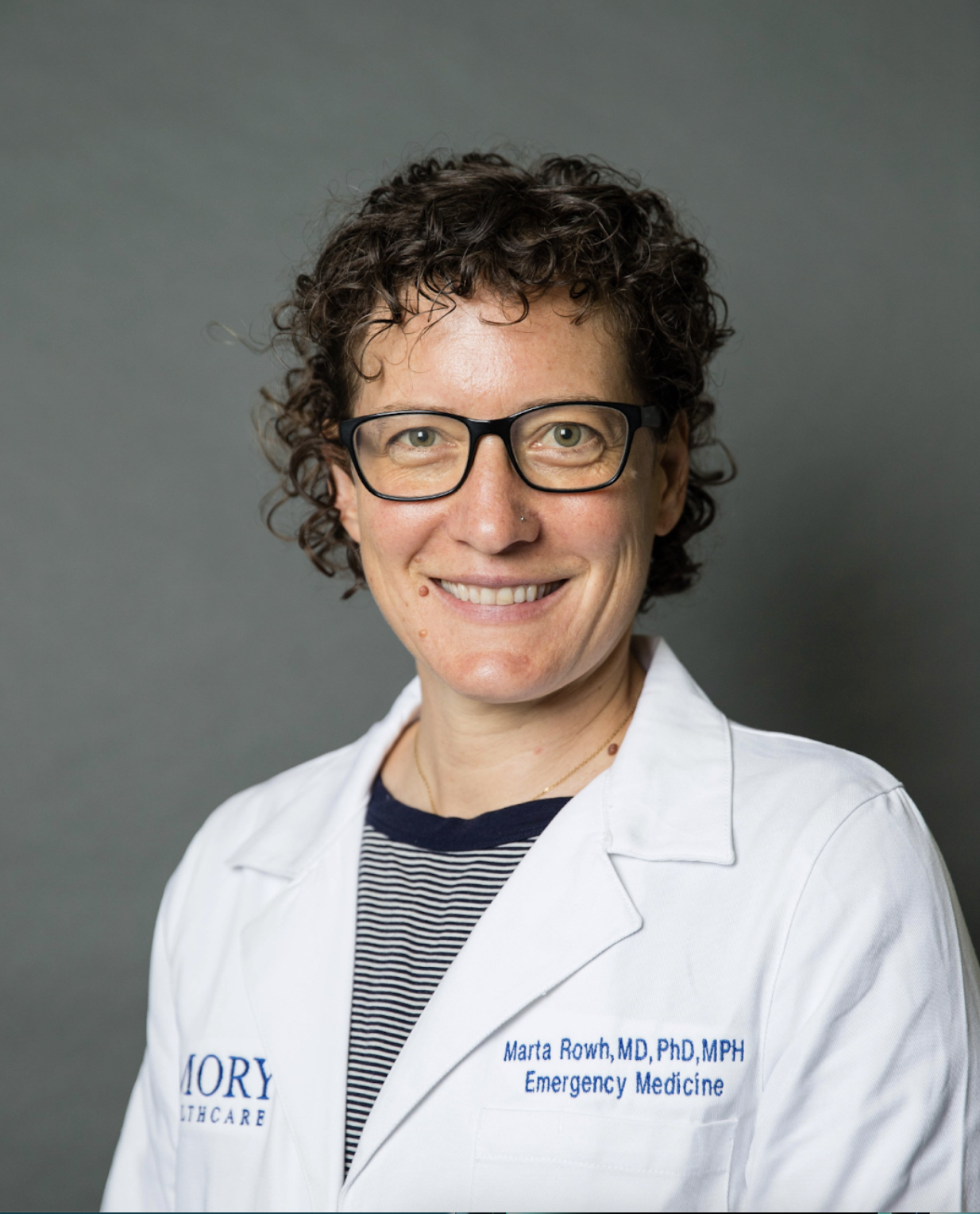
Marta Rowh, MD, PhD
Assistant Professor, Emergency Medicine
Emory University
Marta Rowh, MD, PhD, is an assistant professor of emergency medicine (EM) at Emory University and a leading researcher on artificial intelligence (AI) applications in medical education. Her research utilizes Natural Language Processing (NLP) algorithms to analyze how medical education materials represent social demographics and incorporate diverse patient populations in case-based learning. As the 2025 recipient of the SAEM Education grant, she is leading an initiative to apply AI-driven analysis to large volumes of curricular content, identifying demographic underrepresentation that may reinforce health inequities. This research seeks to provide educators with scalable tools to systematically assess and revise curricula to promote more equitable demographic representation.
-

John Dickens, MD, MBA
Resident, Emergency Medicine
McGaw Medical Center / Northwestern University
John Dickens, MD, MBA is a third-year Emergency Medicine resident at McGaw Medical Center/Northwestern University in Chicago, IL. He attained his MD and MBA degrees from the University of Louisville in his hometown of Louisville, KY. Prior to his medical education, Dr. Dickens worked as a project manager for large healthcare corporations including Epic Systems and Humana where he worked with the company’s Digital Health & Analytics group. Dr. Dickens has worked in various roles with SAEM including Medical Student Ambassador for the SAEM Annual Conference, Resident Liaison for the Informatics, Data Science, & Artificial Intelligence Interest Group, member of the RAMS Nominating Committee, Member-at-Large of the RAMS Board, and RAMS Board Representative to the SAEM Awards Committee. His research and academic interests are primarily in the development and implementation of emerging technologies in the Emergency Department and in new models of Care Management including Point-of-Care diagnostic tools, Remote Patient Monitoring, and Hospital-at-Home initiatives.