Game Day in the Emergency Department: Sharpening Skills With Mental Practice
Emergency medicine professionals face increasing demands for innovative, affordable methods to maintain technical and non-technical skills. High-acuity, low-occurrence procedures, in particular, require regular practice to sustain proficiency, yet traditional training methods can be resource-intensive. Mental practice—cognitive rehearsal without physical movement—presents a low-cost, evidence-based solution with proven success across fields like sports, surgery, and healthcare. This session will explore the concept of mental practice, backed by evidence from sports psychology, neuroscience, and healthcare literature. Through interactive discussions, examples, and evidence-based strategies, participants will learn how mental practice can enhance both technical and non-technical skills. The engaging “Mental Practice Mary” segment will encourage active participation, allowing attendees to reflect on how they can incorporate mental practice into their educational settings. The session will also cover practical strategies for integrating mental practice into daily routines and training programs, demonstrating its role as a low-cost tool for resident remediation and skill maintenance for attendings.
Learning Objectives:
- Describe mental practice, its theoretical underpinnings, and evidence from sports psychology and neuroscience, demonstrating its value as a tool in emergency medicine.
- Identify the core value of mental practice as a low-cost, low-resource tool for skill development, and review best practices for implementing it in clinical settings.
- Apply strategies to integrate mental practice into their daily routines and training programs, overcoming barriers to effectively utilize it in their professional development.
Presenters:
- Kirlos N. Haroun, MD
- McKenzie Warshel, DO, MEd
- Linda A. Regan, MD, MEd
-
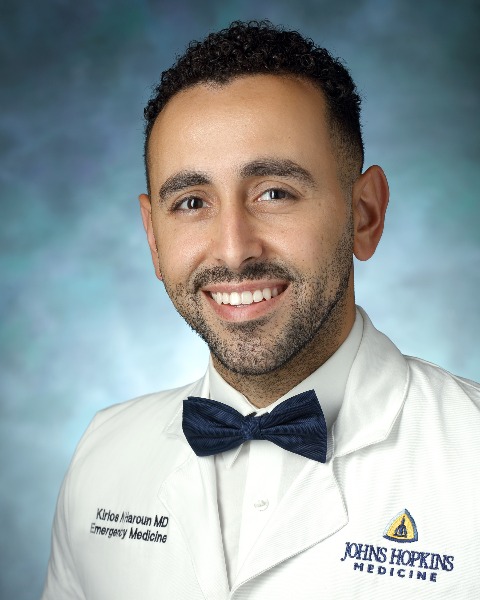
Kirlos N. Haroun, MD
Johns Hopkins University
I was born in Egypt to an incredibly supportive farming family before moving to Miami, Florida with my parents and my three siblings, where I grew up. I completed my undergraduate studies at the University of Miami, attended medical school at the University of Pennsylvania, and finished my residency at the University of Chicago. Currently, I am learning and growing as a Clinical Instructor and Medical Education Fellow at Johns Hopkins, focusing on the development of wellness-minded medical professionals. This upcoming July, 2025 I will be gratefully stepping in as the Assistant Program Director of the Johns Hopkins Emergency Medicine Residency!
-

McKenzie Warshel, DO, MEd
Johns Hopkins Hospital
McKenzie is currently a PGY3 in the combined Emergency Medicine and Anesthesia residency at Johns Hopkins. She enjoys blending the two specialties and their unique crossover such as resuscitation, regional anesthesia, and procedural sedation. She has a particular interest in medical education as she completed her Masters in Medical Education while she was a medical student at Lake Erie College of Osteopathic Medicine. Her thesis focus was on educating faculty on techniques to keep medical students more engaged. While at Hopkins, she has worked on curriculum development implementations for the interns. She has a passion for wellness and mental health advocacy in residency training.
Prior to medical school, McKenzie was a domestic violence counselor with an emphasis on children in Johnstown, PA. She spent years developing and implementing trauma-informed group counseling program in the carceral system. She attended conferences and workshops around the country on working in the carceral system, group counseling, and trauma-informed care. She created a longitudinal curriculum for incarcerated patients focusing on coping mechanisms, communication skills, healthy relationships, and accountability. She ran all group counseling sessions weekly for men and women at Cambria County Prison for two years. Prior to medical school matriculation, was awarded funding and expanded her Empowerment Program to the three correctional facilities in her local area. -
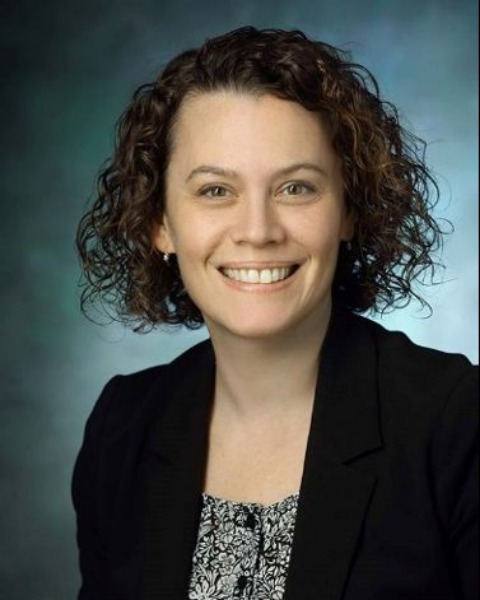
Linda A. Regan, MD, MEd
Johns Hopkins University
Dr. Linda Regan is an Associate Professor in the Department of Emergency Medicine at Johns Hopkins, where she serves as the Vice Chair for Education and the director of the Medical Education Fellowship. Dr. Regan served on the program committee for both SAEM and CORD for many years, including three years as a track chair for the CORD Best Practices track. She served for four years as a member of the Board of Directors of CORD and is a well-known national speaker on a wide array of educational topics, having spoken at ACEP, CORD, SAEM, ACGME, and AMEE. She is the current Chair of the ACGME’s Residency Review Committee in EM. Dr. Regan is well known at Johns Hopkins for her work as an educational program builder and 13 years spent as the program director for the Emergency Medicine residency. She obtained her Masters in Education for the Health Professions from the Johns Hopkins School of Education, with a focus on educational research. Dr. Regan’s educational research interests lay mainly in the applications of adult learning theories and conceptual models to postgraduate education, in particular as they pertain to the development of adaptive expertise for learners, as well as how to best teach and represent yourself as an educator.