Building It Better: How to Cultivate Equitable International Academic Emergency Medicine Partnerships (GEMA and ADIEM Sponsored)
Equitable international collaborations are crucial for the sharing of expertise, data, and resources needed to advance the field of academic global emergency medicine (GEM). Partners in research, education, advocacy, and systems development should have established relationships built on transparency, trust, authenticity, autonomy, and justice. The opportunity to build equitable partnerships while maintaining in-country partner autonomy and strategic prioritization of culturally contextual goals is paramount to an equitable international EM partnership.
However, despite a greater societal understanding of structural inequities found in international academic partnerships and recent advancements in GEM focused on decolonization of the field, inequalities, and uneven power dynamics persist. This is especially notable in the development and execution of academic partnerships between High-Income Countries (HIC) and Low-Income and Lower-Middle-Income Countries (LLMIC) contexts, with many current partnerships remaining entrenched in colonial influences and inequitable funding structures. Creating a shared sense of justice in international partnerships supports the dismantling of gender inequities, colonial, caste, and racist influences in collaborations between HICs and LLMICs, thus fostering transparency, respect, sustainability, and trust between partners. Only through equitable and just partnerships can we achieve the tenets of GEM by strengthening our collaborations and executing projects that truly serve and impact communities to improve and deliver equitable access to care.
In this interactive session, we will reflect on our experiences with international collaborations as individuals, as institutions, and within SAEM to identify existing structures of inequality and inequitable partnerships and work towards identifying a framework to improve the quality and transparency of our current and future collaborations. Participants will leave this session with an understanding of how and why these pervasive inequities still exist in many international partnerships and will be empowered with at least 3 strategies to apply to current and future partnerships.
Presenters:
- Nikkole J. Turgeon, MD
- Stephanie C. Garbern, MD
- Katie Wells, MD, MPH
- Shama Patel, MD MPH
- Catalina Gonzalez-Marques, MD, MPH
- Vinay N. Kampalath, MD, DTM&H
- Anna P. Fang, MD
-
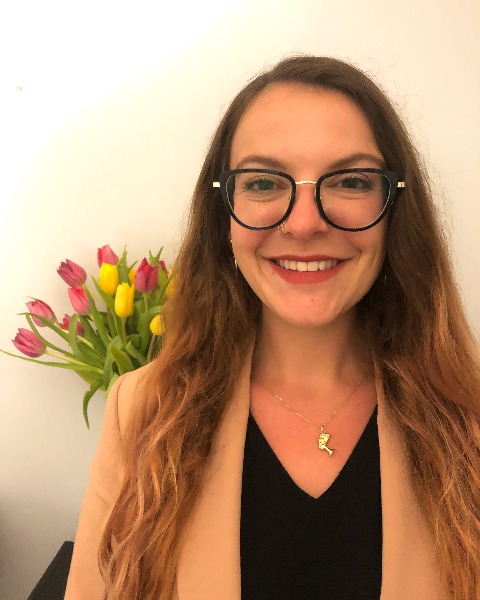
Nikkole Turgeon, MD
Boston University School of Medicine
Nikkole Turgeon, MD is a current PGY-2 resident in Emergency Medicine at Boston Medical Center Emergency Department. In her work within the BMC EM residency, she focuses on the development and implementation of a longitudinally integrated health equity curriculum. She also serves as co-chair of the BMC EM Residency Justice, Equity, Diversity, Inclusion (JEDI) Committee. Within this role, she is working to promote a more inclusive environment for residents through various initiatives. Her current interest in global health work is focused on the advancement of building equitable emergency care systems.
Nikkole grew up in Rhode Island and obtained a B.S. in Medical Laboratory Sciences in 2016 from the University of Rhode Island. During undergrad, she spent time working at a free clinic in Providence, RI where she saw the positive impact that community engagement and advocacy have on advancing health equity. Before medical school, Nikkole was the recipient of a Boren Scholarship that granted her the opportunity to live and work in Mozambique, Africa for six months. She pursued her interest in infectious diseases by working at a tuberculosis clinic and this experience strengthened her interest in pursuing global health work. She obtained her Medical Degree from the University of Vermont Larner College of Medicine in 2018. During her four years in medical school, she dedicated her time to focusing on local and global health equity work. Specifically, she worked on various social justice-related projects including co-leader of the student leadership group, The Social Justice Coalition, and spearheaded the creation and implementation of a social determinants of health curriculum within emergency medicine clerkship. Nationally, she has worked with ACEP and EMRA on advocacy efforts and the development of multiple policy resolutions focused on the advancement of social EM. Her global interests have focused on decolonizing global health and now serves as a co-chair for the Global Emergency Medicine Academy’s Decolonizing Global Health group. Nikkole’s current leadership and other committee roles include Vice Chair of EMRA’s SEM committee, member of the CUGH’s Advocacy and Communications Committee, and SAEM’s Equity and Inclusion Committee. -
Stephanie Chow Garbern, MD, MPH, DTMH
Brown University
I am an Assistant Professor of Emergency Medicine and the Research Coordinator of the Division of Global Emergency Medicine at the Alpert Medical School of Brown University. For over 15 years, I have been committed to expanding emergency care globally, working clinically or on research studies in Honduras, Peru, China, Lebanon, Bangladesh, Ghana, Liberia, Tanzania, Rwanda and the US. After medical school at the Albert Einstein College of Medicine in the Bronx, NY, I obtained my residency training at Beth Israel Deaconess Medical Center in Boston. Afterwards, I completed an MPH in Global Health at Harvard, a Global EM fellowship at Brown, and a Diploma in Tropical Medicine & Hygiene at LSHTM. My research focuses on the use of mobile health tools, wearable devices, and machine learning for emergency care in LMICs and I have led studies developing these tools for sepsis in Rwanda, Ghana, and Uganda. After Hurricanes Irma/Maria, I was a volunteer responder in Caguas, Puerto Rico with International Medical Corps, for which was I was awarded the GEMA Humanitarian Service Award in 2019.
In the past year, I have served on the Executive Committee of GEMA as Secretary, during my tenure so far, we have doubled the number of submissions to SAEM Pulse compared to previous years. I have also served as Co-Chair of the GEMA Engagement Committee, DEI Task Force, and led the formation of the Decolonizing Global EM Working Group, focused on developing anti-racist, anti-colonialist strategies to achieve equity in global EM which has led to two national conference presentations, an SAEM Pulse article and two manuscripts in process. As a member of the executive committee I look forward to working on several focus areas: 1) Expanding GEMA’s presence in print, online and social media to foster greater collaboration between GEMA members and wider audience 2) Creating new opportunities to engage trainees and junior faculty, through increased mentorship networking and collaboration on grants/scholarly outputs 3) Increasing membership diversity, particularly supporting recruitment and election to leadership positions of members from LMICs and under-represented minorities -
Katie Wells, MD, MPH
University of Vermont Medical Center
Dr. Katie Wells is the University of Vermont (UVM) Emergency Department Network Director of International Emergency Medicine and Health Equity. She is also the inaugural UVM Larner College of Medicine Director of Social Medicine. Over the last five years, Dr. Wells has built the UVM International Emergency Medicine program from the ground up, having been awarded multiple grants focused on building critical access to healthcare for Vermont’s immigrant and refugee communities. She completed her Global Health Fellowship with the University of Utah Center for Global Surgery, where she researched trauma, emergency, and surgical system development. Dr. Wells received her Master’s in Public Health from the Johns Hopkins Bloomberg School of Public Health. She spent two years working in Mongolia, focusing on surgical, emergency, and trauma system development while conducting research with the Mongolian Ministry of Health and the national hospital system. During her fellowship, she completed her MPH with a focus on disaster medicine and refugee health. Dr. Wells also focuses on building curriculum and researching health equity and social justice while overseeing trainee involvement in social medicine programs.
Since joining Vermont, Dr. Wells and her team have built partnerships, working alongside multiple international partners and organizations focused on expanding international emergency care system development. UVM Department of Emergency Medicine has supported the development of the first Ugandan curriculum for emergency care nursing for the country, developed an International Rural Emergency Care Systems (IRECS) rotation built for practitioners working in the international context, which was piloted this year with Ugandan partners including SEED Global Health, and two Ugandan residency training programs at Makerere and Mbarara University of Science and Technology with the plan to expand this for all international partners. Additionally, Wells partnered with AFEM and South African partners, Stellenbosch University and the University of Cape Town, to explore equitable GH partnerships and built UVM’s first institutional multidisciplinary Global Health Equity fellowship starting July 2024, amongst many other initiatives. Wells has also developed the first UVM institutional collaborative immigrant health program called the Immigrant Health Initiative (IHI), bringing in members of over 20 different University of Vermont Health Network departments and over 50 community partners and created the first salary-funded hospital network immigrant community liaison position held explicitly by a member of Vermont’s refugee community. Dr. Wells is working collaboratively with community and medical center partners to change statewide policy focused on immigrant health.
-
Shama Patel, MD MPH
University of Florida College of Medicine Jacksonville
Shama Patel has worked in the field of global health for over 15 years, starting as a Global Health fellow at CDC and moving onto medicine, completing an International Emergency Medicine Fellowship and now working as clinical faculty of University of Florida - Jacksonville. She works in health systems development and resilency, global EM research, disaster response and educational programming.
-

Catalina González Marqués, MD, MPH
Mass General Brigham/ Harvard Humanitarian Initiative
Dr. González Marqués works as an attending physician in the Emergency Department at Brigham and Women’s Hospital in their Division of Global Emergency Medicine and Humanitarian Studies and is an Instructor of Emergency Medicine at Harvard Medical School. She joined the Harvard Humanitarian Initiative as the Associate Director of the Emergency Care Systems program. In her global health work, Dr. González Marqués has worked as both a consultant and humanitarian response physician for International Medical Corps during various humanitarian emergencies including the Caribbean, Philippines and most recently in Ukraine. She also worked in Rwanda on emergency care residency development. Her academic interests focus on the continued development of locally appropriate emergency and injury care in resource denied settings and the reexamining and addressing of current academic power structures and colonial histories pervasive in global health and humanitarian aid in order to build equitable partnerships.
-
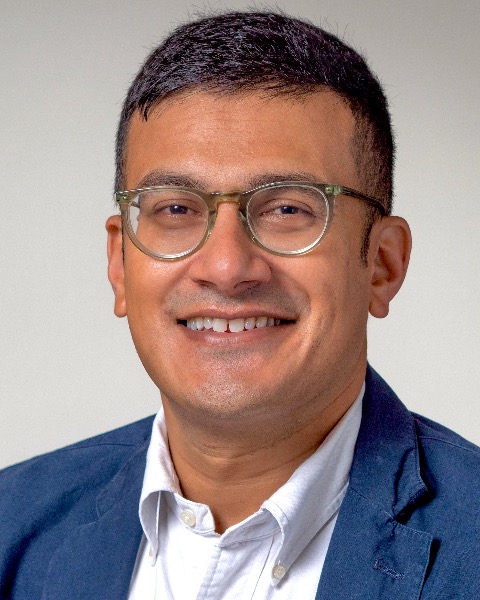
Vinay N. Kampalath, MD, DTM&H
Assistant Professor, Pediatrics
University of Pennsylvania Perelman School of Medicine
Vinay N. Kampalath, MD, DTM&H is an Assistant Professor in Pediatrics at the Perelman School of Medicine at the University of Pennsylvania. Dr. Kampalath has worked in several development and humanitarian contexts as a clinician and educator, and is a researcher studying humanitarian emergencies, universal health coverage, and emergency care development. Dr. Kampalath earned his medical degree at Brown University and finished his residency in pediatrics and fellowship in pediatric emergency medicine and global health at the Children's Hospital of Philadelphia. He earned his diploma in Tropical Medicine and Hygiene at the London School of Hygiene and Tropical Medicine.
-

Anna P. Fang, MD
Boston Medical Center
Anna Fang, MD is a PGY-3 resident physician at Boston Medical Center. She graduated from Yale University in 2014 and received her medical degree from Harvard Medical School in 2021. Her academic work focuses on development of emergency care systems and strengthening emergency care delivery in resource-limited settings globally. Drawing on her expertise in data analytics, her research interests also include data optimization for quality improvement processes and development of monitoring and evaluation systems. She has conducted research in Haiti and Sierra Leone on these topics.