
Should Suicide Prevention Be Central to Emergency Department Trauma Care? (Behavioral and Psychological Interest Group-Sponsored)
Trauma patients presenting to the emergency department (ED) often face both physical injuries and underlying psychological distress, creating an opportunity for integrated care. Emerging evidence shows that trauma is a significant contributor to suicidal ideation and behaviors. The connection between physical trauma—especially from accidents, violence, or self-harm—and mental health issues like depression, anxiety, and post-traumatic stress disorder (PTSD) underscores the need for a comprehensive approach. In response, the American College of Surgeons (ACS) has mandated that trauma centers screen for mental health conditions, including suicidal ideation, depression, and anxiety. This initiative, which began earlier this year, requires trauma centers to implement mental health screenings for patients admitted with traumatic injuries and refer those in need for further intervention and treatment. The ED-SAFE 2 trial also supports the idea that suicide prevention should be a core focus in ED settings, showing that screening, safety planning, and post-discharge follow-up significantly reduce suicide attempts. This session will explore the clinical, logistical, and ethical considerations of integrating suicide prevention into ED trauma care, striving to balance trauma care and mental health interventions in resource-limited environments.
Learning Objectives:
- Evaluate whether EDs should prioritize suicide prevention alongside trauma care, considering the challenges and benefits of integrating mental health interventions for trauma patients.
- Explore the challenges of implementing ACS-mandated mental health screenings in EDs, focusing on practicality, resource allocation, and workflow integration.
- Examine the ethical obligations of EDs to address both physical and mental health needs in trauma patients, discussing possible referral systems.
- Understand the complexities of balancing acute trauma care with comprehensive mental health interventions in resource-limited ED environments.
Presenters:
- Thomas R. Kosten, MD
- Christopher D. Verrico, PhD
- Ynhi Thomas, MD
- Nicholas Murphy, PhD
- Nidal Moukaddam, MD, PhD
- Jetaury I. Davis
- Alan C. Swann, MD
- Michael P. Wilson, MD, PhD
- Sanjay Mathew, MD
-
Thomas R. Kosten, MD
Baylor College of Medicine
I have spent 45 years developing medications for psychiatric disorders including schizophrenia, affective disorders, PTSD, substance use disorders and dementing disorders in over 50 clinical trials as PI with funding from NIH, DoD, VHA, Pharma companies and Foundations. These studies have resulted in my publishing over 900 papers and books in this field. I also have a human genetics lab that focuses on pharmacogenetics and epigenetics, particularly microRNA and DNA methylation as biomarkers in several neuropsychiatric diseases. I have consulted to many pharmaceutical companies over the years including Alkermes, Astellas, Boehringer-Ingelheim, BioXcel, Novartis, Pfizer, GSK, Otsuka, J&J, Sage, and Sandoz -
Christopher D. Verrico, PhD
Baylor College of Medicine
Christopher (“Chris”) Verrico is an Associate Professor in the Department of Psychiatry at the Baylor College of Medicine (BCM), with a secondary appointment in Pharmacology. He is also a principal investigator (PI) on the Research Service Line at the Michael E. DeBakey VA Medical Center (MEDVAMC). Chris leads five active research projects, funded by the Food and Drug Administration (FDA), National Institutes of Health (NIH), Department of Defense (DOD), and the McNair Foundation, that tackle pressing public health issues. One of his prominent projects, funded by the FDA, is a U01 study examining the human abuse potential of kratom, an herbal substance with opioid-like effects. This research will generate critical data on the risks and potential therapeutic applications of kratom, which will help shape regulatory decisions and guide public health recommendations. His R21 investigates the use of a GLP-1 receptor agonist, exenatide, to treat cocaine use disorder, examining how it might modify cocaine's reinforcing effects. Chris is also co-leading an R01-funded trial in collaboration with the University of Texas Health Science Center at Houston, which studies the combination of a GLP-1 receptor agonist and nicotine replacement therapy to improve smoking cessation outcomes. This study also explores whether this approach can mitigate post-cessation weight gain, contributing to more effective long-term cessation strategies. In another project with the University of Texas Health Science Center at San Antonio, supported by DOD funding, he is exploring the combined use of lofexidine and buprenorphine for treating both opioid use disorder and post-traumatic stress disorder. Lastly, in collaboration with Texas Children’s Hospital, Chris is leading a McNair Foundation-funded trial to assess the use of dronabinol for alleviating endometriosis and back pain, offering potential new avenues for pain management. -
.jpg?sfvrsn=5b43ea9b_1 "cropWIIZFPXI-Presenter-ThomasY(2)")
Ynhi Thomas, MD, MPH, MSC
Baylor College of Medicine
Dr. Ynhi Thomas, M.D., M.P.H., M.Sc., is an Assistant Professor of Emergency Medicine at Baylor College of Medicine (BCM) and serves as the Assistant Medical Director of Operations Research at the Ben Taub Hospital Emergency Center. She also holds the role of Investigator in the Behavioral Health Program at the Center for Innovations in Quality, Effectiveness, and Safety (IQuESt). Drawing on her expertise in public health, mental health, and leadership in quality improvement, Dr. Thomas develops innovative interventions to enhance emergency care for patients experiencing mental health crises.
Her contributions include the development of the Behavioral Health Sorting Tool, establishment of a multidisciplinary Crisis Intervention Team, and the formulation of data-driven guidelines for the use of physical restraints. Dr. Thomas's research, funded by federal and private entities, focuses on substance use disorders, suicide prevention, and the development of clinical decision support tools. She has served as principal or co-investigator on various projects, including an FDA-funded U01 study on kratom's human abuse potential and National Institutes of Health-funded initiatives on diagnostic accuracy.
Dr. Thomas has received several accolades, including the 2025 American Society of Clinical Psychopharmacology New Investigator Award, the 2024 Chao Physician-Scientist Award, and the 2023 Academy for Women in Academic Emergency Medicine President's Momentum Award. An inductee of Alpha Omega Alpha and The XXXI Honor Society, she completed her medical degree at the University of Alabama School of Medicine, her M.P.H. at the University of Alabama School of Public Health, her M.Sc. in Medical Anthropology at Oxford University, and her Emergency Medicine residency and fellowship training in Leadership, Quality, and Administration at BCM. Dr. Thomas enjoys hiking, traveling, and spending time with her husband and two school-aged sons. -
Nicholas Murphy, PhD
Baylor College of Medicine
Dr. Murphy is an assistant professor of psychiatry and head of the Neural Oscillations and Modulations Lab within the Mood and Anxiety Disorders Program at Baylor College of Medicine. Dr. Murphy’s research is dedicated to precision neurophysiological biomarkers of mood and trauma-related disorders. His endeavors use linear and non-linear feature extraction methods to quantify dynamic activity within pre-frontal microcircuits; these provide an overview of information processing capacity and communication structure at a variety of temporal scales that describe the functional architecture of the brain and how it responds to treatment. -
Nidal Moukaddam, MD, PhD
Baylor College of Medicine
Nidal Moukaddam, M.D.Ph.D., is an Professor at Baylor College of Medicine and the director of Psychiatry Outpatient Clinics at Harris Health.
Her recent work includes the creation and testing of smartphone applications for mental illness across the age spectrum, research performed in collaboration with the Rice University department of Electrical and Computer Engineering. Her team has also developed tools to enhance wellness and combat burnout in physicians. The results of this work include an open, fee-free, dynamic platform for academic collaboration, Healthsense, that is now available for researchers to engage in sensor-based measurements in their studies and earned the community paper award at the 25th Annual International Conference on Mobile Computing and Networking. Their team has also released a longitudinal adaptive study for the effects of COVID-19 on mental health, available at http://sh.rice.edu/covid-sense/
Dr. Moukaddam has supervised many students and residents, leading to numerous awards including Women of Excellence Award at Baylor College of Medicine (2020), the Faculty Mentorship & Teaching award for Baylor Psychiatry Department (2018), being selected for Houstonia magazine- Houston top 100 doctors’ selection (2017) and Baylor College of Medicine, Department of Psychiatry & Behavioral Sciences’ Outstanding Mentor Award (2017). She is also the creator of a wellness curriculum for Baylor College of Medicine’s Center of Excellence in Health Equity, Training and Research.
She received her MD from the American University of Beirut and did both her PhD and residency at UTMB-Galveston, in clinical sciences. She is board certified in General Psychiatry & Addiction Medicine and specializes in challenging adult populations: she practices emergency psychiatry at Ben Taub Hospital, a level 1 trauma center in Houston, Texas, with a special focus on individuals afflicted with both psychosis and addiction. -
Jetaury I. Davis
Baylor College of Medicine
JeTaury (Jet) is a recent graduate of Northeastern University where he studied Cell and Molecular Biology and minored in Africana Studies. Jet's research experience dates back to high school where he interned in a cardiovascular lab at Baylor College of Medicine (BCM). During his undergraduate years, he engaged in computational chemistry research looking at the kinetics of biorthogonal reactions and worked in Investigative Toxicology at Alnylam Pharmaceuticals. Before applying to medical school, Jet has returned to BCM to participate in clinical research during his gap year under the guidance of Dr.Ynhi Thomas. -
Alan C. Swann, MD
Baylor College of Medicine
Alan Swann, MD, is professor in the Department of Psychiatry and Behavioral Sciences at the Baylor College of Medicine and Michael E. DeBakey Veterans Affairs Medical Center in Houston, Texas. Professor Swann is directly involved in teaching, research, and patient care. He graduated from the University of Texas, Southwestern Medical School in Dallas, Texas, in 1972 and completed a medical internship at Columbia-Presbyterian Medical Center in New York. He then completed a research fellowship at the National Institute of Neurological Disorders and Stroke and a psychiatry residency at Yale University School of Medicine. Professor Swann recently completed a term on the National Advisory Council on Alcoholism and Alcohol Abuse and has served on grant review boards for NIH and for the Veterans Administration, where he was chair of the Merit Review Board on Mental Health and Behavioral Sciences. He is a co-founder and former president of the International Society for Research on Impulsivity. His clinical interests include practical diagnosis and treatment of severe and common psychiatric disorders and their relationships to other medical conditions. He teaches residents and medical students at Baylor College of Medicine and the affiliated Michael E. DeBakey VA Medical Center. His research support has included the NIMH, NIAAA, and the American Heart Institute. Clinical research focuses on treatment of affective disorders, especially prediction of treatment response and development of more objective measures of disease severity, its underlying behavioral mechanisms, and its change during treatment. Preclinical human research concerns the neurobiology of behavior, such as impulsivity and motivation, which may be basic to bipolar disorder and its most severe complications, including suicidal behavior. Basic research focuses on pharmacological and developmental aspects of behavioral sensitization to stimulants and other potential models for recurrence in affective disorders. His work has resulted in over 300 peer reviewed publications, plus reviews and book chapters. -
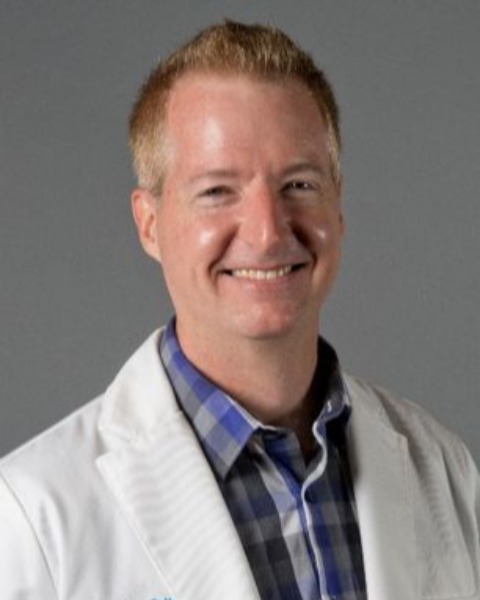
Michael P. Wilson, MD, PhD
University of Arkansas for Medical Sciences
Dr. Wilson is board-certified in Emergency Medicine and Addiction Medicine, and is an Associate Professor (tenured) in the Departments of Emergency Medicine and Psychiatry at the University of Arkansas for Medical Sciences. He serves as the current Chair of the Coalition on Psychiatric Emergencies (coalitiononpsychiatricemergencies.org), Secretary of the Board of Directors for the American Association for Emergency Psychiatry (www.emergencypsychiatry.org), and as Senior Associate Editor of the Journal of Emergency Medicine (www.jem-journal.com). Clinically, he serves as the emergency department lead for neurological emergencies, psychiatric emergencies, and substance use disorders. Dr. Wilson’s research in behavioral emergencies and substance use disorders have been cited more than 4150 times (h-index 32), and he has written more than 90 peer-reviewed articles, 30 book chapters, and 4 edited books. His work has been supported by numerous federal and private grants, and has been recognized as innovative by the American College of Emergency Physicians and the American Foundation for Suicide Prevention
-
Sanjay Mathew, MD
Baylor College of Medicine
I am a board-certified psychiatrist with extensive clinical/translational research experience in clinical trials and the neurobiology and treatment of mood/anxiety disorders and PTSD. I serve as Professor of Psychiatry and Vice Chair for Research and Director of the Mood & Anxiety Disorders Program at Baylor College of Medicine (BCM), Staff Psychiatrist at Michael E. Debakey VA Medical Center, and Senior Scientist at The Menninger Clinic. My research program focuses on experimental therapeutics and pathophysiology of these conditions, with grant support over the past 20 years from NIMH, Department of Veterans Affairs, PCORI, and industry. I have led or co-led numerous studies of pharmacotherapies many of which focused on glutamatergic systems, and have conducted multimodal biomarker (EEG, MRI, blood, cognitive) studies in the context of experimental medicine trials. I have experience in multicenter experimental medicine studies and integrated biomarker protocols.