Navigating the Care of Patients in Police Custody: A Practical Primer (ADIEM and Social EM and Population Health Interest Group Sponsored)
Despite the increasing presence of law enforcement in clinical spaces, little formal training on how to navigate the medical, legal, and ethical gray areas at this intersection exists. Strengthening patient-centered care requires understanding of relevant laws, legal procedures, and patient rights. As part of a series supported by SAEM’s Social Emergency Medicine and Population Health interest group, this lecture focuses on general principles of managing the patient-physician-officer interaction. A partner lecture discusses the broader need for residency training in this area and focuses on curricular development and assessment.
Police custody can affect the care of patients in numerous ways: minimization or withholding of symptoms or details around illness or injury, curtailing of autonomy through restriction of movement, informal use of police as patient’s surrogate, and intimidation or coercion into cooperation. After discharge, patients may face restricted access to discharge paperwork, medications, or recommended care. In this session, we will discuss the challenges facing patients, physicians, and officers with an emphasis on medical ethics and legal precedent. This didactic will begin with a brief summary of relevant laws and constitutional protections, legal definitions, and ethical principles pertinent to the care of the patient in police custody. We will discuss best practices and considerations of two commonly encountered scenarios: 1) Patients under arrest on whom blood draws, body searches, or other invasive medical work up is requested by law enforcement and 2) Patients for whom “medical clearance” for booking/incarceration is requested. Next, in breakout groups, attendees will discuss content covered in the lecture through sample clinical cases highlighting specific laws and ethical considerations, including bodily autonomy, privacy, patient-centered communication, racialized criminalization of patients, and the dual missions of protecting patient rights and promoting public safety. There will be an opportunity for interactive discussion and reflection.
Presenters:
- William Weber, MD, MPH, FACEP, CF
- Caitlin M. Farrell, DO, MPH
- Aaron Dora-Laskey, MD, MS
- Joan Chen, MD
- Utsha G. Khatri, MD, MSHP
-
William Weber, MD, MPH, FACEP
Rush University Medical Center
William Weber, MD, MPH is an Assistant Professor of Emergency Medicine at Rush University Medical Center in Chicago. He helped found the Medical Justice Alliance, a national organization that trains volunteer physicians to provide medical reviews to advocate for the health of individuals in carceral settings. He serves on ACEP’s Medical-Legal Committee and Public Health Committee.
-
Caitlin M. Farrell, DO, MPH
Boston Medical Center
Caitlin M. Farrell is an Emergency Physician at Boston Medical Center and Assistant Professor of Emergency Medicine at the Boston University Chobanian and Avedisian School of Medicine Caitlin graduated from Trinity College with a degree in Biology and Writing. After college, she worked as a preschool teacher at a Head Start in Las Vegas, Nevada, after which she turned her attention to public health and obtained a Masters in Public Health from Boston University with a specialization in Health Policy and Advocacy. She completed her Emergency Medicine training at Baystate Medical Center in Springfield, Massachusetts where she also served as Chief Resident. She then completed her Health Equity Fellowship at Boston Medical Center where she focused on improving healthcare for incarcerated populations. She has served in several leadership roles within organized medicine, including the American Medical Association and the Massachusetts Medical Society. Her academic work is focused on improving the care of incarcerated patients through research and advocacy. Her work has been published in medical journals such as the American Journal of Public Health as well as the New York Times. Additionally, she works closely with the Medical Justice Alliance on medical parole and authors affidavits for patients seeking medical parole. She also visits jails across Massachusetts to perform dementia screenings for patients seeking medical parole. Caitlin aims to advance research, advocacy, and improve health inequities for the marginalized incarcerated population. She lives in Boston with her husband.
-
Aaron Dora-Laskey, MD, MS
Medical College of Wisconsin
Dr. Dora-Laskey is an Adjunct Assistant Professor at the Medical College of Wisconsin, a full-time nocturnist at Trinity Health in SE Michigan, and an MAT provider at Ingham Community Health Centers in Michigan's capital. Their research focuses on ED harm reduction, including an ED take-home naloxone project that has reduced opioid overdose risk for thousands of Michiganders since its inception in 2019.
-
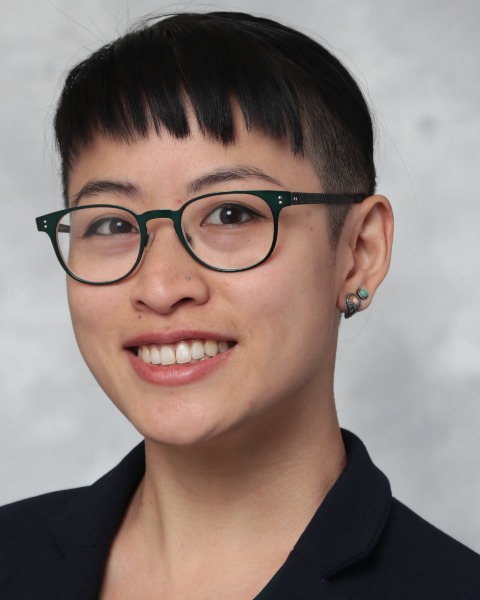
Joan Chen, MD
Mount Sinai Hospital
Joan Chen is a third year resident physician in Emergency Medicine at Mount Sinai Hospital in New York City. Previous to their career in medicine, they worked many years in street-based syringe distribution, HIV/STI testing and harm reduction counseling, and as an outreach worker and community paramedicine adjunct for high utilizers of emergency services in the San Francisco Bay Area.
-

Utsha G. Khatri, MD, MSHP
Assistant Professor, Emergency Medicine
Icahn School of Medicine at Mount Sinai
Dr. Utsha Khatri, is an Assistant Professor of Emergency Medicine at the Icahn School of Medicine at Mount Sinai. She has a secondary appointment at the Institute for Health Equity Research, Department of Population Health Science and Policy. As a health services researcher, Dr. Khatri is interested in improving access, outcomes, and equity with regard to the health and health care of structurally marginalized populations. Her ongoing projects focus on the health care of individuals and communities affected by mass incarceration and those affected by substance use disorders. Dr. Khatri practices clinically as an attending emergency physician at Mount Sinai Hospital and at Elmhurst Hospital. Her current work is supported by a career development award from the National Institute on Drug Abuse.