Mastering the Art of Clinical Feedback: When to Debrief and When to Direct
Learning Objectives:
- Understand the key differences between feedback and debriefing
- Apply direct feedback versus debriefing techniques in clinical teaching
- Practice using advocacy-inquiry/O3 to explore learners’ decision-making frameworks and thought processes
Presenters:
- Janice Shin-Kim, MD
- Mohammad M. Wiese, MD
- Jason Chu, MD
- David Kessler, MD
- Rachel Elkin, MD
-
Janice Shin-Kim, MD
New York–Presbyterian Columbia University Medical Center
Dr. Janice Shin-Kim is an Assistant Professor of Emergency Medicine at the Columbia University Medical Center. Dr. Shin-Kim completed her Emergency Medicine residency at Mount Sinai Beth Israel, where she served as a chief resident during her final year. She completed her two-year fellowship in Simulation at NYU/Bellevue Hospital.
Dr. Shin-Kim is currently the simulation director for the Columbia Emergency Medicine Department. Her interests include medical simulation, virtual reality, and faculty development. -
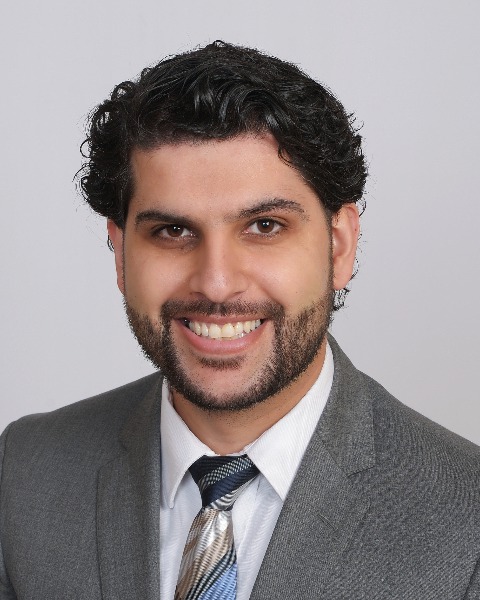
Mohammad M. Wiese, MD
Columbia University Vagelos College of Physicians and Surgeons
Dr. Wiese is a ABEM Board Certified Assistant Professor of Emergency Medicine at Columbia University Vagelos College of Physicians and Surgeons. He received his medical degree from California Northstate University College of Medicine. He completed his residency in Emergency Medicine at NYP-Brooklyn Methodist Hospital, and subsequently completed an Emergency Medicine Simulation Fellowship at Northwell Health - North Shore University Hospital. He joined the Columbia Emergency Medicine Department in July 2023 and currently serves as Simulation faculty and an Assistant Professor of Emergency Medicine at Columbia University Irving Medical Center. He is also Co-Program Director of the Columbia University Department of EM Simulation Fellowship. -
.jpeg.jpg?sfvrsn=7592f750_1 "cropWIIZFPXI-Presenter-ChuJ(1).jpeg")
Jason Chu, MD
Columbia University Irving Medical Center
Dr. Chu is an Associate Professor of Emergency Medicine at Columbia University Vagelos College of Physicians and Surgeons. He received his medical degree from SUNY Downstate Health Sciences University. He completed his residency in Emergency Medicine at Stony Brook University Hospital and a fellowship in Medical Toxicology at NYU Grossman School of Medicine. His interests include antidotal therapies for various toxins such as calcium channel blockers, organophosphates and GHB. He is also passionate about simulation and integrating simulation in medical education. -
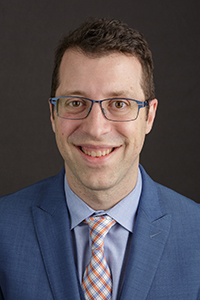
David Kessler, MD, MSc
Dr. Kessler is the Vice Chair of Innovation & Strategic Initiatives in the Department of Emergency Medicine at Columbia University where he oversees virtual health and helps implement innovative solutions to complex system issues.
He is a graduate of Princeton University and Mount Sinai School of Medicine, where he completed his pediatric residency on the global health track. Dr. Kessler completed his Pediatric Emergency Medicine Fellowship and Emergency Ultrasound training at Bellevue Hospital and his Master of Science in Clinical Investigation at New York University.
As an Associate Medical Director for the Mary & Michael Jaharis Simulation Center, Dr. Kessler helps other departments start new safety-driven simulation programs.
As a founder and co-director for INSPIRE, (International Network for Simulation-based Pediatric Innovation, Research, and Education), Dr. Kessler has helped to grow a community of practice dedicated to collaboration and mentorship among investigators committed to scholarship in simulation -
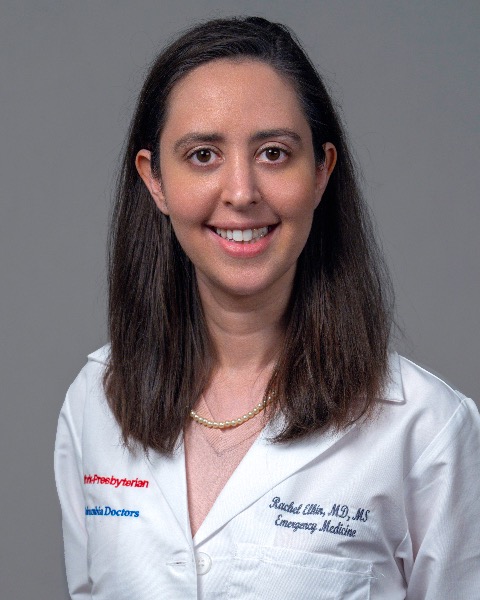
Rachel Elkin, MD
Columbia University Vagelos College of Physicians and Surgeons
Rachel Elkin is a pediatric emergency physician and Assistant Professor of Pediatrics (in Emergency Medicine) at Columbia (New York Presbyterian-Morgan Stanley Children’s Hospital), where she also serves as simulation division faculty within the Department of Emergency Medicine. After medical school – where she also obtained a master’s degree in clinical research – she went on to complete her pediatric residency and pediatric emergency medicine fellowship at Columbia, followed by a simulation fellowship at Massachusetts General Hospital. Her academic interests center around measures of cognitive load and workload, as well as how novel technologies and instructional designs, particularly within simulation, impact educational, psychometric, and clinical outcomes.