Expanding the Definition of Inclusion: Deaf and Hard of Hearing Providers in the Emergency Department (ADIEM-Sponsored)
Hearing loss affects 23% of Americans over age 12, with approximately half a million using American Sign Language. Although progress has been made to include underrepresented groups, Deaf and Hard of Hearing (DHH) physicians remain underrepresented in emergency medicine. Like other diverse groups, their inclusion can provide significant benefits. This session will address the barriers preventing DHH medical students from entering emergency medicine, compare these barriers to those faced by other minority groups, and propose strategies to support and educate DHH students and residents, promoting their development and fostering inclusion in Emergency Medicine.
Learning Objectives:
- Describe current state of clinical specialties for DHH physicians in comparison to other minority groups
- Identify and discuss key barriers preventing DHH medical students from pursuing careers in EM
- Outline a proposed training framework to promote inclusion and education of DHH medical students/residents to foster development of DHH EM physicians
Presenters:
- Jason Rotoli, MD
- IV Mirus, MD, MPH
-
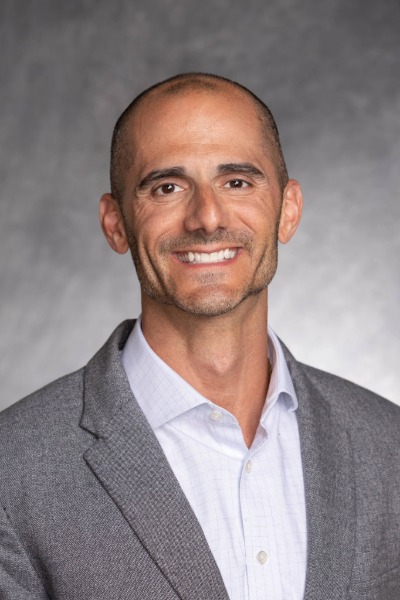
Jason Rotoli, MD
University of Rochester
I have a passion for improving the health literacy and health care for anyone who requires an accommodation, especially the Deaf ASL user. Since learning the American Sign Language as an undergraduate at the University of Rochester, my continuous involvement with the Deaf community demonstrates my dedication to and passion for advocating for the Deaf community. During graduate school and medical school, I worked part time in residential Deaf schools in Philadelphia and Buffalo in order to improve my fluency in American Sign Language. I am currently involved in a volunteer local community deaf health group, Partners in Deaf Health, which is well integrated into the surrounding local deaf community. This organization advocates for the Deaf community and disseminates healthy lifestyle and medical information. Through this group, I have presented locally on a variety of topics including emergency medicine topics and requesting accommodations in graduate medical education in an effort to increase the health literacy of this cultural and linguistic minority population. I am also involved with planning, fundraising, and lecturing at regional Deaf health fairs. Through the department of Emergency Medicine at the University of Rochester, I have had the opportunity to present regional and national universities for Grand Rounds, and at national conferences (SAEM, CORD) on cultural awareness when caring for the Deaf patient. In 2021, I planned and coordinated educational sessions for the Academy for Diversity and Inclusion in Emergency Medicine (ADIEM), part of the Society four Academic Emergency Medicine (SAEM), for the national meeting and have also provided numerous didactic sessions on accommodations in the ED at these annual conferences. Most recently, I was elected to a board position (secretary/treasurer) for ADIEM for the 2022-23 academic year.
I am the Associate Residency Director of the Emergency Medicine residency at the University of Rochester. Through experiential didactics, simulation, and formal assessment, I seek to improve provider cultural awareness by increasing awareness of the needs of vulnerable populations. In 2017, I was hired as the Director of the Deaf Health Pathways, a medical student elective at the University of Rochester School of Medicine and Dentistry, which focuses on health disparities in the deaf community and teaching American Sign Language. Through this role, I hope to have a positive influence on students early in their careers in caring for Deaf ASL users, who are a linguistic and cultural minority. I hope to continue to improve Deaf patient health care delivery and medical knowledge through providing direct access and communication to an ASL fluent physician while working clinically as well as through research and dissemination of health disparities information. -
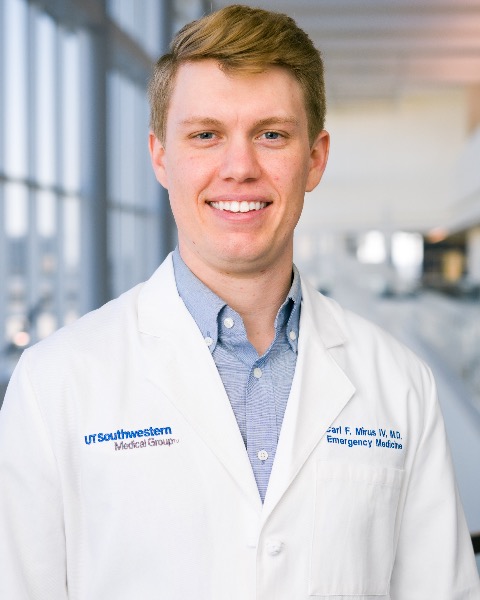
IV Mirus, MD, MPH
University of Texas Southwestern Medical Center
Dr. IV Mirus is an Assistant Professor of Emergency Medicine at UT Southwestern and a recognized leader in the Deaf community. He also serves as Vice Chair of Ethics at Parkland Hospital. Born a CODA (Child of Deaf Adults) with American Sign Language (ASL) as his first language, Dr. Mirus studied public health and health equity and has dedicated his career to bridging communication barriers for linguistic minorities. Prior to medicine, he worked as a professional medical interpreter, developing firsthand insight into the challenges Deaf patients face in a hearing-centric healthcare system. Today, Dr. Mirus continues to serve as both a researcher and advocate, holding board positions with Deaf Action Center and Partners in Deaf Health, exemplifying his unwavering commitment to advancing equitable healthcare for the Deaf community.