
MEDICAL UNIVERSITY OF SOUTH CAROLINA

The MUSC Global Emergency Medicine Fellowship is an endowed fellowship program organized through the Department of Emergency Medicine at the Medical University of South Carolina in collaboration with OneWorld Health. Our fellowship is designed to launch emergency physicians into impactful careers in global health. Fellows gain hands-on clinical experience in resource-limited settings, develop and lead research initiatives, and work alongside world-class faculty and Ugandan partners to create lasting systems change. Field work is tailored to each fellow's interests — from clinical immersion to focused research to non-profit leadership. Fellows choose a 1-year or 2-year fellowship based on their career goals and desired academic training.
Here is a handout summary of our fellowship for downloading or viewing!
Fellowship Experience
Global Health Fellows will receive pre-departure training and hands-on international experiences. This may include time spent working at our affiliated sites with OneWorld Health in Uganda, Nicaragua, Honduras, or other approved sites. Fellows will receive mentorship from our incredible faculty during their time spent abroad. Thus far, our Division has been involved in capacity building, research, and clinical care in:
Haiti
Guyana
Nicaragua
Honduras
Peru
Uganda
St. Croix
See our updated current project list below! Field work can be tailored to a fellow's particular areas of interest.
Global Health Fellows at MUSC are faculty in the Department of Emergency medicine at the level of Clinical Instructor and as such will provide bedside teaching to residents and medical students at MUSC. They play an important role as educators to residents completing the Global Health Residency Track. In addition, they will have opportunities to assist in teaching Global Health Electives, pre-departure training of medical students and residents, training and supervision of medical students and residents working on overseas rotations. Furthermore fellows provide didactic and bedside teaching to overseas medical staff and trainees.
Academic Global Health Training Program Opportunities
Fellows who choose a 2-year fellowship are eligible to pursue a masters degree which may include one or more of the following:
- Master of Public Health
- Master of Education in the Health Professions
- Master of Science in Global Health or Population Health
- International Masters for Health Leadership
- Different degree of your choosing pending approval by fellowship director
Fellows who choose a 1-year fellowship can pursue a Certificate or Diploma programs in Global Health including but not limited to:
- HELP Red Cross Health Emergencies in Large Populations
- Certificate or Diploma program in Global Health and Tropical Disease
- Graduate Certificate in Global Health Leadership
Other training programs may fulfill this requirement if pre-approved by the Fellowship Director and the Division Director


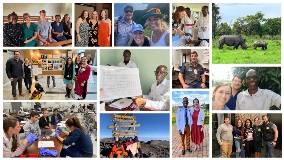
Check us out on Instagram!
Fellowship Curriculum
Global Emergency Medicine is a broad field encompassing five primary domains: research, health systems development, education, direct clinical care, and disaster/humanitarian response. This fellowship track offers a diverse curriculum designed to provide exposure and advanced training across each of these areas through a combination of educational and international fieldwork opportunities.
This track is designed for fellows with prior global health experience and an established partnership in a low-resource setting. Fellows pursue a focused, high-impact project over the course of the fellowship. Past examples include developing a trauma registry and conducting a cross-sectional observational study in rural Honduras, and performing non-communicable disease research on hypertension in emergency departments in Nicaragua.
This two-year track is offered in partnership with OneWorld Health, a global non-profit organization that manages a portfolio of 20 sustainable healthcare facilities in Uganda, Nicaragua and Honduras. Fellows work one day per week in a direct administrative role with OneWorld Health and pursue an advanced degree, such as a Graduate Certificate in Healthcare Management or International Masters in Healthcare Management at McGill University or a comparable program. This unique opportunity provides targeted leadership training for future roles in emergency department administration, non-profit management, or private-sector health leadership. Fellows play a key role in overseeing quality improvement initiatives across OneWorld Health’s divisions in Uganda, Nicaragua, and Honduras.
Projects
| Project Name & Description | Details |
|---|---|
| Emergency Care Implementation Tool (ECIT) |
With only 26 emergency physicians serving all of Uganda, most facilities lack the expertise to deliver high-quality emergency care. The ECIT translates WHO-endorsed Emergency Care Assessment Tool (ECAT) gap analyses into a prioritized action plan for resource-limited facilities — with plans to digitize both tools for broader reach across East Africa. Fellows play a central role in developing the implementation algorithm, digitization, and dissemination of ECAT and ECIT, with opportunities to contribute to major grant funding applications.
|
| ECHO & Emergency Cardiology Program Development |
Bedside ECHO training comes to Masindi Kitara Hospital to establish sustainable cardiac ultrasound capability in rural Uganda. Fellows play a central role in evaluating and expanding the program and developing cardiology and ECHO augmented care pathways — contributing to a first-of-its-kind emergency ECHO curriculum for rural Uganda.
|
| OneWorld Health Facility Mortality Registry — East Africa |
Establishing mortality benchmarks is essential to measuring progress in low-resource settings. This project conducts a systematic literature review across Uganda, Kenya, and Tanzania to derive benchmark mortality ratios for OneWorld Health's rural facilities — anchoring ongoing quality improvement and tracking progress over time. Fellows contribute to registry development, data collection, and QI integration across sites.
|
| (Past Project) An Assessment of Maternal Recognition of Neonatal Sepsis following Implementation of Standardized Newborn Discharge Education in Western Uganda |
This is an ongoing, grant-funded research project involving the employment of a full-time Ugandan research assistant, establishment of standardized discharge form for newborns, a train-the-trainer curriculum for nurse midwives on the signs and symptoms of neonatal sepsis, development of a picture-based teaching aid, and pre-post testing of mothers on their learning.
|
| (Past Project) Building EKG Capacity for Emergent Conditions in Rural Uganda |
This is an ongoing grant-funded project in partnership with OneWorld Health Uganda at Masinid Kitara Hospital. As of 2023, we have hired a full-time Uganda project / research assistant in Masindi, instituted a Kardia 6L EKG in hospital triage, a 12-lead EKG on wards and in outpatient department, have trained all staff to be able to capture a 12-lead on a patient, developed a database for remote quality assurance, and are in the process of developing a 12-lead interpretation curriculum for clinical officers and physicians.
|
Alumni

Claire Milam
2021-2023
Tyler Winders
2017-2019
Rebecca Teague
2020-2021
Richard Tsen
2019-2021
Lacey Menkinsmith
2016-2017
Chris Daly
2021-2025
Blake Willis
2015-2017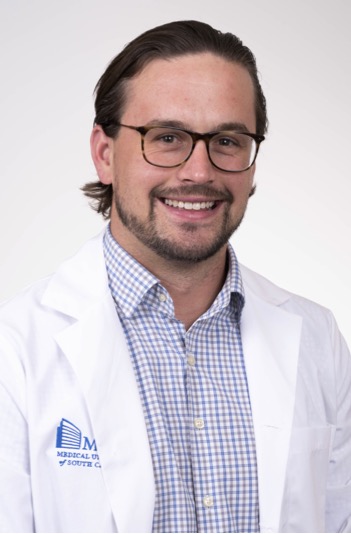
Logan Wolford
2023-2024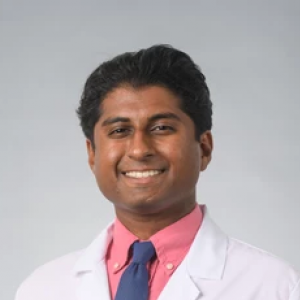
Aqeel Jawahir
2024-2026Contacts

Additional Application / Interview Information
Application Process
Application Deadline
Eligibility
Applicants must have earned their MD or DO and completed residency training in Emergency Medicine.
We have previously had dual fellows completing an ultrasound fellowship and a Pediatric Emergency Medicine fellowship. If this category fits you, please reach out to globalem@musc.edu to discuss your particular situation.
