

COLUMBIA UNIVERSITY GLOBAL EMERGENCY MEDICINE FELLOWSHIP

The CU Global EM Fellowship has a history of training emergency physician educators, implementors, and researchers to decrease health disparities for vulnerable populations in settings with limited health resources. We approach these challenges through data-driven social determinants of health (social EM) approach to ensure health equity and justice. We produce global health leaders who approach public health problem-solving using mixed methods, implementation science to impact the global health system strengthening and humanitarian programs, effective advocacy, and impact policy.
The CU Global EMF is a two-year program that combines in-depth clinical and public health work in low-resource health settings. Fellows enroll in a Master of Public Health (MPH) program at the Columbia Mailman School of Public Health, Heilbrunn Department of Population and Family Health (Pop Fam), under the Forced Migration and Health program. It enables fellows to:
- Obtain the Public Health and Humanitarian Action (PHHA) Certificate (Choose Pop Fam and PHHA certificate to see the 2-year curriculum)
- Contribute to the Columbia University sidHARTe - Strengthening Emergency Systems Program through partnerships with governments (currently Ghana & Rwanda), universities, and local organizations to ensure timely, integrated, adaptive health systems strengthening throughout an effectively linked continuum of care.
Fellowship Experience
Each Fellow conducts up to six months of fieldwork over two years, working 796 (with an MPH) 846 (without an MPH) hours per year as an Instructor of Emergency Medicine at Columbia University Vagelos College of Physicians and Surgeons at the NewYork-Presbyterian
Hospital (NYPH)/ Columbia University Irving Medical Center (CUIMC) /Allen Hospital Emergency Department (ED). The NYPH/CUIMC ED serves a predominantly underserved community in Washington Heights in northern Manhattan. It also serves as the ED for
CUIMC, a major medical center providing tertiary healthcare services to the New York Tri-State area. It is one of two primary NYP Emergency Medicine Residency Program teaching sites. The NYPH Allen Hospital is NYP's community hospital in the Inwood
neighborhood of Manhattan. Adult and pediatric patients can receive care from the same faculty at this site as at CUMC. In addition to understanding approaches to global public health systems, our fellows gain rich experience in humanitarian, disaster,
and conflict-affected settings and the response to epidemic outbreaks. Fellows have been placed in MSF, IRC, WHO, IMC, and UNICEF organizations. Recent fellows' fieldwork includes the following recent illustrative examples:
Partnerships with Ministries of Health (MoH) on Health System Strengthening
- sidHARTe – Strengthening Emergency Systems Ghana Program started in 2008.
- The current partnership with the USAID-funded Developing Acute Care and Emergency Referral Systems (ACERS) Consortium Emergency Maternal and Neonatal Care (EmONC) program in rural Ghana.
- sidHARTe Rwanda Program - Since 2011, the Global EM fellows have supported our sidHARTe program effort on health systems strengthening under the direction of the Rwanda MoH.
Health Systems Strengthening
- Columbia University ICAP research in Sierra Leone to strengthen national IPC, IDSR, and Mpox case management through the Epidemic Ready Primary Health Care model (Christina Roberto, 2025).
- Columbia University ICAP , evaluation of HIV service delivery and system performance in Solwezi, Zambia, (Tyler Nghiem, 2025).
- Partnered with IPAS in Delhi, India, to design long-term contraception strategies for underserved rural communities (Sabena Vaswani, 2024).
- Partnered with the MoH and Partners In Health to strengthen emergency care services in Sierra Leone and conducted a WHO Emergency Care System Assessment (ECO HEAT) across 17 government facilities in Sierra Leone (Abubakarr Bangura, 2022).
- Advanced health system strengthening at University of Benin Teaching Hospital, Nigeria, providing emergency care and service delivery support during a six-month placement (Alex Sloboda, 2022).
- Supported Ghana MoH research on integrating rural Emergency Dispatch Centers under the Ghana Health Service and National Ambulance Service (Brennan Bollman & Alex Sloboda, 2022).
- Contributed to emergency medicine training at CHUK, University Teaching Hospital in Kigali ( Charlotte Roy, Brennan Bollman & William Bruno, 2021–2022).
- Partnered with the USAID-funded ACERS Consortium to enhance Emergency Maternal and Neonatal Care (EmONC) in rural Ghana.
- Supported the sidHARTe Rwanda Program with the Rwanda MoH to strengthen emergency systems (since 2011).
- Launched the sidHARTe – Strengthening Emergency Systems Program in Ghana to improve the integration of primary and emergency care delivery (2008).
Humanitarian Action Partnerships
- Collaborated with the CU Global Consortium on Climate and Health Education to deliver community education on climate-health in the Dominican Republic, analyze program data, and co-author a peer-reviewed publication (Jessica Patel, 2025).
- Partnered with El Colegio de la Frontera Norte (COLEF) in Mexico to develop infectious disease curricula, support community health promoters, and analyze migrant healthcare access disparities (Arjun Banerjee, 2025).
- Conducted data analysis for Taimaka in Nigeria, assessing biometric palmprint recognition in children to enhance identification and follow-up care in CMAM programs (Jessica Patel, 2025).
- Worked with the International Rescue Committee (IRC) in Ciudad Juárez, Mexico , to address sexual and reproductive health needs of migrants in shelters (Kevin Molyneux, 2024).
- Provided medical care to Rohingya refugees in Cox’s Bazar, Bangladesh, through a nine-month mission with Médecins Sans Frontières (MSF) (William Bruno, 2023).
- Delivered clinical services to Ukrainian refugees in Moldova with Medical Teams International (Kristie Hadley & William Bruno, 2022).
- Provided clinical support with MSF in conflict-affected Tigray, Ethiopia , at fixed and mobile clinics in Shire (Charlotte Roy, 2021).
- Participated in MSF’s COVID-19 response in Peru during the pandemic’s peak (Brennan Bollman, 2021).
- the pandemic’s peak (Brennan Bollman, 2021).


Fellowship Curriculum
Projects
| Project Name & Description | Details |
|---|---|
| sidHARTe - Strengthening Emergency Systems Program |
sidHARTe partners to provide timely, accessible, high-quality acute care systems in resource limited settings worldwide
|
| Acute Care and Emergency Referral Systems (ACERS) Project in Rural Ghana |
ACERS is a three-year, USAID-funded implementation research and capacity-building project that aims to contribute to the improvement in maternal and newborn outcomes.
|
| sidHARTe and HRH Rwanda Emergency Care Systems Program |
Since 2011 the Global EM fellows have supported our sidHARTe program effort on health systems strengthening under the direction of the Rwanda Ministry of Health (MoH).
|
Alumni
Ardi Knobel Mendoza
2027
Charlaine Roberto
2026
Tyler Nghiem
2026
Jessica Patel
2025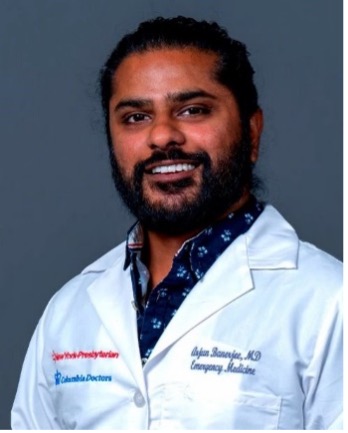
Arjun Banerjee
2025
Sabena Vaswani
2024
Kevin Molyneux
2024
William Bruno
2023
Abubakarr Bangura
2023
Alexander Sloboda
2022
Kristie Hadley
2022
E. Brennan Bollman
2021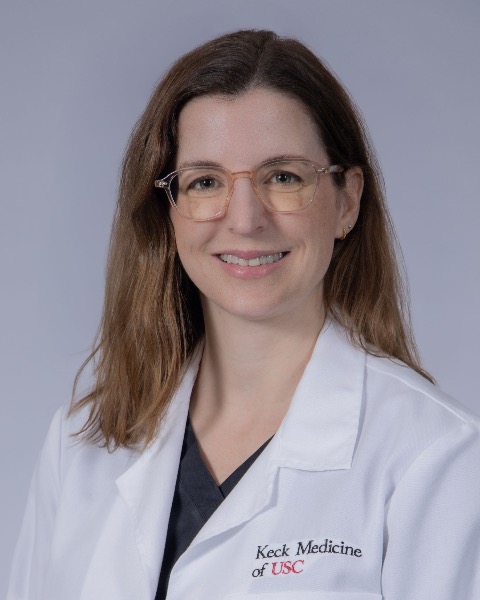
Charlotte Roy
2021
Ben Kaufman
2020
Timothy Depp
2020
Alyssa Green
2019
Shama Patel
2019
Hayes Wong
2018
Sonya Stokes
2018
Jonathan Lee
2017
Tsion Firew
2017
Cara Taubman
2016
Eric Cioe Pena
2015
Makini Chisolm-Straker, MD, MPH
2015
Tim Tan
2014
Dziwe Ntaba
2013
Craig Spencer
2013
Aaron Hultgren
2012
Andrea Tenner
2012
Ayman Yassa
2011
Mary Choi
2011-graham.png?sfvrsn=177d5818_1 "Jennifer (Schwieger) Graham")
Jennifer (Schwieger) Graham
2010
Jeffrey Kinyon
2010
Trina Helderman
2009
Solomon Kuah
2008
Hillary Cohen
2008
Deepti Thomas
2008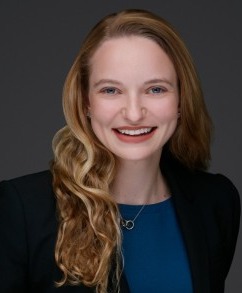
Aislinn McMillan, MD
Current FellowContacts

Other Documents - Program Specific Requirements
1. Letter of Interest: Why are you interested in OUR Fellowship? Please be specific about why Columbia University.
2. Personal Statement (one page): Including fellowship goals, research interests, implementation, advocacy, policy and post-fellowship goals.
3. Curriculum Vitae: Please include work, personal email and mobile phone number.
4. Three Letters of Reference (LoR): Kindly ask your letter writers to do the following:
· 2 LoRs (1 from Program Director): Please ask writers to focus on: a. Clinical abilities b. Professionalism and interpersonal skills c. Ability to navigate complexity (including research, teaching, service, or advocacy). Please ask them NOT to emphasize your global or 'glocal' work.
· 3rd LoR: Please include your Global Health /’Glocal' work, research, program implementation, advocacy or activism.
We seek applicants who embrace and reflect diversity in the broadest sense. Columbia University is an Affirmative Action, Equal Opportunity Employer.
If you have any questions, please contact Dr. Rachel T. Moresky, Columbia University Global Emergency Medicine Fellowship Director or Medical Education Coordinator Ms. Aileen Mendez Ruiz.
Selected fellows MUST APPLY SEPERATELY to the Columbia Mailman School of Public Health by January 15 through the Schools of Public Health Application Service (SOPHAS).
Additional Application / Interview Information
Application Criteria
Candidates for the fellowship must have completed an ACGME-accredited Emergency Medicine residency. We are not accepting H1-B visa applicants. We do not sponsor J-1 visa applicants.
We seek to recruit, retain, promote, and support all individuals and create a workforce that reflects the range of talent of New York City, the larger metropolitan area, the nation, and the world. To foster the free exploration and expression of differing ideas, beliefs, and perspectives through scholarly inquiry and civil discourse.
Application Process
For questions regarding the application portal, contact helpdesk@saem.org.
Application Deadline
Interview Date
