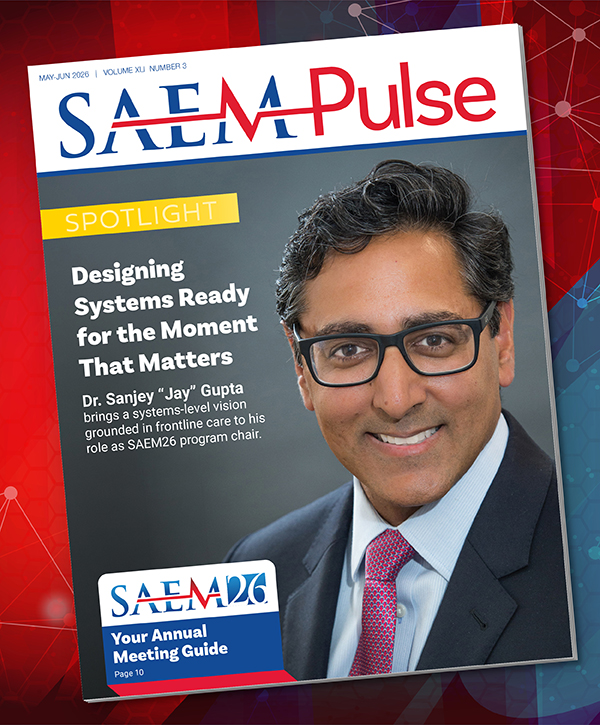
Thank You for Joining Us in Atlanta — See You in San Francisco for SAEM27!
The premier organization for high-quality research and educational innovation in emergency care.
The Society for Academic Emergency Medicine (SAEM) creates and promotes scientific discovery, advancement of education, and the highest professional and ethical standards for clinicians, educators, and researchers.
-
Now Available: Part 2 of AEM’s Geriatric Emergency Medicine Special Collection!Read the full two-part special collection highlighting innovative research, evidence-based practices, and forward-thinking approaches to emergency care for older adults.
-
Apply for an SAEMF Grant by August 1
-
It's Time to Renew Your SAEM MembershipBe a part of our community dedicated to excellence in academic emergency medicine.
-
Meet Our 2026-2027 Leaders!Our 2026-2027 leaders took office during SAEM26 in Atlanta.
Academies, Interest Groups, & Affiliates
-
 Academy of Administrators in Academic Emergency Medicine
 -
 Academy for Diversity & Inclusion in Emergency Medicine
 -
 Academy of Emergency Medicine Pharmacists
 -
 Academy of Emergency Ultrasound
 -
 Academy of Geriatric Emergency Medicine
 -
 Academy for Women in Academic Emergency Medicine
 -
 Clerkship Directors in Emergency Medicine
 -
 Global Emergency Medicine Academy
 -
 SAEM Members who meet, share ideas, and network
 -
 SAEM Residents and Medical Students
 -
 Simulation Academy
 -
 SAEM Foundation
 -
 Association of Academic Chairs of Emergency Medicine